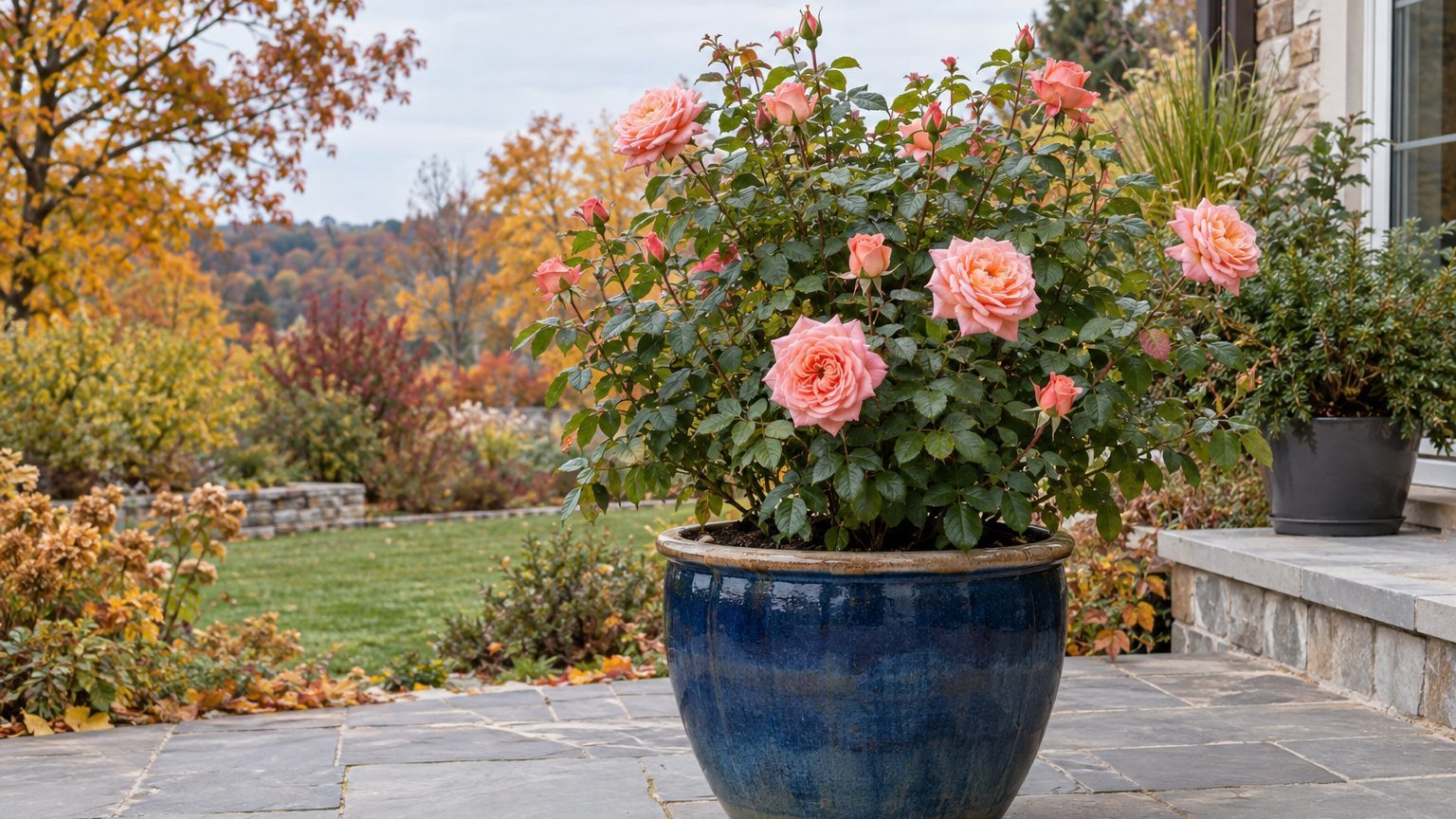
A rose in a container sits close enough to the back door to check on every morning, and it asks for things a bed rose does not: a roomy pot, a mix that drains, and water on a steadier schedule. Growing roses in pots comes down to the container, the soil and the watering, along with a plan for winter.
Can You Grow Roses in Pots?
Yes, roses in pots do well across the country, as long as the container is big enough and drains freely. What changes from place to place is mostly the winter. Where freezes are hard, a potted rose needs protection that a rose in the ground gets from the soil around it.
The type of rose matters too. Compact roses such as miniatures work well in pots, while taller shrubs and climbers need larger containers. Repeat-blooming roses flower on new wood, and once-blooming roses flower on last year’s wood, which changes how you prune them.
The state selector just below this section leads to the page for your state, where the local timing is laid out.
From the almanac
Roses in your state
The dates on this page depend on where you live. Your state's page carries its frost dates, its USDA zones and the year laid out month by month.
Northeast
Southeast
- Alabama
- Arkansas
- Delaware
- Florida
- Georgia
- Kentucky
- Louisiana
- Maryland
- Mississippi
- North Carolina
- South Carolina
- Tennessee
- Virginia
- West Virginia
Midwest
Southwest
West
Pacific Northwest
Canada
How to Grow Roses in Containers

Start with the pot and work upward, because the container is hard to change once the rose is planted.
- Choose a pot at least 18 inches across, the minimum West Virginia growers are advised to use, so the roots have room to spread instead of crowding the sides.
- Check the depth as well, since the same West Virginia advice calls for 24 inches, which gives the roots space to grow down.
- Drill drainage holes if the pot has none. For a barrel-size container in Washington, drill five 3/8-inch holes in the side very near the bottom so water can drain.
- Fill the pot with a loam-based mix and work in compost or well-rotted manure, so the mix holds moisture and still carries nutrients to the roots.
- Loosen the roots before planting. In Illinois, extension advice warns that a rose bought late in the season may have roots that have filled the pot and tangled, and untangling them keeps them from circling forever.
- Water deeply after planting and keep up with it. In Arizona, container roses are watered as often as once a day in warm temperatures, because a pot dries out far faster than a bed.
In New Mexico, potted roses can go in throughout the growing season. In New Mexico, extension advice adds that these plants need special attention to get through the first summer, which usually means checking the soil moisture often rather than trusting the last watering.
Container Roses by Rose Type
Size is the first thing that separates one container rose from another. A compact plant can fit a smaller pot than a large shrub or climber.
Winter handling follows from the type as well, since small plants in pots lose the insulation that soil would give them.
| Rose Type | What changes | Why it matters |
|---|---|---|
| Miniature | Smaller bush, foliage and blooms, from 10 to 24 inches tall | Fits a compact pot, and in Arkansas it can stay outside all winter with a little extra protection |
| Larger miniature and patio | A full cubic foot of soil is better (Kentucky) | A bigger plant needs more root room to stay steady between waterings |
Hybrid tea, shrub, climbing, old garden and rugosa roses all grow in containers too, but they reach larger sizes, so they need the roomier pots described above. Check the mature size on the plant tag before choosing a container. Once-blooming types such as many old garden roses carry their flowers on last year’s wood, so heavy cutting back takes away the next bloom.
Container Rose Mistakes to Avoid
Pot Too Small

A cramped pot gives the roots little room, and the soil dries out quickly, so the rose struggles between waterings. In Washington, an appropriate container size is 22 inches wide by 16 inches high. Move up to a larger pot rather than waiting for the rose to decline.
Roots Left Circling

In Illinois, a rose bought late in the season may have roots that fill the nursery pot and tangle. In Illinois, extension advice notes that roots left this way may keep growing in circles and never spread out. Loosen them with your fingers at planting so they head outward into the new mix.
Bare Pots in Winter
Soil in a pot freezes through from the sides, which roots in the ground rarely face. In Pennsylvania, extension advice is to wrap the whole container, along with several inches above the rim, in multiple layers of big-bubble wrap. Do it once the plant is dormant and before the ground freezes. In Iowa, a storage area for a potted rose should hold steady in the 30s and lower 40s°F.
Container Roses in Your State
The sign to act on is the rose itself. In Pennsylvania, protect a potted rose once it is dormant and before the ground freezes.
- The page for your state gives the months for potting up and planting, so check it before you buy a pot or mix.
- The same page covers the months for winter protection, so read it before the first hard freeze and gather your wrap or storage space early.
Common Questions
Do You Fertilize a Potted Rose in Winter?
In Iowa, the advice for a miniature rose overwintered in a pot is a dilute fertilizer solution every 2 to 4 weeks through the fall and winter months. Keep it dilute, since the plant is growing slowly in those months.
Can You Leave a Miniature Rose Outside in Winter?
In Arkansas, extension advice says a miniature rose should do fine outside all winter as long as you give it a little extra protection. In colder states, plan for more protection than that.
Can You Bury a Potted Rose for Winter?
In Iowa, the method is to dig a hole, set the pot in and cover the canes with soil. The soil should reach 6 to 8 inches over the rose canes. Add the soil after the plant has gone dormant.