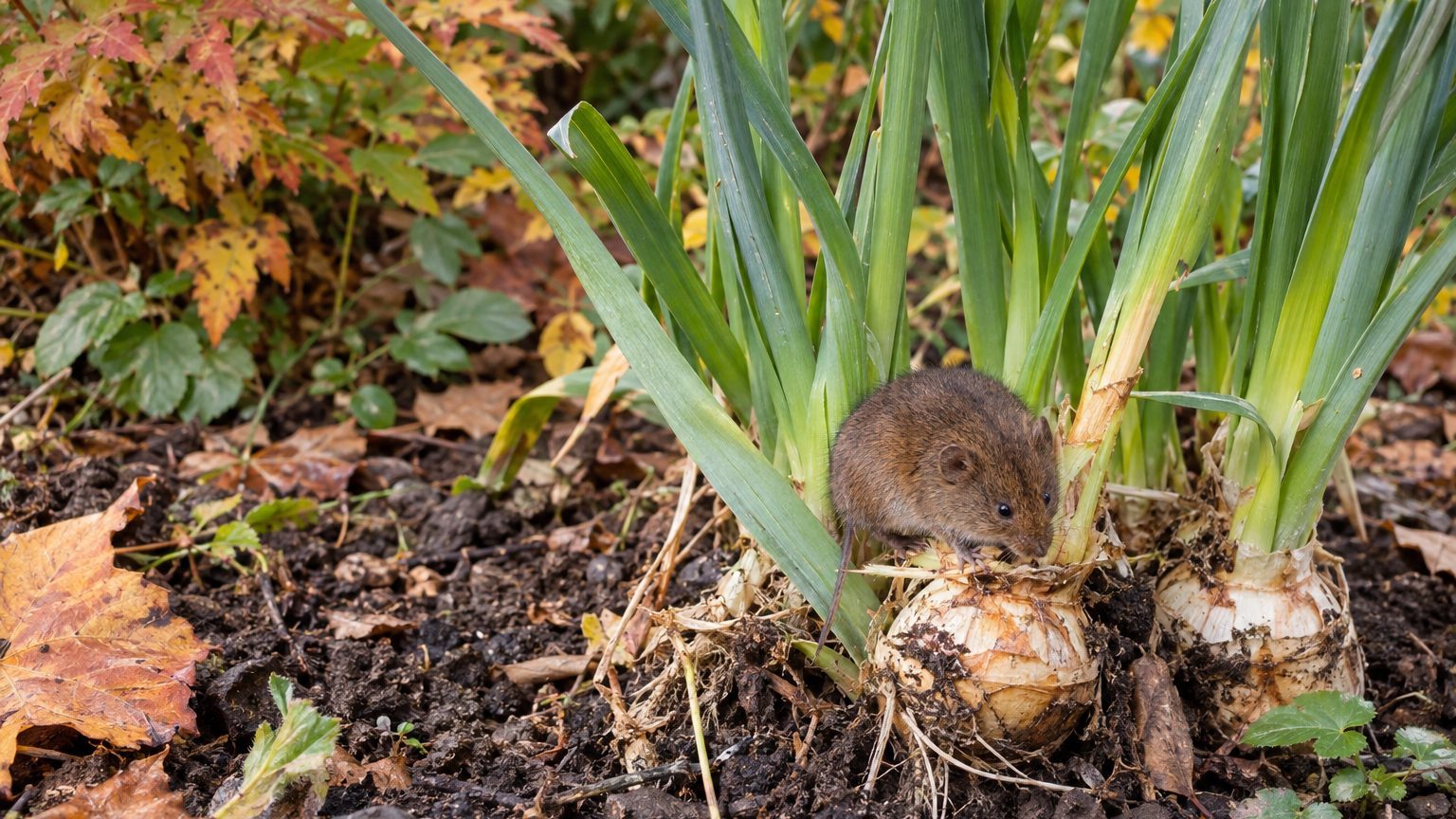
Scattered bulbs on top of the soil, or a row of small empty holes where you planted last week, usually mean a squirrel has been through the bed. Tulips and crocuses are the usual targets, and the damage tends to show up soon after planting in the fall. A few simple barriers protect them.
Squirrels: What You See
Squirrels leave a pattern in the bed, and the clues are easy to read once you know where to look.
- Bulbs lie loose on the surface of the soil or across the lawn nearby, often with the papery skins torn off.
- Small, shallow holes appear in freshly planted ground, usually in the days after the bed was dug.
- Tulip bulbs and crocus corms go missing, leaving gaps in a planting that should be filling in.
- Soil is kicked out onto the path or the edge of the bed, as if something was digging in a hurry.
- Daffodil bulbs stay where you put them, even when the bulbs beside them have been dug up.
That last sign matters, because a bed with only daffodils left intact points to a digger that knows what it likes.
From the almanac
Bulbs in your state
The dates on this page depend on where you live. Your state's page carries its frost dates, its USDA zones and the year laid out month by month.
Northeast
Southeast
- Alabama
- Arkansas
- Delaware
- Florida
- Georgia
- Kentucky
- Louisiana
- Maryland
- Mississippi
- North Carolina
- South Carolina
- Tennessee
- Virginia
- West Virginia
Midwest
Southwest
West
Pacific Northwest
Canada
Squirrels or Something Else?
Other animals take bulbs too, and the fix differs. The difference is in what remains: a squirrel works from the top down and leaves a mess of soil, while others leave the surface tidy or chew the plant rather than the bulb.
| Looks like | How to tell them apart |
|---|---|
| Voles or mice | Bulbs vanish without a crater on top, and you may find narrow tunnels in the soil or lawn edge, where a squirrel would leave open holes and loose soil. |
| Rabbits or deer | Leaves and shoots are nibbled off cleanly in spring, but the bulb is still in the ground when you lift a clump to look. |
| Dogs or other diggers | Holes are wide and deep and cut across several plantings, rather than small and scattered near newly turned soil. |
Chipmunks can also take bulbs and leave small holes, so a quick look at the hole size and whether bulbs are lying on top helps settle it.
What Causes Squirrels, and Where It Is Worst
Squirrels watch people plant. Freshly dug earth works like an X marking the spot, and a bulb is an easy meal buried just under it. The soil you turned over to plant is exactly what draws them in.
Nothing about this is limited to one climate or soil type. A Colorado gardener describes finding newly planted bulbs scattered around the yard after a night of rodent feasting, and in Nebraska tree squirrels are known to dig up bulbs and seeds, bury nuts in turf and landscaped beds, and chew on spring potted plants. Wherever tree squirrels live near your yard, the bed is at risk.
The risk is highest right after planting, when the soil is loose and the scent is fresh. Beds close to trees, fences or feeders get more visits, since that is where squirrels already travel.
How to Treat Squirrels
The most dependable fix is a physical barrier set in place as you plant, and the order of the steps matters because the wire has to go under the bulbs and over them.
- Dig a trench slightly deeper than the planting depth you want, so that the wire at the bottom sits below the bulbs.
- Lay poultry wire along the bottom of the trench so squirrels can’t tunnel up from underneath.
- Add soil and set the bulbs at their usual depth, so they grow normally above the lower wire.
- Lay another strip of poultry wire over the planting, so that the bulbs are completely encased.
- Finish by covering the wire with dirt, so that the bed looks untouched and gives squirrels nothing to notice.
Fallen leaves also work as a cover. Spread a generous layer over the planting area, lay a square of burlap on top, and pin it down with landscape staples driven in with a mallet or hammer. In Colorado, a wrap of 1″ wire mesh is used around tulips and other bulbs. Contact your state’s cooperative extension office for what is approved where you live before using any repellent or trap.
How to Prevent Squirrels Coming Back
Prevention follows the gardening year, with most of the effort at planting time and little afterward.
- In fall, as soon as the bulbs are in, smooth the soil and cover it the same day, so squirrels never see bare, freshly dug earth.
- After planting, put the leaf and burlap cover over the bed, since leaves insulate the soil and hide the spot.
- In the first winter, check that the staples and wire edges are still holding after wind and rain.
- In spring, leave the foliage alone as it grows and fades, because the leaves feed the bulb for next year.
- Through the seasons, keep bird feeders away from bulb beds, since squirrels raid them and then keep returning to the area.
Fall is the key moment, because once the first season passes, the bulbs are less of a target.
Where This Comes From
The advice here draws on university extension and government pages written for gardeners in states such as Colorado and Nebraska. Rules and approved methods vary by state, so check with your state’s cooperative extension service before relying on any single approach.
Common Questions
Do Squirrels Eat Daffodil Bulbs?
Rarely. Daffodil bulbs are poisonous to squirrels and generally remain untouched, which makes them a safe pick for beds that get raided every year.
Can You Use Chicken Wire Over a Bulb Bed?
Yes. Cover the bed with chicken wire and bury it under soil. Extend the wire beyond the edge of the flower bed so squirrels can’t dig around it.
Do Squirrels Damage Anything Besides Bulbs?
They do. Squirrels strip bark from trees, usually in winter and spring, and clip twigs most often in spring and early fall. They also raid bird feeders and sometimes destroy them to reach the food.
Do You Have to Cover Bulbs Every Year?
Not for the long-lived kinds. Daffodils, muscari and crocus come back each year without being dug up, so the cover is only needed the year they are first planted.