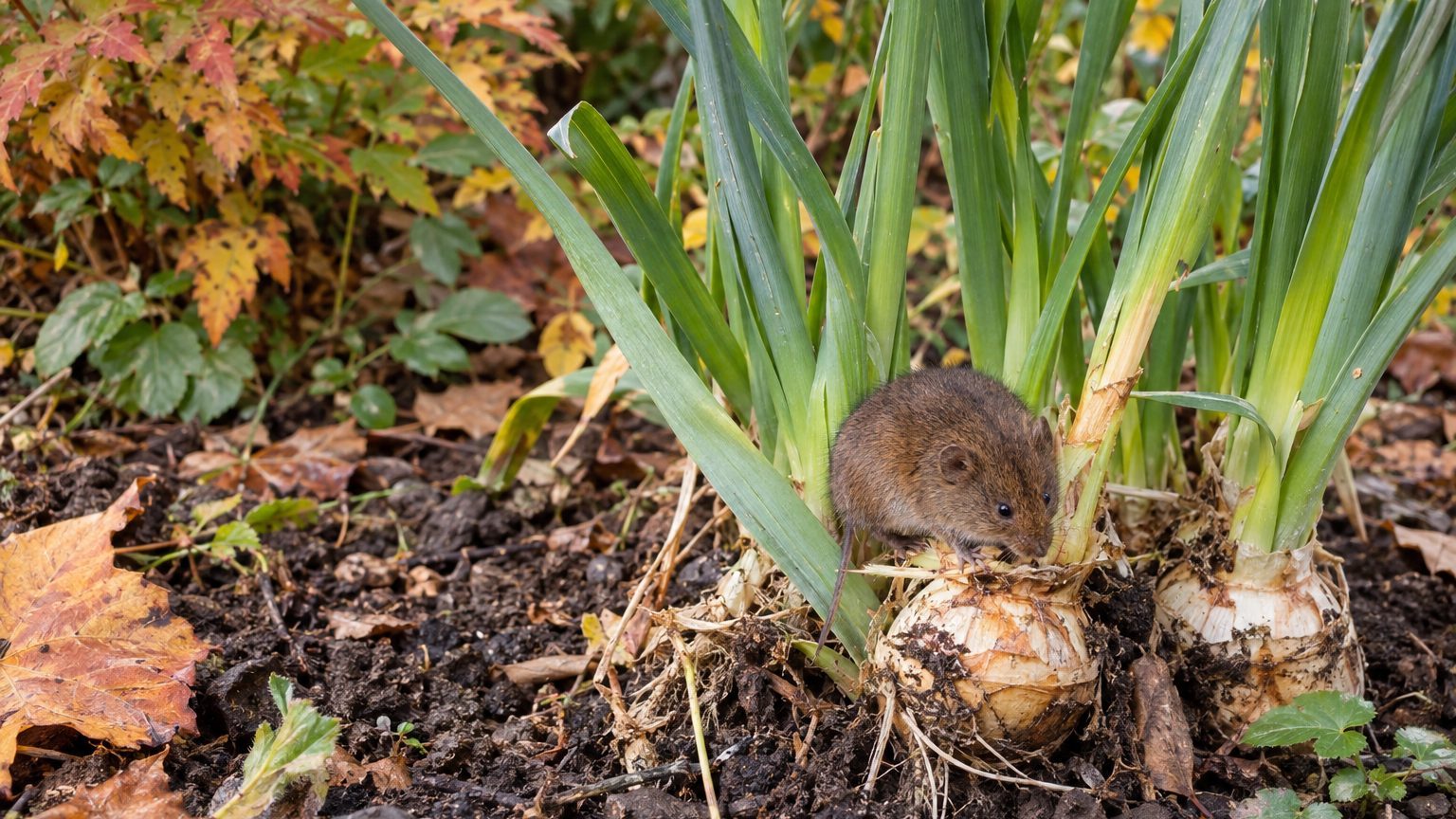
Tulip shoots that look clipped off overnight, with the stems left standing and the buds gone, usually point to a rabbit feeding in the yard. Spring bulb beds draw them because the young growth is tender. The answer is to confirm the signs first, then cover some of the areas with chicken wire when planting.
Rabbits: What You See
Rabbit damage shows up on the plant and on the ground around it, and the cut on the stem is the clearest sign.
- Stems about the size of a pencil are nipped off cleanly at a 45-degree angle, with no ragged or torn edge.
- Young, growing tulip shoots are eaten in spring, often alongside clover and other tender plants growing nearby.
- Pea-sized individual pellets, the droppings, lie scattered on the soil or mulch around the bed.
- Gnaw marks sit irregularly on the trunks of trees and shrubs a few inches aboveground, and sometimes on exposed roots.
- Each cottontail incisor mark is about 1/4 to 3/8 inches wide.
Seeing the angled cut together with the pellets is what lets you name the culprit with confidence.
From the almanac
Bulbs in your state
The dates on this page depend on where you live. Your state's page carries its frost dates, its USDA zones and the year laid out month by month.
Northeast
Southeast
- Alabama
- Arkansas
- Delaware
- Florida
- Georgia
- Kentucky
- Louisiana
- Maryland
- Mississippi
- North Carolina
- South Carolina
- Tennessee
- Virginia
- West Virginia
Midwest
Southwest
West
Pacific Northwest
Canada
Rabbits or Something Else?
Deer and squirrels also go after spring bulbs, and the damage can look similar from a distance. Check the cut on the stem and the state of the soil before you decide.
A close look at one damaged stem and the ground around it usually settles the question.
| Looks like | How to tell them apart |
|---|---|
| Deer browsing | The stem is torn with a jagged edge, and this holds on stems pencil-sized or larger, where a rabbit leaves a clean angled cut. |
| Squirrels digging | Bulbs are dug up and missing, with holes in the soil, whereas rabbits nip the shoots above ground and leave pea-sized pellets. |
Squirrels and rabbits respond to the same kind of protection, so a bed fenced against one often helps against the other.
What Causes Rabbits, and Where It Is Worst
Rabbits come to the bed because spring offers them soft, fresh food. In Nebraska, rabbits prefer young, growing vegetation in spring, including tulips. A yard with all of those side by side is an easy meal.
Nothing in the sourced material ties the problem to one region, so treat it as a risk anywhere cottontails live near a lawn or garden. The beds with the most tender new growth and the least protection take the damage first.
How to Treat Rabbits
Work from the barrier outward, starting with the plants most often eaten.
- Confirm the culprit by checking for angled stem cuts and pea-sized pellets, so that you protect against rabbits and not against the wrong animal.
- Cage the tulips in hardware cloth if they have been eaten before, so that the shoots cannot be reached.
- Plant tulips in clusters, so that one cage can cover a whole group instead of single bulbs.
- Lay chicken wire over the planting area, so that rabbits and squirrels cannot dig the bulbs up.
- Sprinkle red pepper around the plants as a deterrent, and repeat the application after every rainfall, since rain washes it away.
For anything stronger, such as repellents or other controls, your state’s cooperative extension service can tell you what is approved where you live.
How to Prevent Rabbits Coming Back
Prevention starts at planting and carries through the growing season, so the timing matters more than any single product.
- At planting time, cover some of the areas with chicken wire so that rabbits and squirrels cannot dig up the bulbs.
- When planting, set tulips in clusters, which makes it easy to cage them later with hardware cloth.
- When choosing bulbs, look for varieties sold as deer and rabbit resistant, which also attract pollinators and butterflies.
- In spring, as the young shoots push up, keep the cages in place and renew any pepper deterrent after each rainfall.
Leave the foliage alone until it turns yellow.
Where This Comes From
The signs and steps here draw on university extension guidance for spring bulbs and wildlife. Rules and approved controls differ by state, so confirm the details with your state’s cooperative extension service before you buy or apply anything.
Common Questions
Do Rabbits Eat Daffodils?
The sourced guidance does not say that daffodils are or are not eaten. It does say that some bulb selections include varieties that are deer and rabbit resistant, so check the label when you buy.
Will Chicken Wire Stop Rabbits from Digging Up Bulbs?
Covering part of the planting area with chicken wire at planting time helps keep rabbits and squirrels from digging bulbs up. Hardware cloth cages protect tulips that have been eaten before.
Does Red Pepper Keep Rabbits Away from Bulbs?
It sometimes deters squirrels and rabbits, but it does not last. Reapply it after every rainfall, and pair it with a physical barrier for better results.