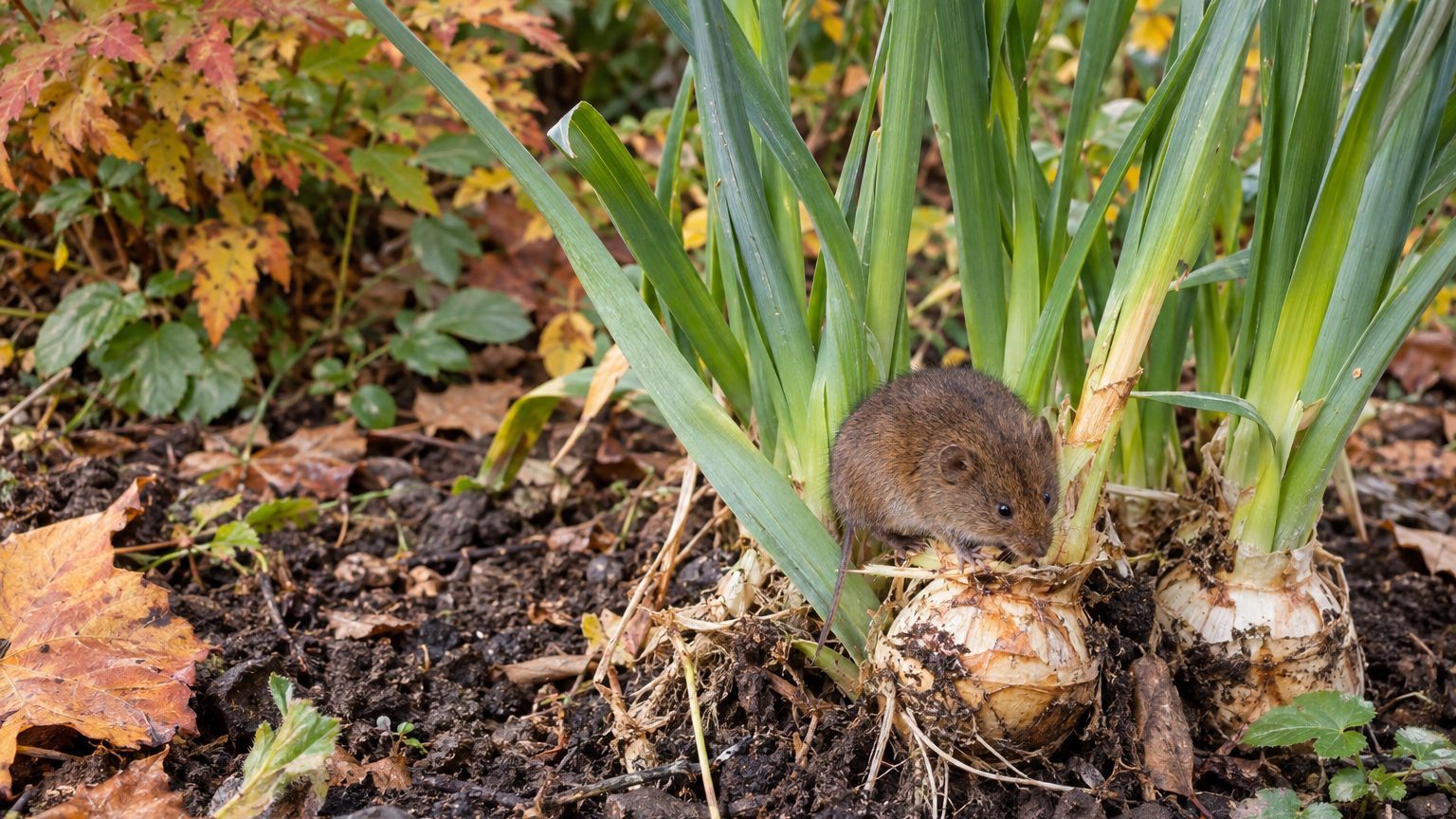
Fan-shaped mounds of loose soil showing up in a bed of tulips, along with shoots that vanish overnight, point to a pocket gopher at work beneath the surface. Spring and fall bring the most digging. The animal is after bulbs and roots, so a planted bed makes an easy meal, and the steps for your yard stop the loss and keep it from happening again.
Gophers: What You See
The clearest sign is the mound, and the rest of the evidence follows from it.
- Mounds are flatter on top and fan-shaped, with the hole sitting off to one side instead of in the middle.
- The hole is plugged with dirt, which marks the tunnel entrance and exit.
- Tulip stems and those of other plants are severed below ground, and sometimes the entire plant gets pulled down into the burrow.
- Bulbs and roots go missing from the bed, since gophers favor them.
- New mounds appear in quick succession, one to three a day, which can add up to as many as 70 in a month.
The animal itself is about the size of a ground squirrel, though you will rarely see it, because it stays in its tunnels.
From the almanac
Bulbs in your state
The dates on this page depend on where you live. Your state's page carries its frost dates, its USDA zones and the year laid out month by month.
Northeast
Southeast
- Alabama
- Arkansas
- Delaware
- Florida
- Georgia
- Kentucky
- Louisiana
- Maryland
- Mississippi
- North Carolina
- South Carolina
- Tennessee
- Virginia
- West Virginia
Midwest
Southwest
West
Pacific Northwest
Canada
Gophers or Something Else?
Other tunneling animals leave soil piles too, and bulbs disappear for more than one reason. Treating the wrong culprit wastes a season, so match the mound shape with a second clue before you act.
A trap set in the wrong tunnel catches nothing, and the damage keeps going.
| Looks like | How to tell them apart |
|---|---|
| Mole mounds | Moles leave round, volcano-like piles, while gopher mounds are flatter and fan-shaped with the hole off to the side. |
| Missing daffodil or onion-family bulbs | Gophers leave daffodils and onion relatives alone, so losses there point to another animal, while missing tulips fit gophers. |
| Plants cut off at the soil line | Gophers do their damage underground, cutting stems and dragging plants into the burrow, often right beside a plugged hole. |
Moles also turn up in beds, and the same barrier ideas apply to both animals.
What Causes Gophers, and Where It Is Worst
Pocket gophers dig for roots and bulbs. During warmer months they frequently eat whatever they meet while tunneling, then pull more of the plant down into the tunnel and eat that too. A bed of tulips gives them roots, bulbs and tender stems in one place.
Tunneling can happen at nearly any time of year. In Iowa, spring and fall are the prime seasons.
One animal can dig a long network, up to 200 yards of tunnels in Iowa. Females there reach breeding age at the end of their first year and give birth to a litter of 3-4 young (sometimes up to ten) from April-June. A small problem in one season can turn into a larger one the next.
How to Treat Gophers
Work in this order, and check with your state’s extension service about which controls are allowed where you live.
- Find the fresh mounds and the plugged holes, so that you know where the active tunnels run before you do anything else.
- Cultivate the area, because turning the soil destroys burrows and forces the animal to rebuild or leave.
- Set two-pronged pincher traps in the active tunnels, since they are effective against gophers when placed where the animal travels.
- Mow or trim the surrounding area to remove the plants gophers find attractive, so that the bed is less appealing.
- Line the bed with gopher mesh, so that the roots and bulbs sit out of reach.
- Check the bed regularly for new mounds, so that any returning animal is caught early.
Rebuilding a tunnel takes the animal time, which is why fresh mounds after cultivating tell you the burrow is still in use.
How to Prevent Gophers Coming Back
Prevention works best when it follows the calendar, because spring and fall bring the most tunneling.
- Line the bed with gopher mesh so the bulbs go into protected ground.
- At planting time, choose daffodils and onion-family bulbs for exposed spots, since gophers do not eat them, while tulips go inside the lined area.
- In spring, keep the area around the bed mowed or trimmed so that plants attractive to gophers do not build up.
- In raised beds, put welded-wire barriers on the bottom, which keep moles and gophers from coming up from underneath.
- In fall, cultivate the surrounding ground to destroy any burrows that formed over the season.
Where This Comes From
The details here come from university extension and government pages on gophers and spring bulbs, and the timing figures were written for Iowa. Your state’s extension service can confirm what works and what is allowed in your area.
Common Questions
Do Gophers Eat Daffodils?
No. Daffodils and members of the onion family are safe from them, while tulips are on the menu.
Can Gophers Pull a Whole Plant Underground?
Yes. They cut stems below ground and pull the plant into the burrow, so a plant can disappear and leave nothing behind on the surface.
Will Mowing Alone Keep Gophers Away from a Bulb Bed?
Mowing removes plants that attract them, which helps. It works best alongside mesh under the bed and trapping where tunnels are active.