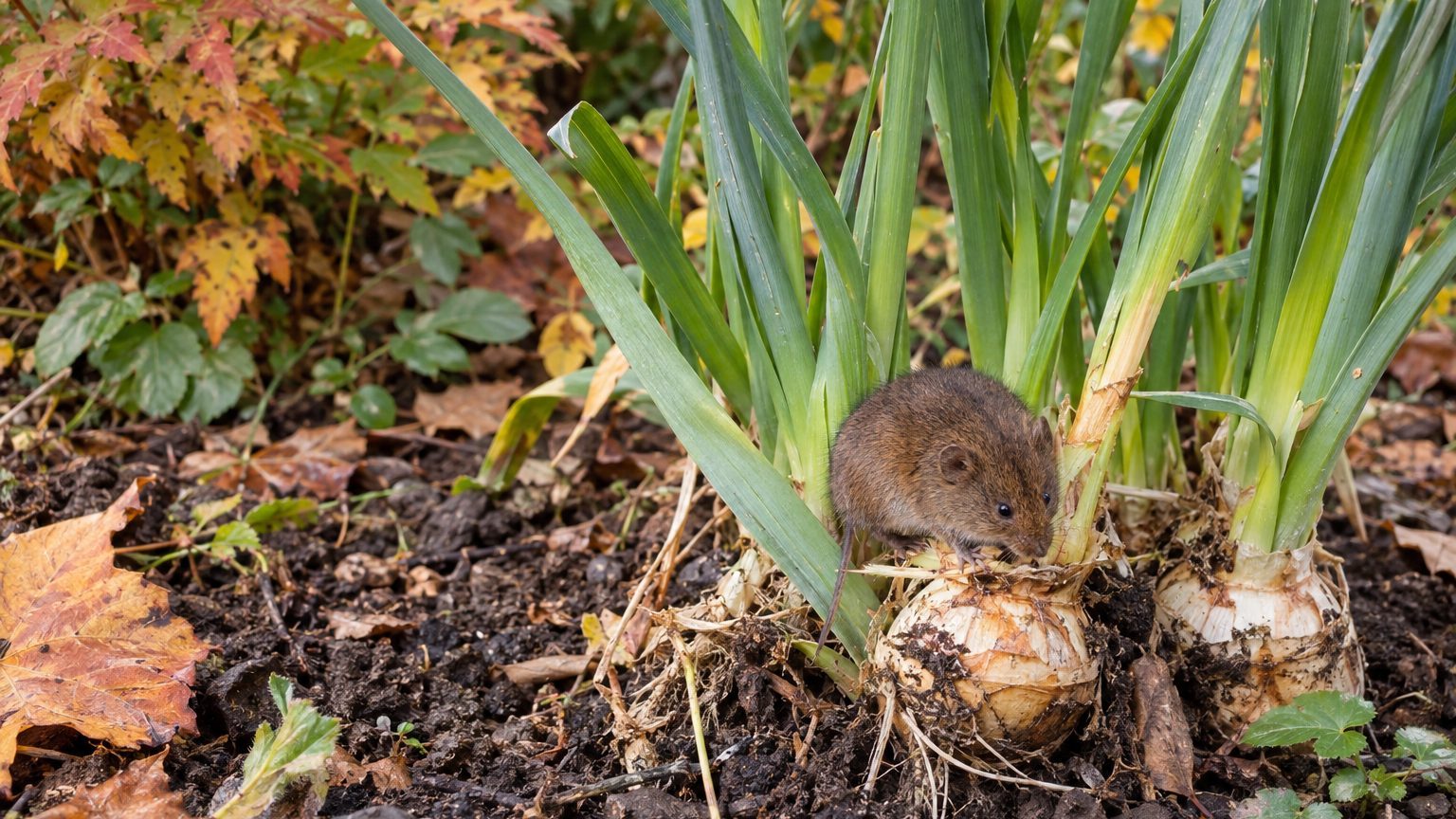
Tulip bulbs planted in fall can vanish from a bed by spring, leaving small holes and loose soil where the shoots should be. Chipmunks are a common cause, since they dig up and eat spring bulbs. Telling their work from other diggers and protecting the bed comes down to a few steady habits.
Chipmunks: What You See
Chipmunks are easiest to recognize by the animal itself, and then by what it leaves in the bed.
- A small, quick rodent with pale stripes down its back, far smaller than a tree squirrel, often darting along walls, steps and shrubs.
- Small holes in the planting bed, with loose, freshly turned soil around them.
- Bulbs gone altogether, sometimes with scraps of papery skin left on the surface.
- Freshly planted tulips as the main target, so the damage often shows up as shoots that never appear in spring.
- Cheeks puffed out with food as the animal runs off, since chipmunks carry what they dig up.
- More activity once they leave hibernation in early March.
One sighting is not proof, but a striped visitor near a bed with missing bulbs makes a strong case.
From the almanac
Bulbs in your state
The dates on this page depend on where you live. Your state's page carries its frost dates, its USDA zones and the year laid out month by month.
Northeast
Southeast
- Alabama
- Arkansas
- Delaware
- Florida
- Georgia
- Kentucky
- Louisiana
- Maryland
- Mississippi
- North Carolina
- South Carolina
- Tennessee
- Virginia
- West Virginia
Midwest
Southwest
West
Pacific Northwest
Canada
Chipmunks or Something Else?
Several animals dig in bulb beds, and the fix differs a little for each. Look at the animal’s size and at the shape of the damage together before you decide.
| Looks like | How to tell them apart |
|---|---|
| Tree squirrels: bulbs dug up and eaten, soil scattered | Squirrels are larger, gray or brown with no back stripes, and often disturb mulch and pots as well as the bed. |
| Voles: freshly planted tulips devoured | Voles work out of sight, so you find bulbs gone with few open holes, and the animal itself is rarely seen in daylight. |
Deer also eat tulips, but they take the foliage and buds above ground and leave ragged, torn stems at browsing height. Chipmunks go for the bulb below ground, so a dug hole points to them rather than to deer.
What Causes Chipmunks, and Where It Is Worst
Food and shelter bring chipmunks in. Shrubbery, flower beds and gardens give them cover, and they eat nuts, seeds, grain, fruits, fungi, insects, roots, leaves and bird eggs along with bulbs. Spilled bird seed and pet food kept in containers that are not rodent-proof add to the draw.
Bulbs themselves send a signal. The scent of bulbs, or even the disturbed soil from planting, can attract diggers. That is why a bed that was untouched for years can suddenly lose bulbs after a new planting.
No single region owns the problem. Wherever chipmunks live, as in Pennsylvania and Indiana, where they are known to eat bulbs, seeds and seedlings, yards with shrubs, walls and feeders are the likeliest to be visited. Tulips planted in fall take the brunt.
How to Treat Chipmunks
Start with the bulbs that are already in the ground, then work toward barriers and repellents.
- Replant any dug-up bulbs at the proper depth, 6-8 inches for tulips, and water them in, so that the settled soil discourages further digging.
- Lay quarter-inch hardware cloth over the bed and cover the cloth with soil, so that the animals cannot reach the bulbs and the metal stays out of sight.
- Extend the cloth at least 1 foot past each margin of the planting, so that chipmunks cannot dig in from the edge.
- Build cages from ½-inch galvanized hardware cloth for new plantings, set the bulbs inside root end down, and bury the whole cage at planting depth, which keeps rodents from getting to them when done properly.
- Place a wire cloche over a small planting, since a cover is simpler than a buried cage for a few bulbs.
- Apply a taste repellent to the soil at the planting site only as a backup, and reapply it after every rain, because multiple applications are needed to keep it working.
Repellent products and what is approved for use vary by state, so your state’s cooperative extension service is the place to confirm what is allowed where you live.
How to Prevent Chipmunks Coming Back
Prevention follows the year, starting with how you plant in fall and ending with how you store food through spring.
- In fall, as you plant, mix tulips in among daffodils, which squirrels find less attractive, a trick that works in Vermont and is worth trying elsewhere.
- Right after planting, spread a layer of mulch over the bed, which in Vermont helps disguise the scent of the bulbs and keeps soil moisture and temperature more even.
- Through winter, check that the soil still covers any hardware cloth, since exposed edges give chipmunks something to push under.
- Before chipmunks emerge in early March, move bird seed and pet food into rodent-proof containers.
- Through spring and summer, sweep up spilled seed under feeders so the yard stops advertising a free meal.
Thinning the cover near the bed, such as dense shrubbery or woodpiles, also takes away shelter that makes a yard attractive.
Where This Comes From
These notes draw on university extension and government pages written for Pennsylvania, Indiana, Kansas and Vermont, along with general guidance on chipmunks and bulbs.
Rules on repellents and trapping differ from state to state, so confirm them with your state’s extension service.
Common Questions
Do Chipmunks Eat Crocus Bulbs?
They do, though less often than tulips. Freshly planted tulips are the usual favorite, and crocus is taken to a lesser extent, so a crocus bed near a tulip planting still deserves the same protection.
Do Chipmunks Eat Anything Besides Bulbs?
Yes. They also take seeds, seedlings, garden fruits, insects and bird eggs. In Indiana they are noted for attacking garden fruits as well as digging up bulbs and seeds, so damage elsewhere in the yard is a clue to the same visitor.
Can Chipmunks Get Through Hardware Cloth?
Not when the cloth is set up properly. Caged or covered bulbs stay out of reach, but gaps at the edge or cloth left uncovered by soil give them a way in, so check the margins of the bed.