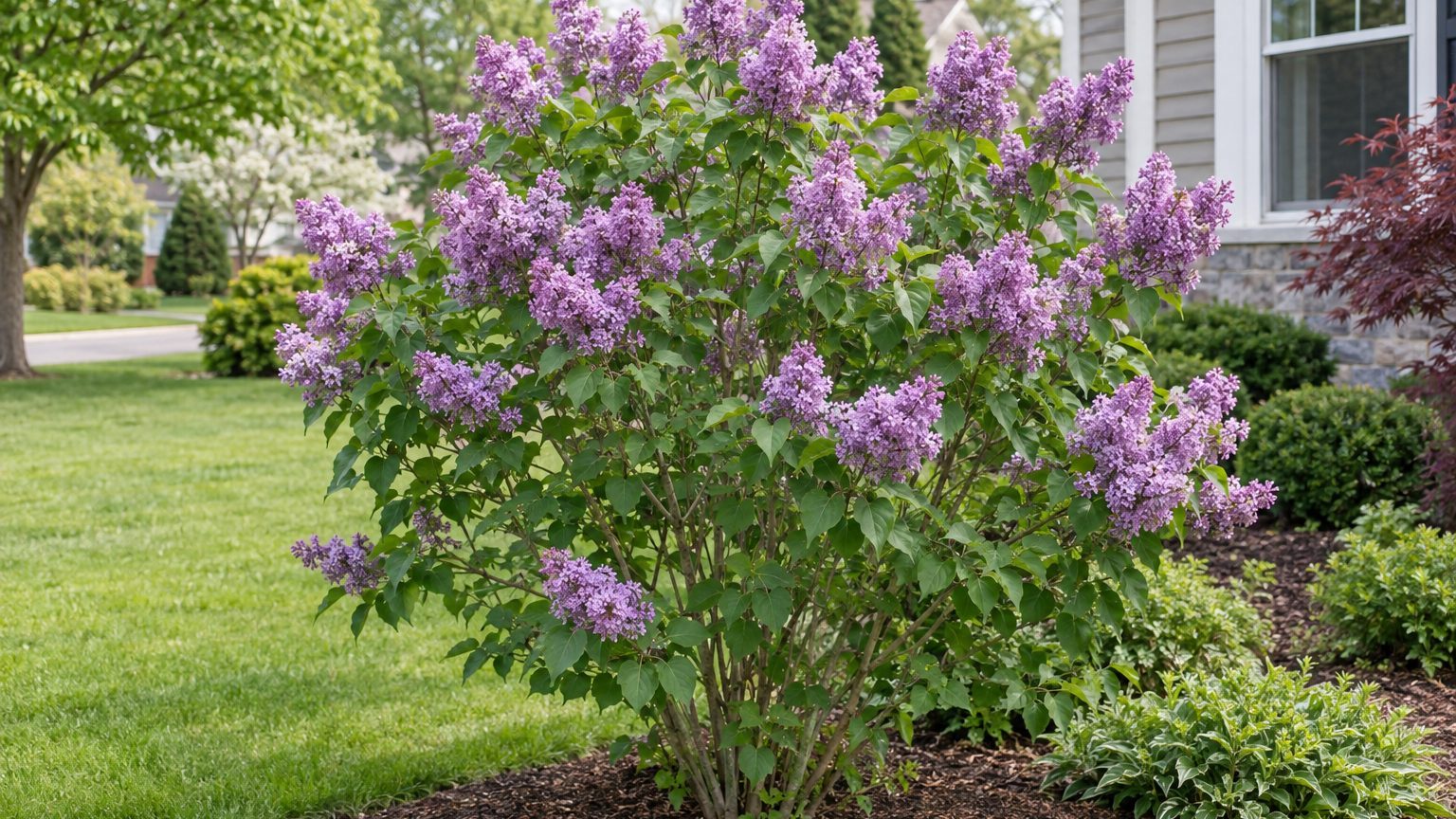
A lilac that stays small enough to tuck beside a front step, yet still fills the yard with scent in late spring, solves a problem many homeowners have. Tinker Belle is that kind of shrub.
What Is the Tinker Belle Lilac?
Tinker Belle was the first introduction in the Fairytale series of lilacs. Its growth habit and bloom time resemble the Dwarf Korean lilac, one of its parents. Its compact growth suits a small yard.
The flowers are wine-red in bud and open to pale pink in fragrant clusters. The scent is described as pleasing and spicy.
A mature shrub reaches about 5 ft. tall and 5 ft. wide, and it grows at a moderate pace. That makes it a fit for foundation beds, mixed borders and spots where a full-size lilac would crowd a window or walkway.
From the almanac
Lilacs in your state
The dates on this page depend on where you live. Your state's page carries its frost dates, its USDA zones and the year laid out month by month.
Northeast
Southeast
- Alabama
- Arkansas
- Delaware
- Florida
- Georgia
- Kentucky
- Louisiana
- Maryland
- Mississippi
- North Carolina
- South Carolina
- Tennessee
- Virginia
- West Virginia
Midwest
Southwest
West
Pacific Northwest
Canada
Where Does the Tinker Belle Lilac Grow Best?
This lilac is rated for zones 3-7. Within that range, the regions differ in what to watch for.
- Upper Midwest: The Fairytale lilacs are hardy to zone 3 and overwinter easily in Iowa, so hard winters are no obstacle.
- Intermountain West: The shrub prefers full sun and alkaline soil and has low water use.
- Northeast and Ohio Valley: Pick a spot with well-drained soil so the roots are not left sitting in spring wet.
- Gulf Coast and Deep South: Locations outside zones 3-7 fall outside its stated range. Expect a struggle in that heat and humidity.
The state selector just below this section takes you to the page for your own state, where the timing is laid out for where you live.
How to Care for the Tinker Belle Lilac Through the Year
Bloom

Flowers open in May-June, and pollinators visit them. Plant the shrub where you will pass it often, near a patio or entry, because the spicy fragrance is the reward for putting it close to where people gather.
Pruning After Bloom
Some pruning is necessary.
Shape the shrub lightly and take out dead or crossing stems. A compact lilac needs far less cutting than a large one, so avoid chopping it back hard.
Summer
Water use is low, so this is the easy season. The shrub prefers full sun.
The plant prefers well-drained soil.
Fall
This lilac prefers alkaline soil.
A layer of mulch over the root zone, kept off the stems, holds moisture and evens out soil temperature.
Winter
Tinker Belle needs little help in winter. It is hardy to zone 3.
Tinker Belle Lilac Diseases and Weak Points
This is a forgiving shrub. It is resistant to diseases and pests, and it also tolerates urban conditions.
Its weak points are mostly about placement. Wet feet and deep shade work against a plant that wants sun and good drainage.
| Threat | How Tinker Belle handles it |
|---|---|
| Common lilac diseases | Resistant |
| Insect pests | Resistant |
| City conditions | Tolerates urban settings |
| Heavy, soggy soil | Prefers well-drained soil |
| Shade | Prefers full sun |
Acidic soil is another thing to watch, since the shrub favors alkaline ground. Because the shrub favors alkaline, well-drained soil and full sun, check those conditions if growth is sluggish.
Is the Tinker Belle Lilac Right for Your Yard?
It suits a sunny spot with drained soil, a small footprint and a gardener who wants fragrance without much upkeep. It suits less well a deeply shaded bed.
- Choose it for a front yard, foundation planting or border where a smaller lilac fits; some pruning will be necessary.
- Skip it if your area is warmer than zone 7 or your only open spot gets little sun.
- Open your state’s page from the selector above to see the months that apply where you live, then pick a sunny, well-drained spot before you buy.
Common Questions
How Fast Does a Tinker Belle Lilac Grow?
Growth is moderate, so the shrub does not race past its space.
Does a Tinker Belle Lilac Attract Pollinators?
Yes. Pollinators visit the fragrant flowers during the May-June bloom.
Can You Plant Tinker Belle Lilacs as a Low Hedge?
Its compact habit can suit a row along a path. Check the plant tag for the mature width, then space the shrubs so air can move between them as they fill in.