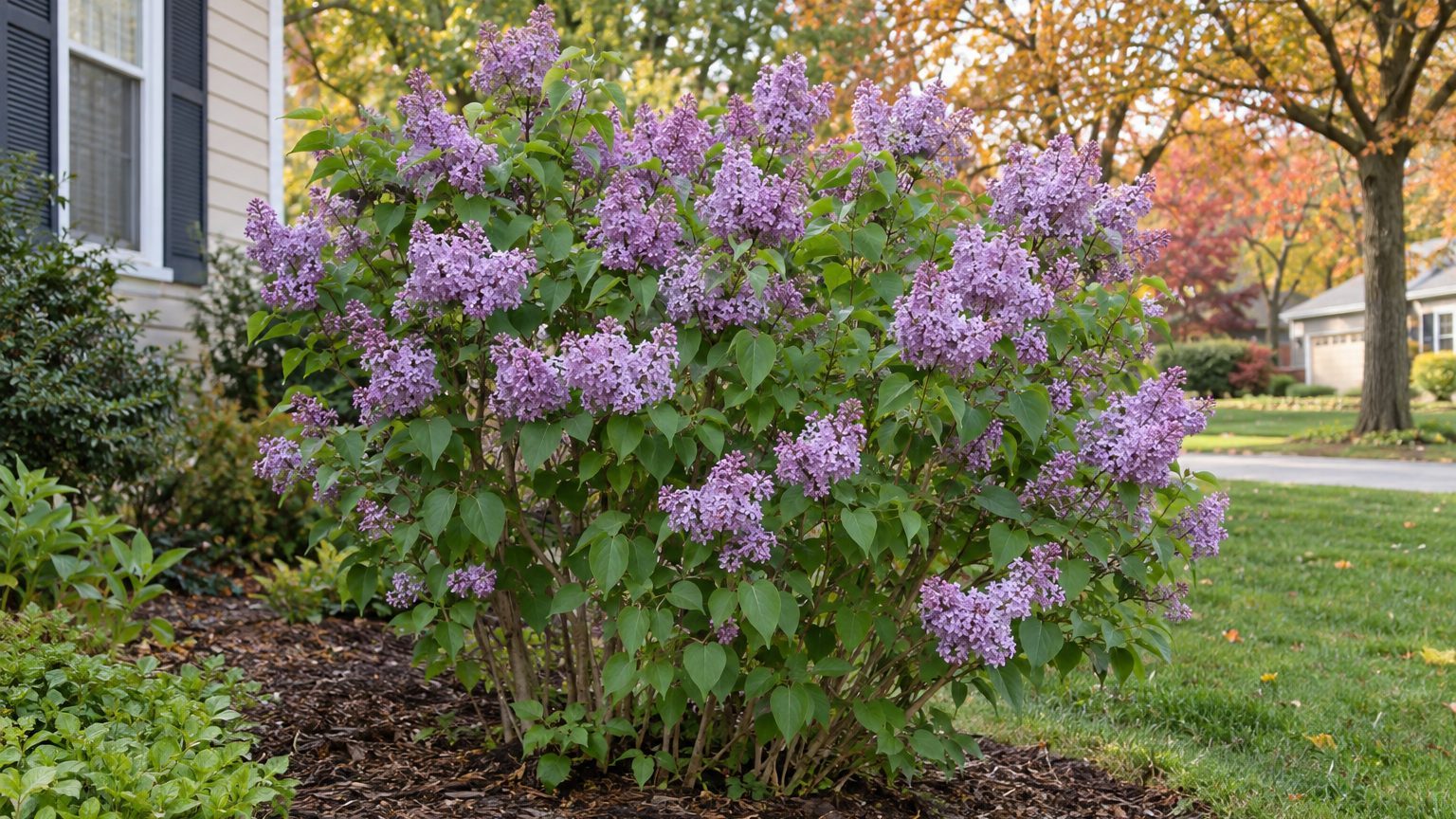
A dwarf Korean lilac often shows up at the garden center as a small round-headed tree, a ball of branches balanced on a single slim trunk. The shape is the first thing to understand, because it explains how the plant behaves and why it needs a little help from you. The page covers size, climate, bloom, and care through the year.
What Is the Dwarf Korean Lilac?
The plant sold as a dwarf Korean lilac tree is really a lilac bush grafted onto a straight stem, called a standard. The top is a shrub and the trunk is a support, so it will not be as sturdy as a true tree of the same height.
Typically it is pruned to hold a ball shape atop the trunk. Because the ball of branches carries the leaves and flowers, the crown can get heavy for the thin stem beneath it.
Like other lilacs, it forms flower buds in summer and blooms on that old wood the next spring. Size at maturity varies, so check the plant tag before choosing a spot.
From the almanac
Lilacs in your state
The dates on this page depend on where you live. Your state's page carries its frost dates, its USDA zones and the year laid out month by month.
Northeast
Southeast
- Alabama
- Arkansas
- Delaware
- Florida
- Georgia
- Kentucky
- Louisiana
- Maryland
- Mississippi
- North Carolina
- South Carolina
- Tennessee
- Virginia
- West Virginia
Midwest
Southwest
West
Pacific Northwest
Canada
Where Does the Dwarf Korean Lilac Grow Best?
The tag on the plant lists the zones it was bred for, and that is the number to match against your yard.
- In cold regions, lilacs get the cold rest they like, so the plant sets buds reliably.
- In the Mid-Atlantic and the Midwest, a spot with good air movement helps when summers turn muggy.
- In hot, humid regions with short winters, lilacs tend to bloom poorly.
- In the Mountain West and Pacific Northwest, cool nights and dry summers suit lilacs, as long as the planting site drains well.
The state selector just below this section leads to the page for your state, where you can see what that means for your yard.
How to Care for the Dwarf Korean Lilac Through the Year
Spring Bloom

Flowers open on wood that grew the year before, so what you see in spring was set the previous summer. The weight of the flowers and branches can make the crown too heavy for the trunk to hold.
Pruning After Bloom
Prune as soon as flowering ends. Waiting lets the plant start next year’s buds, and any cut made later takes some of them with it.
On a young plant with a weak trunk, take about 1/4 to 1/3 of the smaller branches back to the main stem. Then do heading cuts on the branches that remain, reducing them in height by about 1/4. Make each cut just above a leaf shoot, using a sharp tool and an angled cut. Do not cut into the main stem, and do not leave a long stub, since stubs can lead to health problems.
This may have to be repeated yearly, especially until the trunk gets stronger.
Summer
Summer is when the plant builds next year’s flower buds, so leave the crown alone. Watch how the crown sits on the trunk, because its weight can make the trunk bend.
Autumn
Winter
The bare crown is easy to read in winter, and the ball shape shows whether branches have grown unevenly. Resist the urge to cut for shape now. Pruning in this season removes buds that would have opened in spring, so save it for after bloom.
Dwarf Korean Lilac Diseases and Weak Points
The plant’s main weak point is structural. Its graft sits on a thin standard, and the crown can outweigh the trunk when it fills out and flowers.
Careless pruning is the other way to cause trouble, and it is easy to avoid with clean cuts.
| Threat | How Dwarf Korean handles it |
|---|---|
| Heavy crown on a slim trunk | Bends if left unsupported, so stake it and trim branches back until the trunk strengthens |
| Long stubs left after pruning | Can lead to health problems, so cut just above a leaf shoot without cutting into the main stem |
| Pruning at the wrong time | Removes flower buds set on old wood, so prune as soon as flowering ends |
For pests and leaf diseases, watch the leaves through the growing season and ask a local garden center or county extension office what is common in your area.
Is the Dwarf Korean Lilac Right for Your Yard?
It suits a garden where a ball-shaped crown on a standard fits the design. It may need yearly pruning, especially until the trunk gets stronger.
- Your local county or provincial extension office can show the months to prune and plant where you live.
- Check the plant tag for mature size and zone before you buy.
- Right after the last flower fades, go out with sharp pruners and shape the crown.
Common Questions
Should You Stake a Dwarf Korean Lilac?
If the trunk bends under the crown, yes. Support the trunk if it bends under the crown while pruning lightens the head.
Can You Prune a Dwarf Korean Lilac in Winter?
You can, but it costs you flowers. Buds for the coming spring are already on the branches, so cutting them off in winter means fewer blooms.
Will It Need as Much Pruning in Later Years?
Probably not quite as much needs to be removed, though that depends on each tree and its growing environment. A strong trunk and a balanced crown mean lighter work.