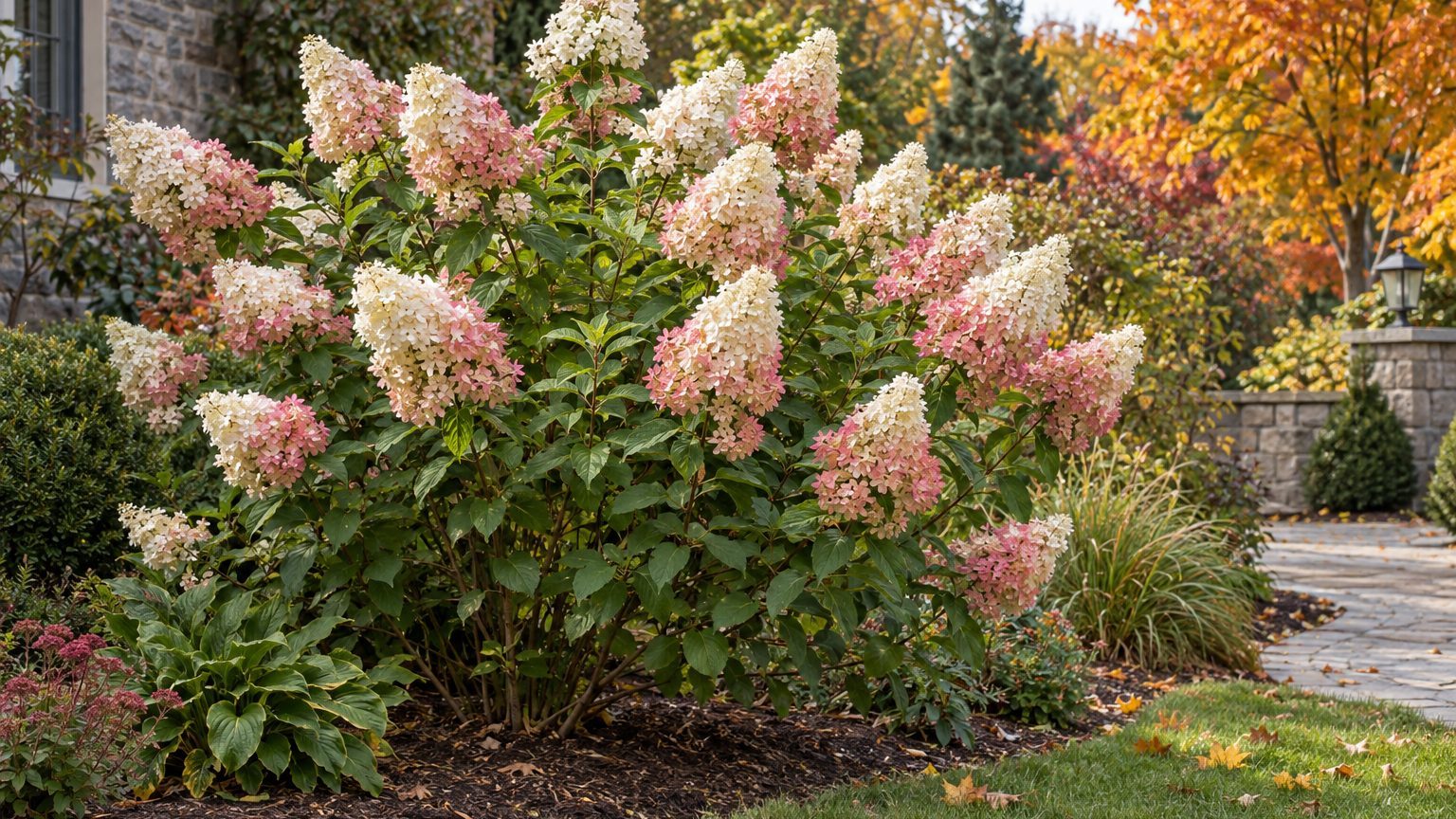
Tardiva hydrangea is a panicle type that opens its white, cone-shaped flower clusters later than most shrubs in its group, well into late summer. It blooms on new wood, so a late-winter cut costs you nothing.
What This Variety Is
Tardiva is a selection of Hydrangea paniculata, the panicle hydrangea, grown as a large upright deciduous shrub. It can also be trained into a small single-trunk tree, which is how many nurseries sell it.
What sets it apart is timing, since the cone-shaped white clusters open later than on most other panicles. They carry on into fall, fading toward pink and tan as the nights cool.
Flowers form on the current season’s growth, and that fact decides how you prune. Cut it in late winter or early spring and the shrub still blooms, unlike bigleaf types that set buds the summer before.
For a hydrangea it takes sun well, though it still wants steady moisture.
From the almanac
Hydrangeas in your state
The dates on this page depend on where you live. Your state's page carries its frost dates, its USDA zones and the year laid out month by month.
Northeast
Southeast
- Alabama
- Arkansas
- Delaware
- Florida
- Georgia
- Kentucky
- Louisiana
- Maryland
- Mississippi
- North Carolina
- South Carolina
- Tennessee
- Virginia
- West Virginia
Midwest
Southwest
West
Pacific Northwest
Canada
Where It Grows: Zones and Regions
Panicle hydrangeas are the cold-tolerant branch of the family, so Tardiva reaches much farther north than the bigleaf types. Heat and dry air, not winter, set its limits in the warmest regions.
- Great Lakes and the North (Michigan, Minnesota, Wisconsin): panicles like this one are the dependable hydrangea here, because they bloom on new wood and winter dieback does not cancel the season.
- The Northeast (New York, Vermont, Maine): it does well in full sun to part shade, and a late bloom means color when many other shrubs have finished.
- The South (Georgia, Texas, the Carolinas): it grows, but afternoon shade and regular water keep the blooms from browning in summer heat.
- The Mountain West and Plains (Colorado, Nebraska, Utah): it holds up to cold, though dry air and alkaline soil mean deep watering and a mulch layer.
- The hot desert Southwest (Arizona, Nevada): this is where it struggles, since it needs more water and cooler afternoons than the climate gives.
The state selector shown just below this section leads to the page for your state, with local frost dates and the pruning window for your area.
The Year With It, Season by Season
Spring
Bare-root and container plants both settle in best while the soil is cool and moist. Dig the hole wide, set the crown level with the soil, and mulch. Prune before new growth breaks, since buds form on this year’s wood.
Summer
Growth is fast once the weather warms, and shallow roots dry out first. Water deeply at the base rather than sprinkling the leaves, and keep the mulch a few inches from the stems. Skip heavy feeding, because too much nitrogen gives leaves at the expense of flowers.
Late summer
This is the season the variety is named for. The white clusters open after most neighbors have faded, and heavy heads may arch the branches. Leave them, or stake a young plant. Do not deadhead now, because the flowers are the show.
Fall
As nights cool, the white blooms take on pink and tan tones. Resist the urge to cut them, since the dried heads feed the winter look and cost the plant nothing. Keep watering until the ground freezes, especially for a first-year shrub.
Winter
Dormancy is when the shrub is easiest to shape. Once the worst cold passes, remove dead or crossing wood and shorten last year’s stems to reshape it. Do this before buds swell. Your state page gives the exact window.
Diseases and Pests It Resists
What holds for most shrubs applies here too. Good air movement, correct spacing and watering at the base do more to prevent trouble than any resistance claim on a plant tag. If leaves spot or wilt, check the soil moisture first.
For cross-variety comparisons of how the hydrangea types differ, see Hydrangea Varieties Compared.
Where to Plant It in a Yard
Give it a spot with room for a full-size shrub, ideally in sun with some relief from hot afternoon light. It works as a specimen, a back-of-border anchor, or a loose summer hedge.
- Nikko Blue Hydrangea: Size, Zones, Pruning and Care: a bigleaf that blooms on old wood, useful as a contrast in the same bed if you have the shade for it.
- Climbing Hydrangea Hydrangea: Size, Zones, Pruning and Care: a vine for a wall or fence behind the shrub, and a shade-tolerant partner.
- Hydrangea Varieties Compared: the side-by-side view for deciding which types suit your yard.
Then open your state page and note the pruning window before you buy.
Common questions
When does Tardiva hydrangea bloom?
Later than most panicle hydrangeas, opening in late summer and carrying into fall. The exact timing shifts with your climate, so check your state page.
When should I prune it?
In late winter or early spring, before new growth starts. It blooms on new wood, so this cut does not remove the coming flowers.
Can I grow it as a tree?
Yes. It can be trained to a single trunk, and many nurseries sell it that way. Stake it while young and remove suckers from the base as they appear.
Sources : rhs.org.uk | plants.oaklandnursery.com