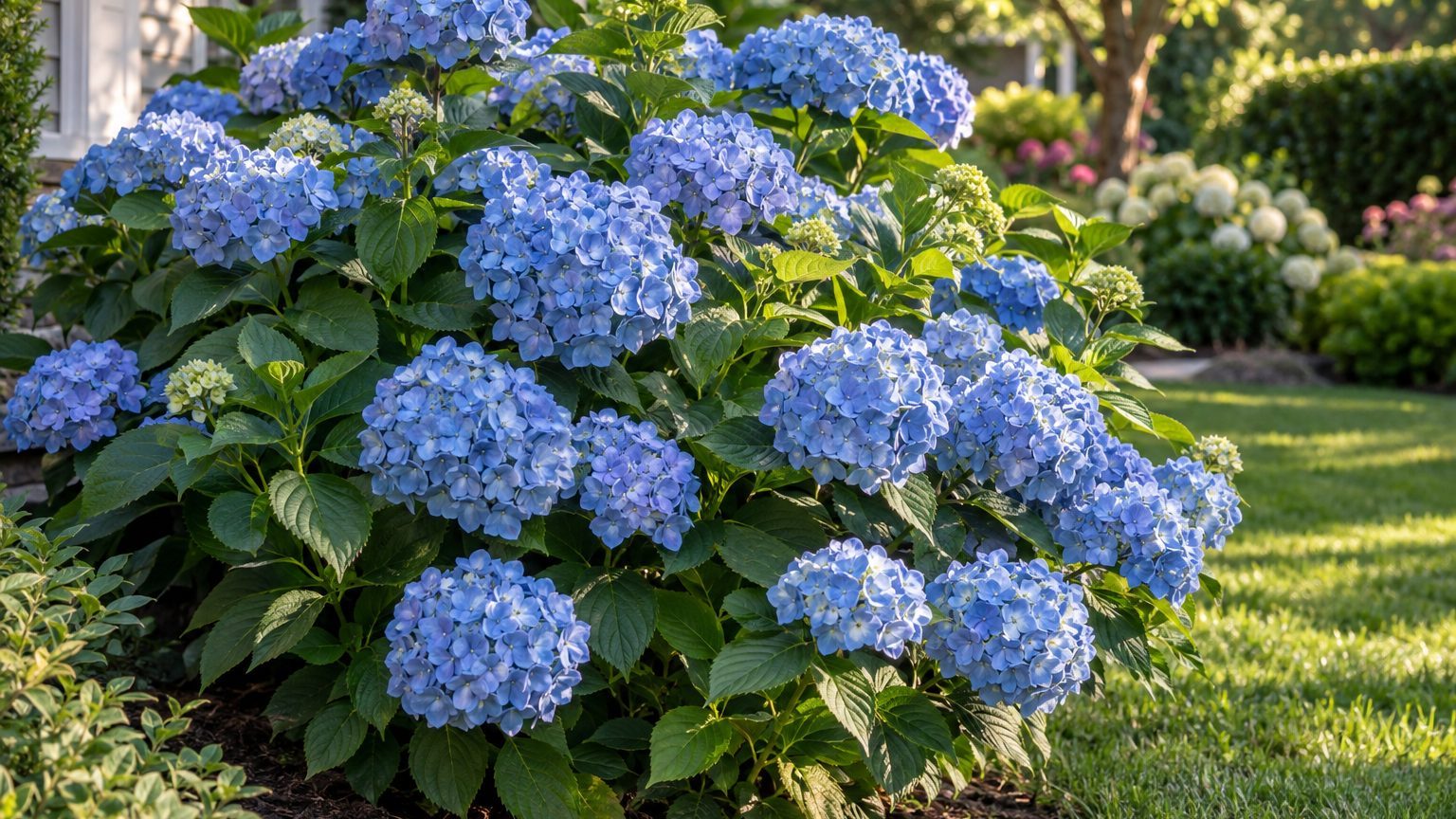
Nikko Blue is a bigleaf hydrangea grown for large mophead blooms that turn blue or pink depending on soil pH, hardy in USDA zones 6 through 9, reaching 4 to 6 feet tall and wide. It flowers on wood set the previous summer, which is why pruning time and winter cold matter more with this variety than with most shrubs in a yard.
What This Variety Is
NC State Extension Gardener Plant Toolbox lists Nikko Blue as a cultivar of bigleaf hydrangea, Hydrangea macrophylla, grown for its rounded mophead flower heads. It flowers on wood grown the previous year, not on new spring growth.
The shrub forms a rounded mound, often wider at maturity than many newer bigleaf types bred for smaller yards. Stems stay woody through winter, holding next year’s buds near the tips.
Leaves are broad, glossy, and coarsely toothed, dropping clean in fall with little color change. Three traits set it apart from other bigleaf cultivars:
- Flower color shifts with soil pH rather than staying fixed
- Bloom heads run larger than many reblooming cultivars sold today
- Next year’s buds form by late summer, well ahead of frost
Full sun suits it in cooler regions, but afternoon shade keeps the foliage from wilting where summers run hot and humid.
From the almanac
Hydrangeas in your state
The dates on this page depend on where you live. Your state's page carries its frost dates, its USDA zones and the year laid out month by month.
Northeast
Southeast
- Alabama
- Arkansas
- Delaware
- Florida
- Georgia
- Kentucky
- Louisiana
- Maryland
- Mississippi
- North Carolina
- South Carolina
- Tennessee
- Virginia
- West Virginia
Midwest
Southwest
West
Pacific Northwest
Canada
Where It Grows: Zones and Regions
NC State Extension Gardener Plant Toolbox rates Nikko Blue for USDA zones 6 through 9, and that range decides flowering more than soil ever will.
- The Coastal South (Georgia, South Carolina, Texas): summers run long enough that afternoon shade matters more than winter cold, and flower buds survive most years without any wrap or cover.
- The Mid-Atlantic and Upper South (Virginia, North Carolina, Tennessee): sits near the middle of the range, with the shrub tolerating more sun where summer humidity stays high through the season.
- The Pacific Northwest (Washington, Oregon): mild winters paired with cool summers let it hold more direct sun than it would tolerate on the East Coast.
- The Northeast and cold Midwest (Massachusetts, Minnesota, Wisconsin): sits at or below the low edge of the range, where a hard winter can kill the flower buds even though the shrub itself survives.
That last group explains why so many Nikko Blue shrubs in colder yards leaf out every spring but skip flowering, since the wood carrying next year’s buds froze back over winter. The state selector below this section leads to the frost dates and pruning window for the state you actually garden in.
The Year With It, Season by Season
Spring
New leaves push out from buds formed the previous summer, and a late frost can blacken the tips before growth hardens off. Wait until leaves show before pruning, then cut only stems that stayed bare and brittle.
Early summer
Mophead flowers open from last year’s buds over several weeks once the shrub leafs out fully. Deadhead spent blooms just below the flower head rather than further down the stem, since next year’s buds are already forming there.
Midsummer
Heat pulls moisture from the broad leaves faster than roots can replace it, so afternoon wilt shows up even in moist soil. A deep watering at the base, not overhead, carries the plant through the hottest stretch without scorching leaf edges.
Late summer
The shrub sets next year’s flower buds on this season’s wood, usually as daylight starts shortening. Any pruning done past this point removes next year’s blooms, making this the last safe window to shape the plant.
Fall
Leaves drop with little color change, leaving bare stems that already carry next year’s buds. Leave the spent flower heads through fall instead of cutting them back, since they add winter interest and shield the buds just below.
Winter
Cold at the low end of the range can kill exposed flower buds even when the shrub itself survives underground. A loose pile of mulch or leaves over the base, pulled back in spring, buys the buds a few extra degrees.
Diseases and Pests It Resists
NC State Extension Gardener Plant Toolbox lists leaf spot and powdery mildew as the main disease pressure on bigleaf hydrangea, both worse in still, humid air. Good spacing and morning watering cut back both more than any spray applied after the fact.
Pests stay minor on this shrub, with aphids showing up on soft new growth and rarely causing lasting damage. Deer are the bigger threat, browsing both leaves and flower buds through winter when other food runs short.
| Threat | This one | Source |
|---|---|---|
| Leaf spot (Cercospora) | Common in humid summers | — |
| Powdery mildew | Worse in still, shaded air | — |
| Aphids | Minor, on new growth | — |
| Deer browsing | Not resistant | — |
Bacterial wilt and root rot show up occasionally in soil that stays wet, but neither is common enough to call typical for this cultivar. Other bigleaf types carry their own disease notes on their own pages.
Where to Plant It in a Yard
Nikko Blue works best along a foundation or a woodland edge where afternoon shade holds through the hottest hours, with room for its 4 to 6 foot spread to fill in without crowding a walkway.
- Your state page: the frost dates and the pruning window for where you live.
- Hydrangea types compared: how this bigleaf cultivar stacks up against panicle and smooth types for the same spot.
- Soil pH and bloom color: what pushes a Nikko Blue toward pink instead of blue in your own beds.
Check your state page before the first cut, since a pruning window that works in Georgia can strip next year’s flowers off a shrub in Minnesota.
Common questions
Why is my Nikko Blue not flowering?
The most common cause is pruning at the wrong time, cutting off wood that was already carrying next year’s buds. A hard winter in a colder zone can do the same damage without any pruning at all.
How do I make Nikko Blue hydrangea turn blue?
Blue color depends on aluminum being available to the roots, which happens in acidic soil below a pH of about 6.0. Working aluminum sulfate into the soil in fall, ahead of the growing season, gives it time to reach the roots before bud break.
When should I prune Nikko Blue hydrangea?
Prune right after the flowers fade in summer, not in fall or the following spring. Waiting past late summer removes the buds the shrub has already set for next year’s bloom.
Sources : pepinieres-naudet.com