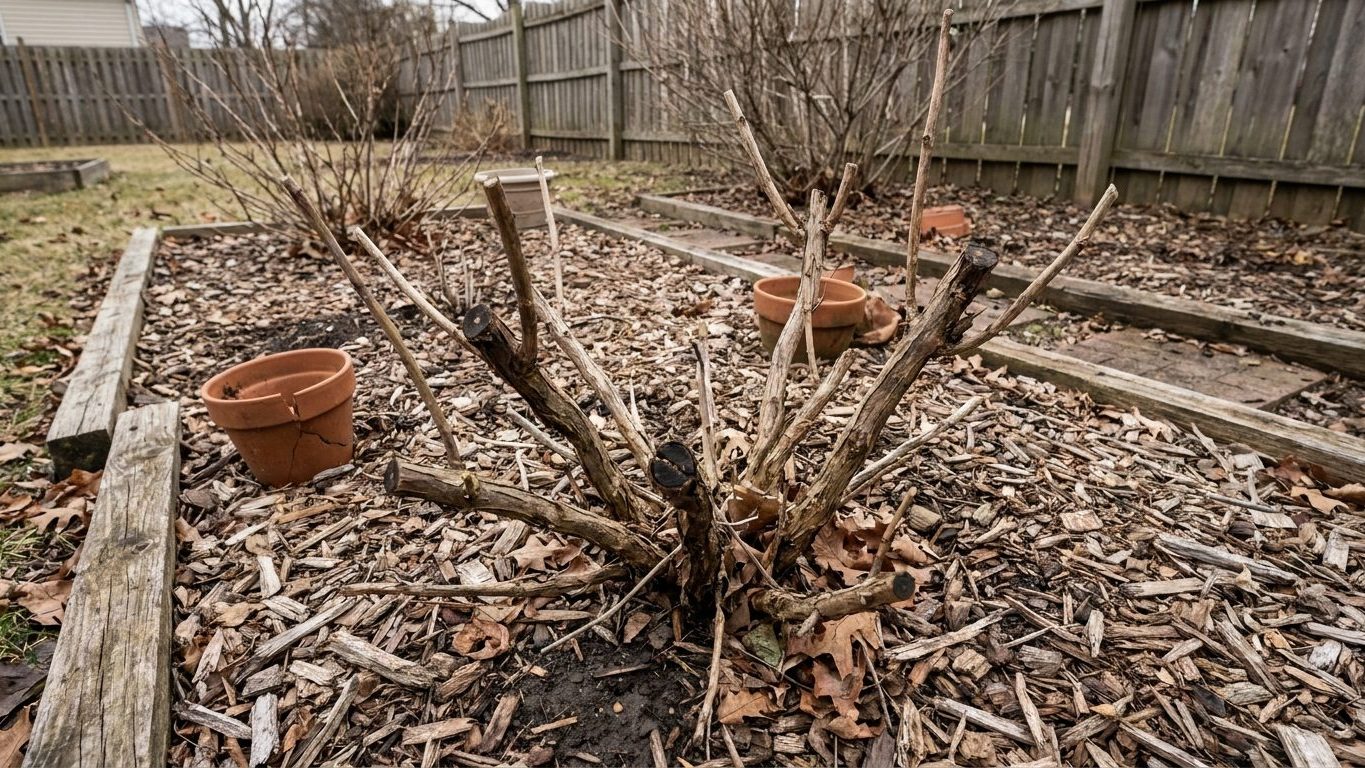
Bigleaf, oakleaf, mountain and climbing hydrangeas set next year’s buds on this year’s wood, so I prune them right after the flowers fade, never in spring. Panicle and smooth types bloom on new growth, so late winter or early spring works, even a hard cutback. Zone shifts the calendar by weeks.
Pruning Hydrangeas: The Short Answer
NC State Extension Gardener Plant Toolbox lists the hydrangea genus at USDA zones 3a through 9b, but that number means little on its own. Hardiness, bloom timing and the right month to cut all depend on which type is growing in the yard.
Old-wood bloomers, bigleaf, oakleaf, mountain and climbing, set their buds the summer before, so I cut them within a few weeks of the last flower. New-wood bloomers, panicle and smooth, wait until the plant is still dormant, in late winter or very early spring.
Zone pushes those windows earlier or later. A gardener in coastal South Carolina and a gardener in inland Vermont are not pruning in the same month, even with the identical shrub.
The state-by-state table just below sorts out those weeks for wherever you garden, one state per plate, with its own zone and its own months.
From the almanac
When to prune bigleaf hydrangeas, state by state
The months each state's extension calendar marks for this, kept inside that state's own frost-free season. Open your state for the frost dates, the USDA zone and the rest of the year.
Northeast
- ConnecticutJun–JulUSDA 6a-7b
- MaineJun–JulUSDA 3b-6a
- MassachusettsJun–JulUSDA 5a-7b
- New HampshireJun–JulUSDA 3b-6a
- New JerseyJun–JulUSDA 6a-7b
- New YorkJun–JulUSDA 3b-7b
- PennsylvaniaJun–JulUSDA 5a-7b
- Rhode IslandJun–JulUSDA 6a-7b
- VermontJun–JulUSDA 3b-5b
Southeast
- AlabamaJun–JulUSDA 7a-9a
- ArkansasJun–JulUSDA 6b-8a
- DelawareJun–JulUSDA 7a-8a
- FloridaJun–JulUSDA 8b-11b
- GeorgiaJun–JulUSDA 6a-9b
- KentuckyJun–JulUSDA 6a-7a
- LouisianaJun–JulUSDA 8a-10a
- MarylandJun–JulUSDA 5b-8a
- MississippiJun–JulUSDA 7b-9a
- North CarolinaJun–JulUSDA 5b-8b
- South CarolinaJun–JulUSDA 7a-9a
- TennesseeJun–JulUSDA 5b-8a
- VirginiaJun–JulUSDA 5a-8b
- West VirginiaJun–JulUSDA 5a-7a
Midwest
- IllinoisJun–JulUSDA 5a-7b
- IndianaJun–JulUSDA 5b-7a
- IowaJun–JulUSDA 4b-6a
- KansasJun–JulUSDA 5b-7a
- MichiganJun–JulUSDA 4a-6b
- MinnesotaJun–JulUSDA 3a-5a
- MissouriJun–JulUSDA 5b-7b
- NebraskaJun–JulUSDA 4a-5b
- North DakotaJun–JulUSDA 3a-4b
- OhioJun–JulUSDA 5b-6b
- South DakotaJun–JulUSDA 3b-5b
- WisconsinJun–JulUSDA 3b-6a
Southwest
- ArizonaJun–JulUSDA 4b-10b
- New MexicoJun–JulUSDA 4b-9a
- OklahomaJun–JulUSDA 6a-8a
- TexasJun–JulUSDA 6a-10a
West
- AlaskaJun–JulUSDA 1a-8a
- CaliforniaJun–JulUSDA 5a-11a
- ColoradoJun–JulUSDA 3b-7b
- HawaiiJun–JulUSDA 9a-13a
- IdahoJun–JulUSDA 3b-7b
- MontanaJun–JulUSDA 3a-6a
- NevadaJun–JulUSDA 4a-10a
- UtahJun–JulUSDA 4a-9a
- WyomingJun–JulUSDA 3a-6a
Pacific Northwest
Canada
- AlbertaJun–JulZone 4a
- British ColumbiaJun–JulZone 9a
- ManitobaJun–JulZone 3b
- New BrunswickJun–JulZone 5a
- Newfoundland and LabradorJun–JulZone 6a
- Northwest TerritoriesJun–JulZone 1b
- Nova ScotiaJun–JulZone 6b
- NunavutJun–JulZone 0a
- OntarioJun–JulZone 7a
- Prince Edward IslandJun–JulZone 5b
- QuebecJun–JulZone 5b
- SaskatchewanJun–JulZone 3a
- YukonJun–JulZone 1b
Sources: state frost facts and Clemson HGIC factsheet — Hydrangea. A state with no marked month is not shown.
Pruning Hydrangeas, Step by Step

The cuts are the same tools and the same clean blade for every hydrangea, but the order below keeps you from cutting off next year’s flowers.
- Identify the type before you touch the pruners: bigleaf, oakleaf, mountain and climbing hydrangeas set buds on last year’s wood, while panicle and smooth types flower on the current season’s growth, and the two groups get pruned in opposite seasons.
- Time old-wood types to the bloom, not the calendar: NC State Extension Gardener Plant Toolbox sets the bigleaf deadline before August 1, once the flowers have faded, so new buds get the rest of summer to form.
- Time new-wood types to dormancy: wait for late winter or very early spring on panicle and smooth types, when the plant shows no green, and cut hard if the shrub has grown leggy.
- Cut just above a healthy bud: angle the cut about a quarter inch above a plump bud facing outward, so new growth heads away from the center of the shrub.
- Thin the oldest stems at the base: remove no more than a third of the oldest wood in a single season, so the shrub keeps blooming while it renews itself.
- Leave some hollow stems standing at 12 to 24 inches: native bees nest inside them over winter, so let that stubble stay until it disintegrates on its own.
Mulch afterward. Both bigleaf and panicle hydrangeas are shallow-rooted, and a layer of mulch over the root zone protects the roots that did the work of forming next year’s buds.
Pruning Hydrangeas by Hydrangea Type
NC State Extension Gardener Plant Toolbox puts bigleaf hydrangea at USDA 6a to 11b, flowering on last year’s wood, while panicle hydrangea covers a wider 3a to 8b and flowers on the current season’s growth instead.
That single difference decides everything else: panicle can be cut back hard in late winter, and it is the only hydrangea in the group that takes full sun well, standing in for bigleaf where that species isn’t winter hardy.
| Kind | Flowers on | USDA zones | Sun |
|---|---|---|---|
| Bigleaf | Last year’s wood | 6a-11b | Dappled to deep shade |
| Panicle | Current season’s growth | 3a-8b | Full sun |
The other kinds are on their own pages. Oakleaf keeps old-wood buds and turns wine-red in autumn, at about 5 feet tall, and smooth is the hardiest of the genus, blooming on new wood.
Mountain’s buds take a late frost better than bigleaf’s, and climbing hydrangea can reach 15 feet and more before it starts flowering at all.
Pruning Hydrangeas: Mistakes That Cost a Season
Pruning bigleaf in spring

Bigleaf hydrangea sets its buds on last year’s wood, so a spring cut removes flowers that already exist inside the stem. The fix is to prune within a few weeks after the blooms fade, never later than the type and zone allow. See the state page for the exact window.
Feeding for blue, getting pink

High-phosphorus fertilizer locks aluminum in the soil, and without available aluminum a bigleaf hydrangea cannot hold blue. Flowers drift toward pink no matter how acid the soil tests. Feed with a balanced formula instead, and adjust color through soil pH, not through the feeding schedule.
Clearing every stem each fall

NC State Extension Gardener Plant Toolbox notes that native bees nest inside the hollow stems over winter, so a tidy fall cleanup removes their shelter. Cut spent stalks back to 12 to 24 inches instead, and leave that stubble standing until it disintegrates on its own.
Pruning Hydrangeas in Your State
Nothing here replaces the frost dates and zone where you actually garden. The national rule sets the type and the order, but the month still depends on your state and your local extension office.
- Your state page: the frost dates and the pruning window mapped for the type you’re growing.
- Which types hold up here: a zone check before you plant another bigleaf hydrangea in a spot too cold for it.
- Your county extension office: a call or a visit for a soil test and a local answer when the calendar isn’t enough.
Match the two, type and zone, before the first cut.
Common questions
Why didn’t my hydrangea bloom this year?
The most common cause is a spring cut on an old-wood type like bigleaf, oakleaf, mountain or climbing hydrangea, which removes buds already formed the summer before. A late frost after the buds have broken can do the same damage without any pruning at all.
Can I change hydrangea flower color by pruning?
No. Pruning has nothing to do with it. Only bigleaf and mountain hydrangeas shift color with soil pH, blue below about pH 5.5 and pink above about pH 6.5, and panicle, smooth, oakleaf and climbing types stay whatever color they were bred to be.
Are hydrangeas toxic to pets?
Only bigleaf hydrangea is documented toxic, and only in large quantities, causing nausea, stomach pain and vomiting in people as well as cats, dogs and horses. The bark, flowers, leaves and stems all carry the compound.