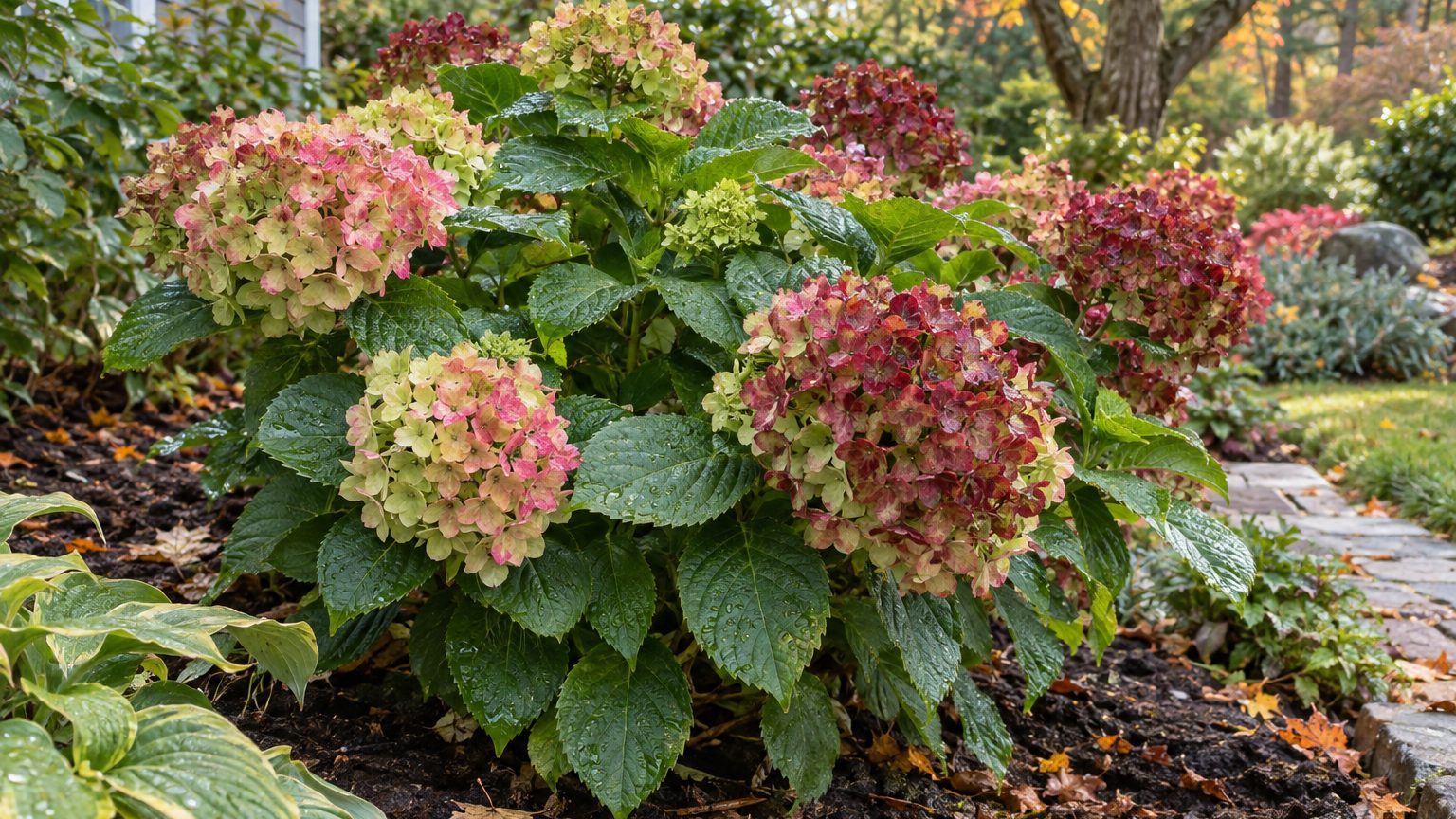
Pistachio hydrangea is a bigleaf type grown for blooms that blend green with pink and burgundy instead of one clean color. It suits part shade and steady moisture. Its size, zone range and pruning window follow the bigleaf group.
What This Variety Is
Pistachio is a cultivar of bigleaf hydrangea, Hydrangea macrophylla, a deciduous shrub with broad, glossy leaves and rounded flower heads. The blooms are the draw, mixing green with pink and burgundy as they age.
Read the plant tag at purchase, since bigleaf sizes vary widely between cultivars.
Most bigleafs set buds on last year’s wood, which means a hard spring cut removes the flowers. Treat it as an old-wood bloomer until the tag says otherwise.
Bigleaf shrubs also drink heavily and wilt in afternoon sun. That shapes almost every decision later on, and where you plant it matters more than any fertilizer you add.
From the almanac
Hydrangeas in your state
The dates on this page depend on where you live. Your state's page carries its frost dates, its USDA zones and the year laid out month by month.
Northeast
Southeast
- Alabama
- Arkansas
- Delaware
- Florida
- Georgia
- Kentucky
- Louisiana
- Maryland
- Mississippi
- North Carolina
- South Carolina
- Tennessee
- Virginia
- West Virginia
Midwest
Southwest
West
Pacific Northwest
Canada
Where It Grows: Zones and Regions
These regions describe how bigleaf hydrangeas generally behave.
- Great Lakes and the North (Michigan, Minnesota, Wisconsin): winter cold often kills the flower buds on bigleaf types, so bloom is unreliable without shelter or a protected spot.
- Northeast and Mid-Atlantic (New York, Pennsylvania, Virginia): bigleafs usually establish well, though a hard late freeze can take the buds in a cold year.
- The South (Georgia, Texas, the Carolinas): the shrub grows readily, but afternoon sun and dry spells scorch the leaves, so shade and water decide the outcome.
- The West and Pacific Northwest (Oregon, Washington, California): mild coastal gardens suit it, while inland heat demands shade and regular irrigation.
The state selector just below this section leads to the page for your state, with its frost dates and pruning window for the reference city.
The Year With It, Season by Season
Planting
Set it in the ground when the soil is workable and the weather is mild, not in midsummer heat. Dig a wide hole at the same depth as the pot. Water deeply after planting. Your state page lists the local planting window.
Spring growth
New leaves appear before the flower buds show themselves. Hold your pruners until buds swell, then trim only dead stems back to living wood. A late frost can blacken new growth, so keep an old sheet handy to cover the shrub.
Bloom
Flower heads open green, then take on pink and burgundy tones as they age. That color shift is the point of this cultivar. Deadhead spent blooms lightly, cutting just above the first healthy pair of leaves, and leave the rest of the stem alone.
Summer heat
Wilting at midday is normal for bigleafs, but limp leaves in the evening mean the roots are dry. Water at the base, deeply, a few times a week in dry spells. A layer of mulch keeps the root zone cooler.
Fall
Stop fertilizing in late summer so the stems can harden off. Leave the faded flower heads in place, since they protect the buds below. Rake fallen leaves away from the crown if they mat down, and keep watering until the ground freezes.
Winter
In colder states, buds are the weak point. Mound mulch or shredded leaves around the base and wrap the stems loosely in burlap over a wire cage. Remove the wrap once hard freezes are past, using the dates on your state page.
Diseases and Pests It Resists
What holds for bigleafs in general is more practical. Crowded plants in humid weather invite powdery mildew and leaf spots, and stressed shrubs attract more trouble than well-watered ones. Water the soil, not the foliage, and give each shrub room for air to move.
Your county extension office can tell you which leaf problems are active locally. The other hydrangea kinds have their own pages, with their own tolerances laid out.
Where to Plant It in a Yard
Choose a spot with morning sun and afternoon shade, near a hose bib or a downspout. It works along a north or east foundation, beside a front walk, or under high tree canopy where the soil stays moist.
- Hydrangea Varieties Compared: how the bigleaf group stacks up against the other kinds, so you can judge whether Pistachio fits your climate.
- Annabelle Hydrangea: Size, Zones, Pruning and Care: a smooth hydrangea that blooms on new wood, useful in colder yards where bigleaf buds freeze.
- Tardiva Hydrangea: Size, Zones, Pruning and Care: a panicle type that tolerates more sun, handy for the brighter part of the same bed.
Before you buy, open your state page and check the frost dates and pruning window for where you live.
Common questions
When should I prune a Pistachio hydrangea?
Assume it blooms on old wood. Prune lightly right after flowering, and in spring remove only stems that are clearly dead once the buds have swelled. Your state page gives the window for your area.
Does it need full sun?
No. Morning sun with afternoon shade suits bigleaf hydrangeas best, since strong afternoon light scorches leaves and dries the soil fast.
How big will it get?
Check the plant tag, and leave enough room for the shrub to mature without crowding walls or walkways.
Sources : covingtonnursery.com | yahoo.com