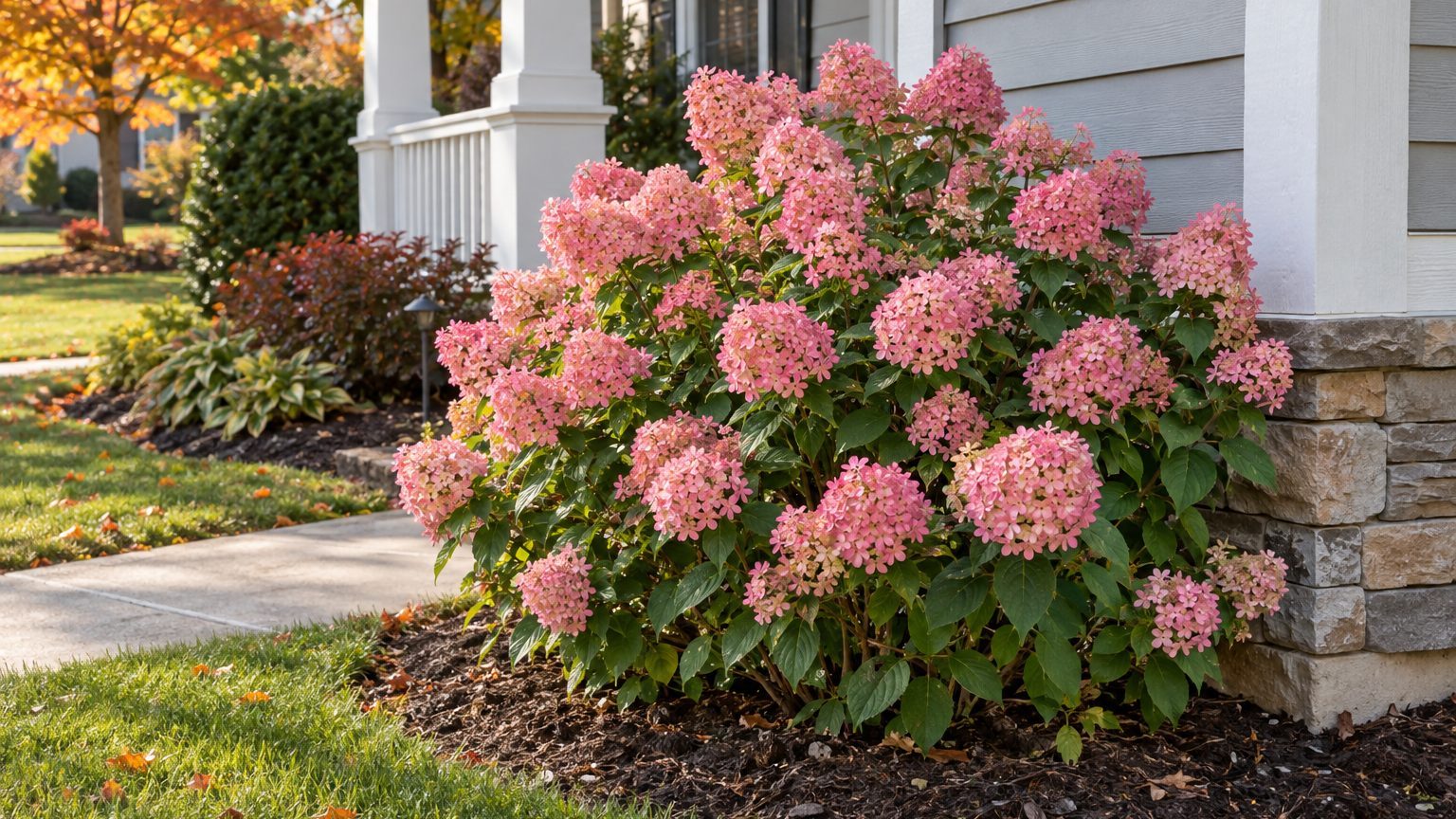
What This Variety Is
Pink Elf is a compact hydrangea sold for foundation beds and porch corners. Its mature height, spread and exact species vary by source, so trust the plate the site renders here over any number you read elsewhere.
Its appeal is scale. A compact hydrangea needs less clearance from a walkway or a window than a full-size shrub, which is why it turns up in small front yards.
Check the plant tag for one more thing: whether the shrub blooms on old wood or new wood. That single line tells you when you can prune. Flower color on some pink hydrangeas also shifts with soil chemistry, so test the bed’s pH if the shade of pink matters to you.
Where It Grows: Zones and Regions
I can’t cite a verified hardiness range for this variety, so here is the country sorted by the stress that usually decides the outcome.
- Great Lakes and the North (Michigan, Minnesota, Wisconsin): winter cold is the test, and flower buds that sit above ground can die back in a hard freeze, so pick a sheltered spot.
- Northeast and Mid-Atlantic (Massachusetts, Pennsylvania, Virginia): winters are usually manageable, but late frosts can nip early buds after a warm spell.
- The South (Georgia, Texas, the Carolinas): summer heat and dry spells do the damage, so morning sun and afternoon shade matter more than anything else.
- Mountain West and Plains (Colorado, Nebraska, Kansas): dry air, wind and alkaline soil are the hurdles, and a windbreak and steady watering help.
- Pacific Coast (Oregon, Washington, coastal California): mild, damp conditions suit hydrangeas in general, with inland valleys needing more summer water.
The state selector rendered just below this section leads to the page for your state, with the frost dates and pruning window for where you live.
From the almanac
Hydrangeas in your state
The dates on this page depend on where you live. Your state's page carries its frost dates, its USDA zones and the year laid out month by month.
Northeast
Southeast
- Alabama
- Arkansas
- Delaware
- Florida
- Georgia
- Kentucky
- Louisiana
- Maryland
- Mississippi
- North Carolina
- South Carolina
- Tennessee
- Virginia
- West Virginia
Midwest
Southwest
West
Pacific Northwest
Canada
The Year With It, Season by Season
Spring
Planting goes best once the ground is workable and hard frosts are behind you, because new roots need a calm start. Set the crown level with the soil and water deeply. Hold the pruners until you see which buds are alive. The Hydrangea Varieties Compared page explains how bloom wood changes the timing.
Early summer
Growth and bloom overlap here, and a compact shrub can flop under heavy flower heads if it is overfed with nitrogen. Feed lightly, or not at all in rich soil. Deep, infrequent watering at the base keeps leaves dry and the shrub steady.
Midsummer heat
Wilting at midday is often heat, not thirst. Push a finger into the soil before you water, since soggy roots wilt a hydrangea too. If leaves scorch on the sunny side, mulch the root zone and think about moving the shrub next spring, when it can be lifted safely.
Fall
Blooms fade to a papery blush, and you can leave them on the plant. Cool nights bring color to the leaves, and shortening days tell the shrub to slow down. Stop feeding, keep watering until the ground freezes, and skip any hard cutback if this one blooms on old wood.
Winter
Cold injury happens to the buds, not the roots. In the colder states, a loose cage filled with leaves or a layer of mulch over the crown gives protection. Avoid wrapping in plastic. Come spring, wait for green buds before removing anything, as the pruning notes in Bobo Hydrangea: Size, Zones, Pruning and Care show for a related compact shrub.
Diseases and Pests It Resists
A table of resistances would be a table of guesses.
Hydrangeas as a group tend to get powdery mildew and leaf spot where air is stagnant and leaves stay wet. Deer browse them in many neighborhoods. Give the shrub room, water at the soil line and fence it if deer are regulars.
Other hydrangea kinds have their own resistance notes on their pages. Until Pink Elf gets a documented rating, treat it as an average hydrangea and check the leaves every week or so in humid stretches.
Where to Plant It in a Yard
A compact hydrangea earns its place close to the house, along a path or in a mixed border where it gets morning sun. Pair it with shrubs of similar size, and compare it with two other compact choices before you buy.
- Angel Blush Hydrangea: Size, Zones, Pruning and Care: a comparison point when you are weighing pink flowers for a small bed.
- Bobo Hydrangea: Size, Zones, Pruning and Care: a compact shrub with full notes on size and pruning.
- Your state page: the frost dates and the pruning window where you live, reached through the selector above.
Common questions
How big does Pink Elf hydrangea get?
Read the plate the site renders here, or the tag on the pot, and leave clearance for the widest number.
When should I prune it?
It depends on whether the shrub flowers on old wood or new wood. If the tag doesn’t say, prune only dead stems until buds swell, then cut back to live growth.
Does it need shade?
In hot regions such as Georgia and Texas, afternoon shade protects the leaves and flowers. In cooler states like Michigan and Oregon, more sun is usually fine as long as the soil stays evenly moist.