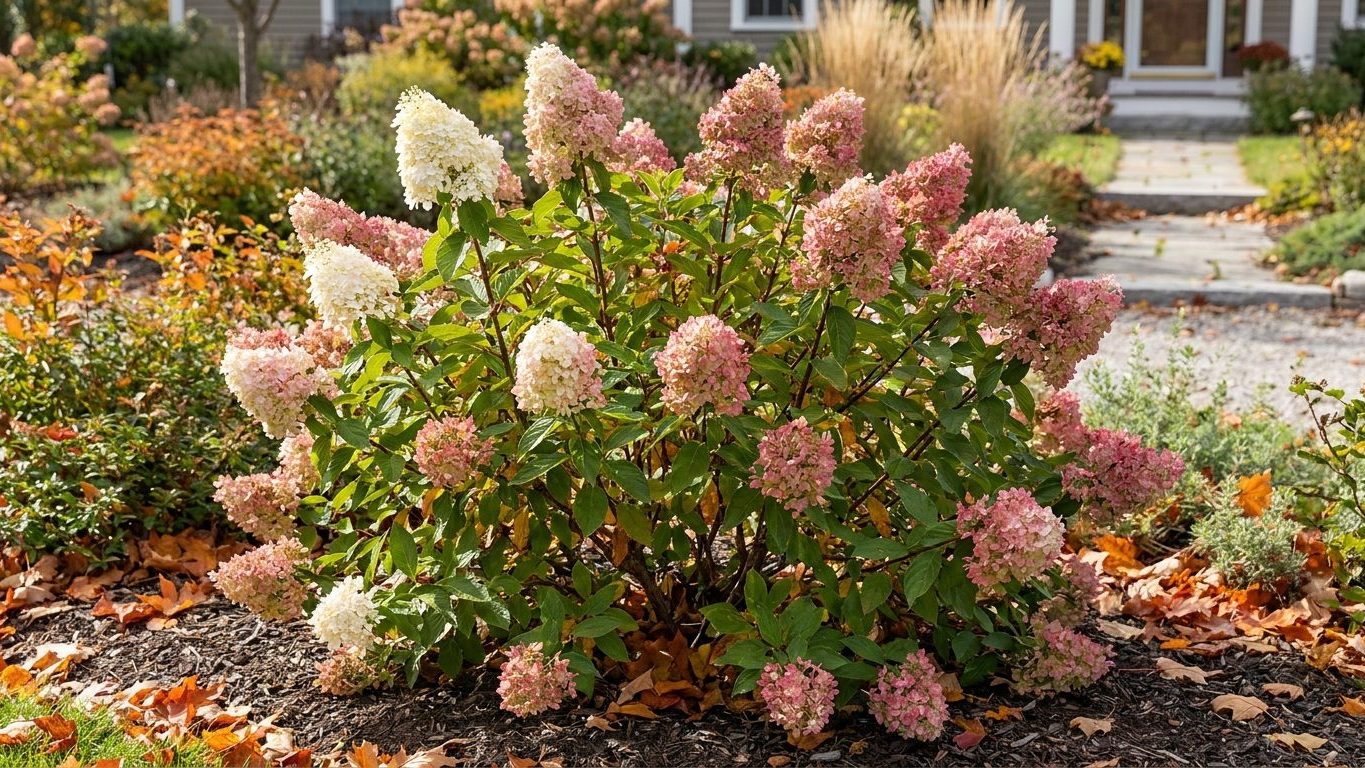
Bobo hydrangea is a dwarf panicle hydrangea that tops out around 2.5 to 3 feet tall and wide, hardy in USDA zones 3 to 8, and it blooms on new wood, which means late-winter pruning never costs you a flower. It carries white cone-shaped blooms that shift to soft pink as nights cool, and it holds its shape best in full sun.
What This Variety Is
Proven Winners, the breeder that introduced Bobo, lists it as a full dwarf form of Hydrangea paniculata, the same species sold as PeeGee hydrangea. It reaches just 2.5 to 3 feet tall and wide, a fraction of the 8 feet a standard panicle hydrangea can hit.
The stems stay short and thick enough to hold up the flower heads without staking. That single trait sets it apart from taller paniculata varieties that flop after a hard rain.
Its flower heads run smaller than a standard paniculata too, cone-shaped panicles that open white in early summer. That earlier, smaller bloom is the trait most growers point to when they explain why it fits a small yard.
Growers also note it flowers from a young age, often blooming its first year in the ground. That head start makes it a fast way to add height and color to a new bed without waiting seasons for size.
- Compact, mounded habit
- White blooms that age to pink
- Sturdy stems that need no staking
From the almanac
Hydrangeas in your state
The dates on this page depend on where you live. Your state's page carries its frost dates, its USDA zones and the year laid out month by month.
Northeast
Southeast
- Alabama
- Arkansas
- Delaware
- Florida
- Georgia
- Kentucky
- Louisiana
- Maryland
- Mississippi
- North Carolina
- South Carolina
- Tennessee
- Virginia
- West Virginia
Midwest
Southwest
West
Pacific Northwest
Canada
Where It Grows: Zones and Regions
Proven Winners rates Bobo hydrangea for USDA zones 3 to 8, a wider range than most panicle hydrangeas carry, which puts it in yards from Duluth to Atlanta and most places in between.
- Great Lakes and the North (Minnesota, Wisconsin, Michigan): zone 3 winters sit within range, and the plant can die back to the ground some years, then rebuild and bloom that same season since flowers form on new wood.
- The Northeast and Mid-Atlantic (New York, Pennsylvania, Virginia): zone 5 to 7 summers suit it well, and full sun keeps the compact stems from stretching and going loose.
- The South (Georgia, Texas, the Carolinas): zone 8 heat pushes it toward part shade, with afternoon shade protecting the blooms from bleaching out fast in July and August.
- The Plains and Mountain West (Colorado, Nebraska): wind and dry air call for a spot out of the harshest gusts, since the short stems still take a beating in wide-open exposure.
The state selector below this section leads to the page built for where you live, with the frost window and the pruning dates that apply to your zip code.
The Year With It, Season by Season
Spring
New shoots push from the base as soil warms, and this is the pruning window since the buds that matter form later on this new growth. Cut stems back by about a third, or to a low framework if winter dieback took the top.
Summer
Bobo often opens its cone-shaped flower heads earlier than full-size panicle hydrangeas, typically by midsummer. Regular water through hot stretches keeps the compact stems from wilting, since the shallow root system dries out fast in such a small footprint.
Fall
White blooms shift toward pink and then a tan-rose as nights cool, and the heads hold on the stem well into the season. Leave them uncut for color in the yard rather than deadheading early in the fall.
Winter
In the coldest end of its range the top growth can die back to the ground, which is normal rather than a failure. Skip any pruning now and wait for spring, since cutting dormant wood in winter offers no real benefit.
Diseases and Pests It Resists
Proven Winners does not list any serious disease as a regular problem on Bobo hydrangea, and panicle types as a group shrug off much of the leaf spot and mildew that trouble bigleaf hydrangeas.
Deer pressure is the more common complaint in home yards, though panicle hydrangeas rank as one of the less-browsed types when deer have other options nearby.
| Threat | This one | Source |
|---|---|---|
| Bacterial leaf spot | Not a common issue on panicle types | Proven Winners |
| Powdery mildew | Rare compared to bigleaf hydrangea | Proven Winners |
| Deer browsing | Occasional, not a preferred plant | Proven Winners |
Documentation on insect pests specific to Bobo is thin, and the other hydrangea kinds are on their own pages if you are comparing resistance across the full lineup.
Where to Plant It in a Yard
Bobo’s small footprint fits a foundation bed, a low hedge along a walkway, or a large container by a front door, taking full sun in the North or part shade through hot southern summers.
- Your state page: the frost dates and the pruning window for where you garden.
- Which hydrangeas hold up here: a comparison of types suited to your zone.
- Hydrangea pruning guide: the by-type cutting calendar so you prune Bobo at the right moment.
Pair it with low grasses or a groundcover that won’t crowd its shallow roots, and check your state page before the first hard freeze sets the pruning clock.
Common questions
How tall does Bobo hydrangea actually get?
Most plants settle between 2.5 and 3 feet tall and wide, which is why Proven Winners markets it as a full dwarf panicle hydrangea rather than a standard-size one.
Does Bobo hydrangea need full sun?
Full sun works best in cooler climates, while gardeners in zone 7 and 8 heat get sturdier, longer-lasting blooms with some afternoon shade to protect the flower heads.
When should I prune Bobo hydrangea?
Late winter into early spring, before new growth starts, since flowers form on the current season’s wood and pruning then removes no buds at all.
Sources : gardeningwithcreekside.com | mckaynursery.com | hydrangeasplus.com