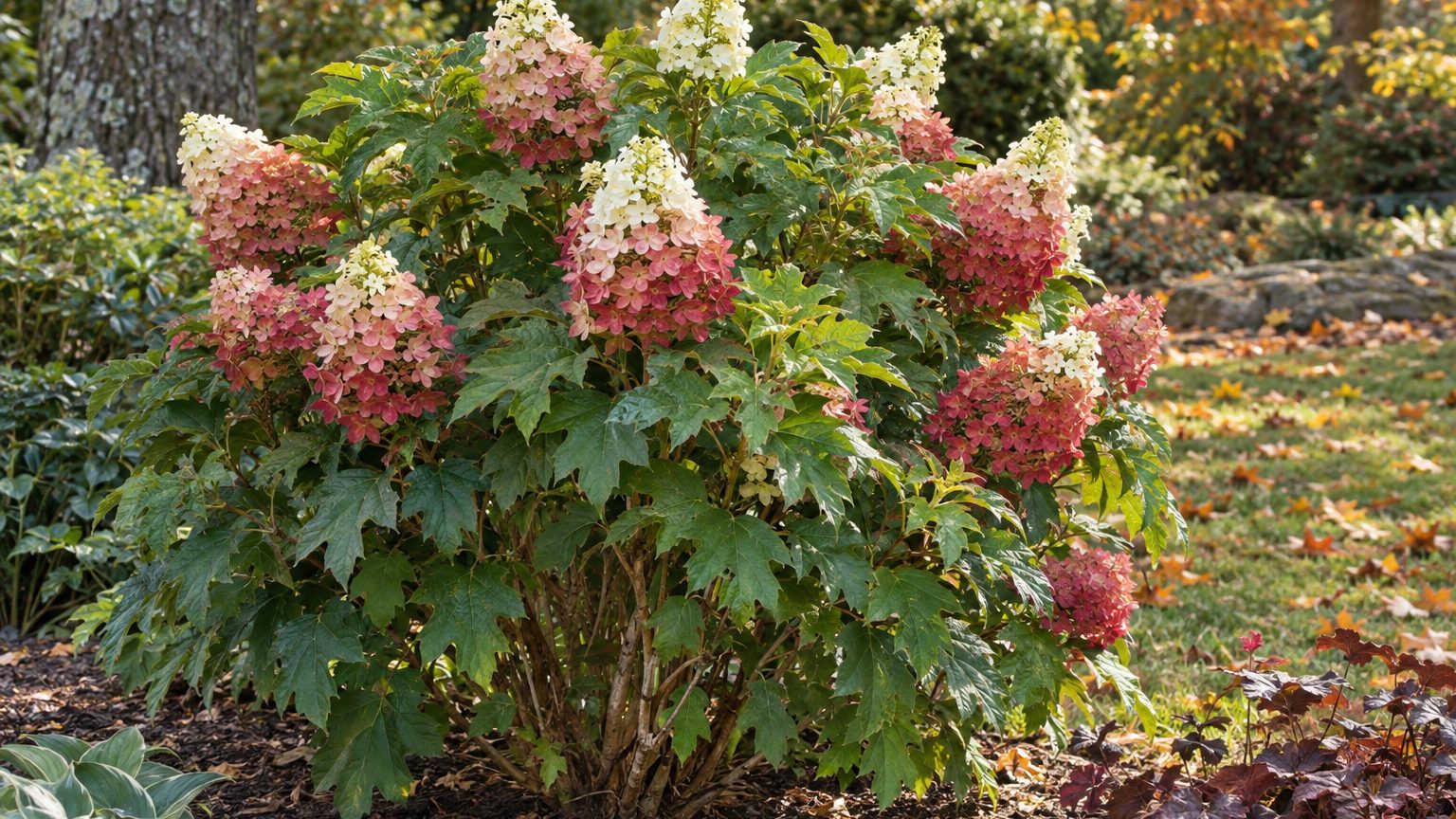
Ruby Slippers is a compact oakleaf hydrangea that stays roughly 3 to 4 feet tall and wide and grows in USDA zones 5 to 9. It blooms on old wood, so pruning is limited to a light trim right after the flowers fade. Its white cones age to pink, then deep red.
What This Variety Is
Ruby Slippers is a cultivar of oakleaf hydrangea, a North American native shrub with big, lobed leaves shaped like those of an oak. It forms a tidy mound, which makes it a smaller stand-in for the sprawling species.
The flower cones open white and upright, then shift to pink and finally a deep ruby red as summer runs on. The color change happens on the same panicle, so one shrub can carry three shades at once.
Three traits set it apart from other hydrangeas:
- A compact habit that fits foundation beds without constant cutting back
- Flowers on old wood, formed the previous season
- Burgundy fall foliage and peeling bark for winter interest
That old-wood habit is the detail that decides when and whether you prune. Cut at the wrong time and you remove next summer’s flower buds along with the branch.
From the almanac
Hydrangeas in your state
The dates on this page depend on where you live. Your state's page carries its frost dates, its USDA zones and the year laid out month by month.
Northeast
Southeast
- Alabama
- Arkansas
- Delaware
- Florida
- Georgia
- Kentucky
- Louisiana
- Maryland
- Mississippi
- North Carolina
- South Carolina
- Tennessee
- Virginia
- West Virginia
Midwest
Southwest
West
Pacific Northwest
Canada
Where It Grows: Zones and Regions
This oakleaf hydrangea is listed for USDA zones 5 to 9, so it handles cold better than a bigleaf but gives out where winters are brutal or summers are dry and searing. Here is how that plays out across the country:
- Great Lakes and the North (Michigan, Minnesota, Wisconsin): the cold edge of its range. Southern Michigan and the milder lakeshore areas work with mulch and a sheltered spot, while northern Minnesota and Wisconsin are too cold for reliable buds.
- Northeast and Mid-Atlantic (Pennsylvania, New York, Virginia): comfortably inside the range, with room to spare in most suburbs.
- The South (Georgia, Alabama, the Carolinas): it tolerates heat well as long as it gets afternoon shade and steady moisture. Zone 9 is the ceiling, so the hottest coastal and Gulf pockets are a stretch.
- Midwest, Plains and West (Missouri, Oregon, Washington): fine in the Pacific Northwest and the milder Midwest. Dry inland sites and alkaline soils need extra water and shade.
The state selector just below this section leads to the page for your state, with local frost dates and the pruning window where you live.
The Year With It, Season by Season
Planting
Roots need time to settle before stress arrives, so plant in spring or early fall, well ahead of hard frost. Set the crown level with the soil, water deeply, and add mulch. Compare it with sturdier options on Hydrangea Varieties Compared if your site is tough.
Spring
Buds swell on last year’s stems, and a late freeze can burn them. Watch the forecast and drape a sheet over the shrub on frost nights. Resist any urge to cut, because live buds on old wood are your flowers, and dead tips show themselves once leaves open.
Summer bloom
Flowers open white and age toward red, and the color deepens in sun. Prune only after bloom fades, if at all, and stop by late summer so new buds can form. Cutting later trades next year’s flowers for a tidier shape.
Heat
Oakleaf types handle heat better than bigleaf hydrangeas, but wilting still shows up in dry spells, especially on new plants. Water deeply at the base a few times a week rather than sprinkling daily. Afternoon shade helps most in the South and inland West.
Fall
Leaves turn burgundy and the flower heads dry to a papery tan on the stem. Leave them for winter looks, and skip late fertilizer, which pushes tender growth. A fresh layer of mulch now protects the roots as the ground cools.
Winter
Bare stems reveal the peeling bark, and the buds for next summer sit dormant on old wood. In zone 5, extra mulch and a windbreak matter most. Where cold repeatedly kills buds, the Fuji Waterfall Hydrangea: Size, Zones, Pruning and Care page covers a hydrangea with a different flowering habit.
Diseases and Pests It Resists
Claiming resistance without a source would only give you false confidence.
Oakleaf hydrangeas as a group are usually easy going, but leaf spot and powdery mildew can appear in humid weather and crowded plantings. Deer will also browse hydrangeas in lean seasons. Good spacing and morning sun help most, and watering at the base keeps foliage dry.
Because there is no verified comparison table for this shrub, the other kinds are on their own pages. Check your local extension office if a specific problem shows up on your plant.
Where to Plant It in a Yard
Give it a spot with morning sun and afternoon shade, rich well-drained soil, and enough room that air moves through the branches. Its compact size suits foundation beds, mixed borders, and the front of a shrub row.
- Snow Queen: the Snow Queen Hydrangea: Size, Zones, Pruning and Care page covers a larger oakleaf that pairs well behind this one.
- Hydrangea Varieties Compared: Hydrangea Varieties Compared helps you match a hydrangea to sun, cold, and space.
- Your state page: the frost dates and the pruning window where you live, reached through the state selector above.
Common questions
When should I prune Ruby Slippers hydrangea?
Right after the flowers fade in summer, and only lightly. It blooms on old wood, so pruning in fall, winter, or spring removes next season’s buds. Cut dead stems in spring once you can see which are alive.
Why do the flowers turn red?
That color shift is part of the plant’s normal aging, from white to pink to deep red. Sun and warm weather intensify it. Soil pH does not change it the way it changes bigleaf hydrangeas.
Does it need full sun?
Morning sun with afternoon shade suits most of the country. In cooler northern zones it can take more sun, but in the South and inland West, strong afternoon light causes scorch and wilting.
Sources : saudersnursery.com | plantaddicts.com | unitychurchhillnursery.com