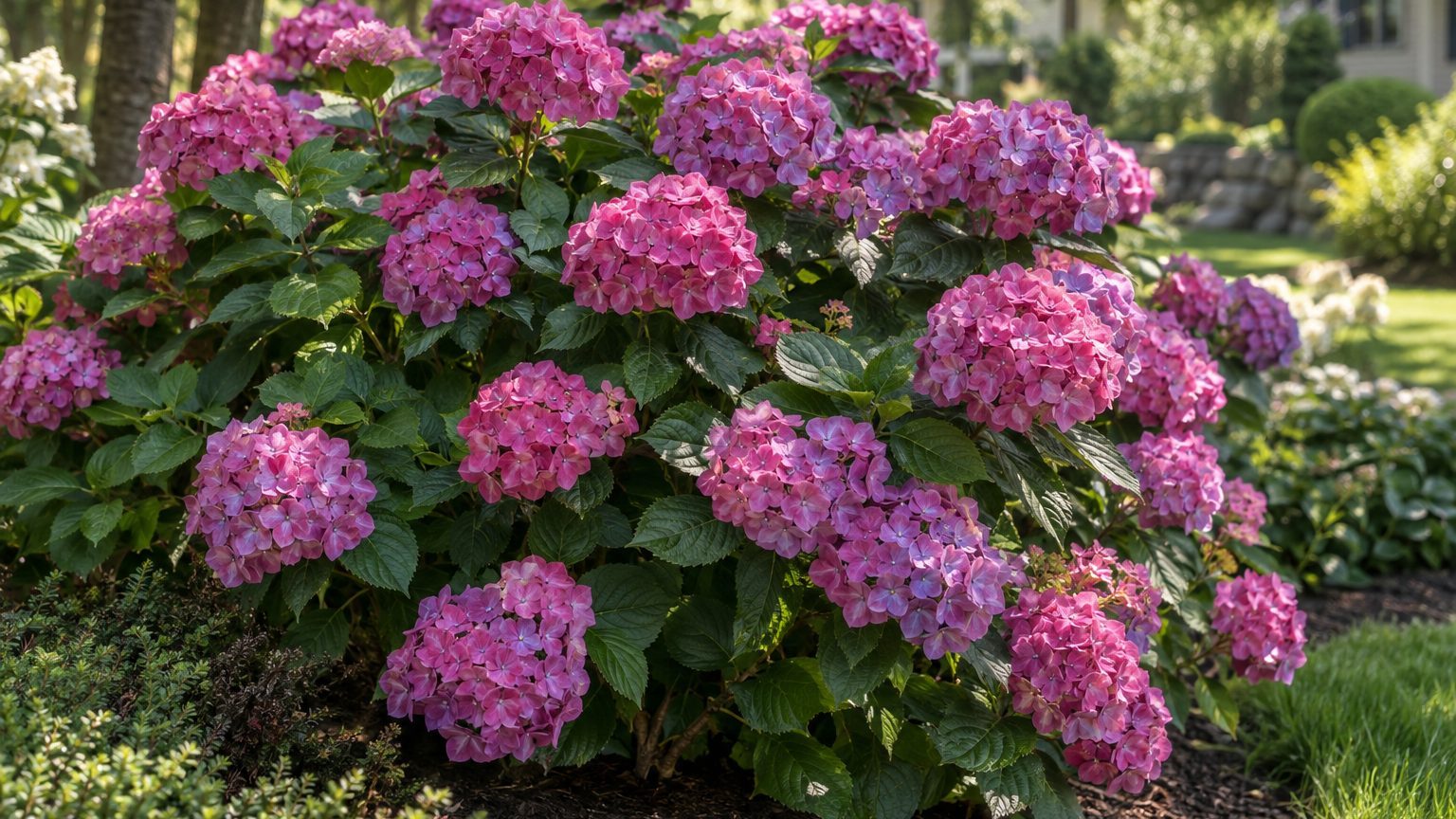
Mathilda Gutges is a mophead bigleaf hydrangea (Hydrangea macrophylla), hardy in USDA zones 6 through 9, growing 4 to 6 feet tall and wide. It blooms on last year’s wood, so pruning happens right after flowering, not in fall or spring. Part shade and moist, well-drained soil keep it healthiest, and flower color shifts from pink toward blue as soil pH drops.
What This Variety Is
Mathilda Gutges is a bigleaf hydrangea, a mophead cultivar with dense, rounded flower heads rather than the flat lacecap form. NC State Extension Gardener Plant Toolbox lists bigleaf hydrangea at zones 6 through 9, and this cultivar sits inside that same range.
Mature size runs 4 to 6 feet tall and just as wide, a rounded shrub rather than a climber or a small tree. Flowers open deep pink in alkaline soil and shift toward violet blue as the soil turns acidic.
It flowers on old wood, meaning this year’s blooms formed on stems grown last season. That single fact decides when you can safely cut it back.
Three traits define it in a yard:
- Mophead flower clusters that hold their shape through a full summer
- Bloom color tied to soil pH, not the plant’s genetics
- Soft new stems that need protection through cold winters
From the almanac
Hydrangeas in your state
The dates on this page depend on where you live. Your state's page carries its frost dates, its USDA zones and the year laid out month by month.
Northeast
Southeast
- Alabama
- Arkansas
- Delaware
- Florida
- Georgia
- Kentucky
- Louisiana
- Maryland
- Mississippi
- North Carolina
- South Carolina
- Tennessee
- Virginia
- West Virginia
Midwest
Southwest
West
Pacific Northwest
Canada
Where It Grows: Zones and Regions
Bigleaf hydrangea covers a wide band of the country, but Mathilda Gutges holds best where winters stay inside zones 6 through 9 and summers don’t scorch past what part shade can buffer.
- Pacific Northwest (Oregon, Washington): mild, damp winters keep old wood intact, and cool summers protect mophead blooms from fading fast.
- Mid-Atlantic and Southeast (Virginia, North Carolina, Georgia): reliable zone 7 and 8 winters let old wood survive, though afternoon shade matters more the farther south you go.
- Northeast and New England (Massachusetts, Connecticut, New York): zone 6 winters sit at the edge of its range, and a hard late freeze can kill buds already set to bloom.
- Deep South and Gulf Coast (Florida, Texas, Louisiana): zone 9 heat pushes past its comfort, and full sun there scorches leaves by midsummer.
The state selector below this section leads to the page built for where you live, with your own frost dates and pruning window.
The Year With It, Season by Season
Spring
Old wood buds swell first, and new leaves follow within weeks. Skip any hard pruning now, since cutting back removes flower buds already set last fall. A light feeding with an acid-forming fertilizer at this point nudges bloom color toward blue.
Summer
Mophead clusters open in early summer and hold color for several weeks in part shade. Full sun afternoons wilt the leaves fast, so a deep soak twice a week beats a daily light sprinkle. Deadheading spent blooms keeps the shrub tidy without harming next year’s buds.
Fall
Flower buds for next year form on the new stems that grew this summer, so this is the one window for shaping cuts. Wait until leaves drop to see the shrub’s true form before trimming. A layer of mulch now protects shallow roots before frost.
Winter
Old wood carries next year’s blooms through the cold, and a hard freeze on exposed buds is the main risk in zone 6 gardens. Wrapping the base with leaves or burlap in the coldest weeks guards buds low on the stem. Zones 8 and 9 need none of this.
Diseases and Pests It Resists
Mathilda Gutges carries the same weak points as most bigleaf hydrangeas, more foliage trouble than the kind of disease that kills a shrub outright.
Deer browse tender leaves and flower buds in early spring when little else is green, though it isn’t a preferred target once other food is around.
| Threat | This one | Source |
|---|---|---|
| Powdery mildew | Common on crowded plants with poor air flow | NC State Extension Gardener Plant Toolbox |
| Cercospora leaf spot | Brown spots on older leaves late in summer | NC State Extension Gardener Plant Toolbox |
| Deer browsing | Moderate, buds eaten in early spring | NC State Extension Gardener Plant Toolbox |
Aphids and scale show up occasionally but rarely need treatment beyond a strong spray of water. The other kinds, like oakleaf or panicle hydrangea, are on their own pages for their own pest lists.
Where to Plant It in a Yard
Part shade near a north or east wall suits it best, sheltered from wind and hot afternoon sun. Pair it with ferns or hostas that like the same moist, part-shade soil.
- Your state page: the frost dates and the pruning window where you live.
- Hydrangea pruning guide: when to cut back old wood versus new wood bloomers.
- Hydrangea color change guide: how soil pH shifts pink blooms toward blue.
Test the soil before you plant it, since the pH that day sets the color for years.
Common questions
Does Mathilda Gutges bloom on old wood or new wood?
Old wood, which is why pruning right after the flowers fade in late summer is the safe window, not spring or fall.
Can I grow Mathilda Gutges in a pot?
Yes, in a large container with drainage, though the shallow root ball dries faster than one in the ground and needs more frequent watering through summer.
Why did my Mathilda Gutges not bloom this year?
A late frost likely killed the buds already set on old wood, or a hard pruning cut them off by mistake the season before.
Sources : joycreek.com | plants.ces.ncsu.edu