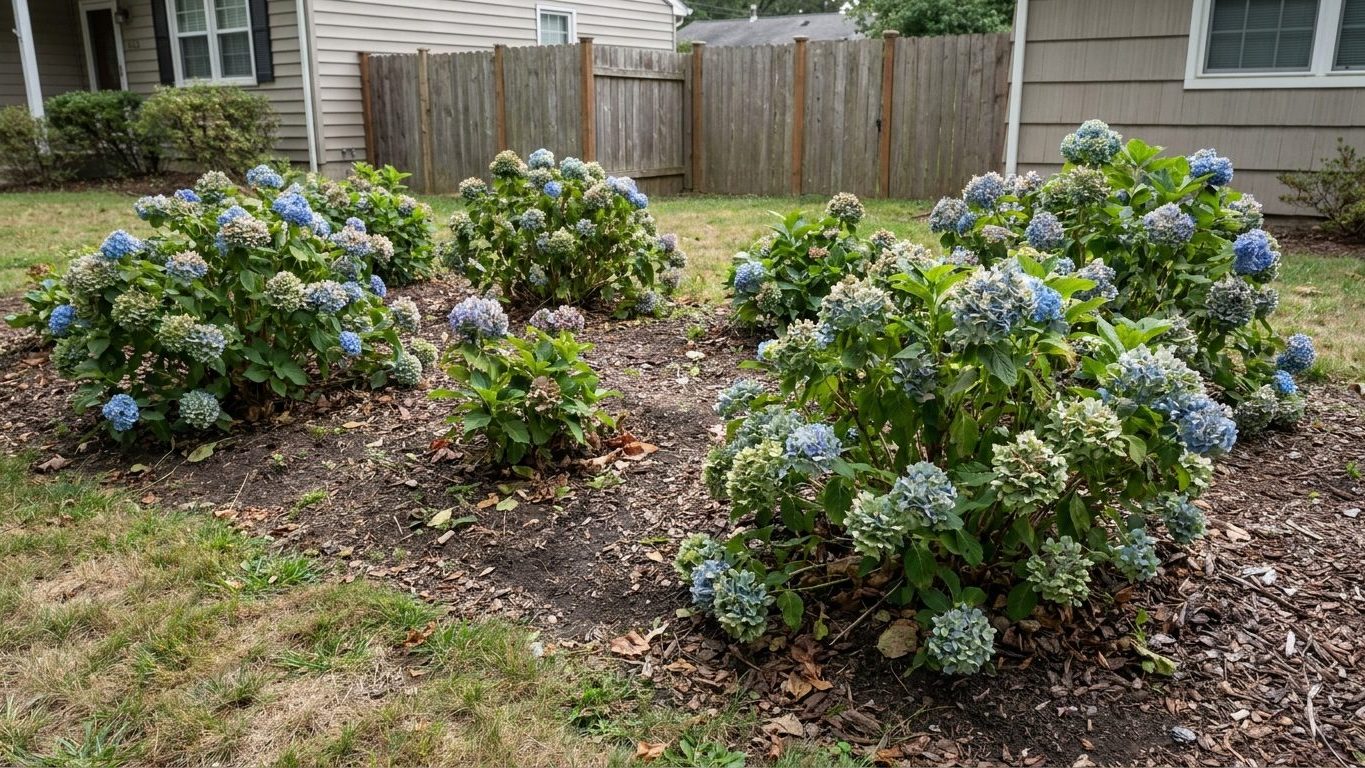
Limelight hydrangea (Hydrangea paniculata ‘Limelight’) grows in USDA zones 3 through 8, tolerating far more sun and cold than a bigleaf hydrangea. It blooms on new wood, opening lime green in midsummer and aging to pink by fall. A mature shrub reaches 6 to 8 feet tall and wide, needing one late-winter pruning cut a year rather than constant care.
What This Variety Is
Limelight is a panicle hydrangea, Hydrangea paniculata under the skin, and that parentage decides almost everything else about it. It blooms on new wood, so the flower buds it needs this summer are ones it has not grown yet.
Missouri Botanical Garden Plant Finder lists it for USDA zones 3 to 8, a range wide enough to cover a Duluth, Minnesota winter and an Atlanta, Georgia summer. Mature plants reach 6 to 8 feet tall and just as wide, built as a rounded shrub rather than a vine or a groundcover.
The flower heads open lime green in midsummer and age toward pink and tan by fall. It takes more direct sun than a bigleaf hydrangea without wilting for good, which is the trait that decides where it goes in a yard.
From the almanac
Hydrangeas in your state
The dates on this page depend on where you live. Your state's page carries its frost dates, its USDA zones and the year laid out month by month.
Northeast
Southeast
- Alabama
- Arkansas
- Delaware
- Florida
- Georgia
- Kentucky
- Louisiana
- Maryland
- Mississippi
- North Carolina
- South Carolina
- Tennessee
- Virginia
- West Virginia
Midwest
Southwest
West
Pacific Northwest
Canada
Where It Grows: Zones and Regions
Missouri Botanical Garden Plant Finder rates Limelight for USDA zones 3 to 8, and inside that band the plant behaves differently depending on how hot the summer runs.
- Great Lakes and the North (Michigan, Minnesota, Wisconsin): winters here test the lower end of the range, and a Duluth planting often comes back from the roots even after a hard freeze kills the top growth.
- Northeast and Mid-Atlantic (New York, Pennsylvania, Virginia): this sits in the middle of the zone range, where full sun all day rarely causes trouble and the shrub holds its shape without staking.
- The Upper South (Tennessee, North Carolina, Kentucky): summers run hot enough that some afternoon shade keeps the flower heads from fading fast in July.
- The Deep South (Georgia, South Carolina, Texas): near the top of the zone range, an Atlanta yard does better with morning sun and afternoon cover, since all-day heat stresses the roots.
Below zone 3 or above zone 8, the plant is pushing past the range the source gives, and results get unreliable in either direction. The state selector below leads to the page for where you live, with frost dates and the pruning window specific to your zone.
The Year With It, Season by Season
Spring

Limelight leafs out later than the smooth hydrangeas planted nearby, often waiting until the soil has warmed before pushing new stems. This is also the window for the one pruning cut it needs, since flower buds form on wood grown this same season.
Early summer

New shoots stretch fast once the weather turns warm, and by early summer the shrub has already set the buds that will open later. A skipped watering during a dry stretch here can shrink the flower heads that follow.
Midsummer bloom

Flower heads open lime green from midsummer on, holding that color for weeks before pink tones creep in. Full sun through this stretch keeps the color saturated, while heavy shade leaves the panicles pale and floppy on their stems.
Late summer heat
In the hottest weeks, leaves on the sunniest side can wilt by afternoon even with damp soil, a normal response rather than a sign of disease. The plant usually perks back up by evening, and a deep watering every few days carries it through.
Fall color change
The blooms age from green to shades of pink and tan through fall, and many growers leave them on the shrub for the look alone. Cutting stops here, since new growth this late will not have time to harden off.
Winter dormancy
The shrub drops its leaves and goes fully dormant, with the dried flower heads often staying put through snow. Because next year’s flowers grow on wood made after dormancy breaks, winter damage to the tips rarely costs a season of bloom.
Diseases and Pests It Resists
Limelight carries a lighter pest and disease load than the bigleaf hydrangeas grown farther south, according to Missouri Botanical Garden Plant Finder, which lists no serious insect or disease problems for the species.
Occasional trouble shows up in wet years, mostly cosmetic rather than plant killing, and it rarely needs a spray program to stay healthy.
| Threat | This one | Source |
|---|---|---|
| Serious insects | None documented as serious | — |
| Serious diseases | None documented as serious | — |
| Leaf spot | Occasional, cosmetic | — |
| Powdery mildew | Occasional in humid, still air | — |
Bigleaf and oakleaf hydrangeas carry their own separate pest notes, and those live on their own pages rather than here.
Where to Plant It in a Yard
Give it a spot with room to spread to 6 to 8 feet across, since crowding it against a foundation or a walkway means constant pruning just to keep the path clear.
- Your state page: the frost dates and the pruning window where you live.
- Which hydrangea holds up here: a side-by-side look at how this variety compares with bigleaf and oakleaf types for your zone.
- Pruning by month: the cutting calendar that keeps a new-wood bloomer like this one flowering on schedule.
Plant it where the state page for your area marks the pruning window, and the summer bloom takes care of itself.
Common questions
Does Limelight hydrangea need full sun?
It handles more sun than a bigleaf hydrangea, and in the northern part of its range full sun all day usually works fine. In the Deep South, morning sun with afternoon shade keeps the leaves from wilting during the hottest weeks.
Why is my Limelight hydrangea not blooming?
A healthy plant with no flowers usually points to a pruning cut made too late in the season, removing the new wood before it had time to set buds. Since it blooms on wood grown the same year, cutting in late winter rather than midsummer avoids the problem.
How tall does Limelight hydrangea get?
Mature plants reach roughly 6 to 8 feet tall and just as wide, which is worth planning for before it goes in the ground. A spot too close to a walkway or foundation means fighting its size every year instead of enjoying it.