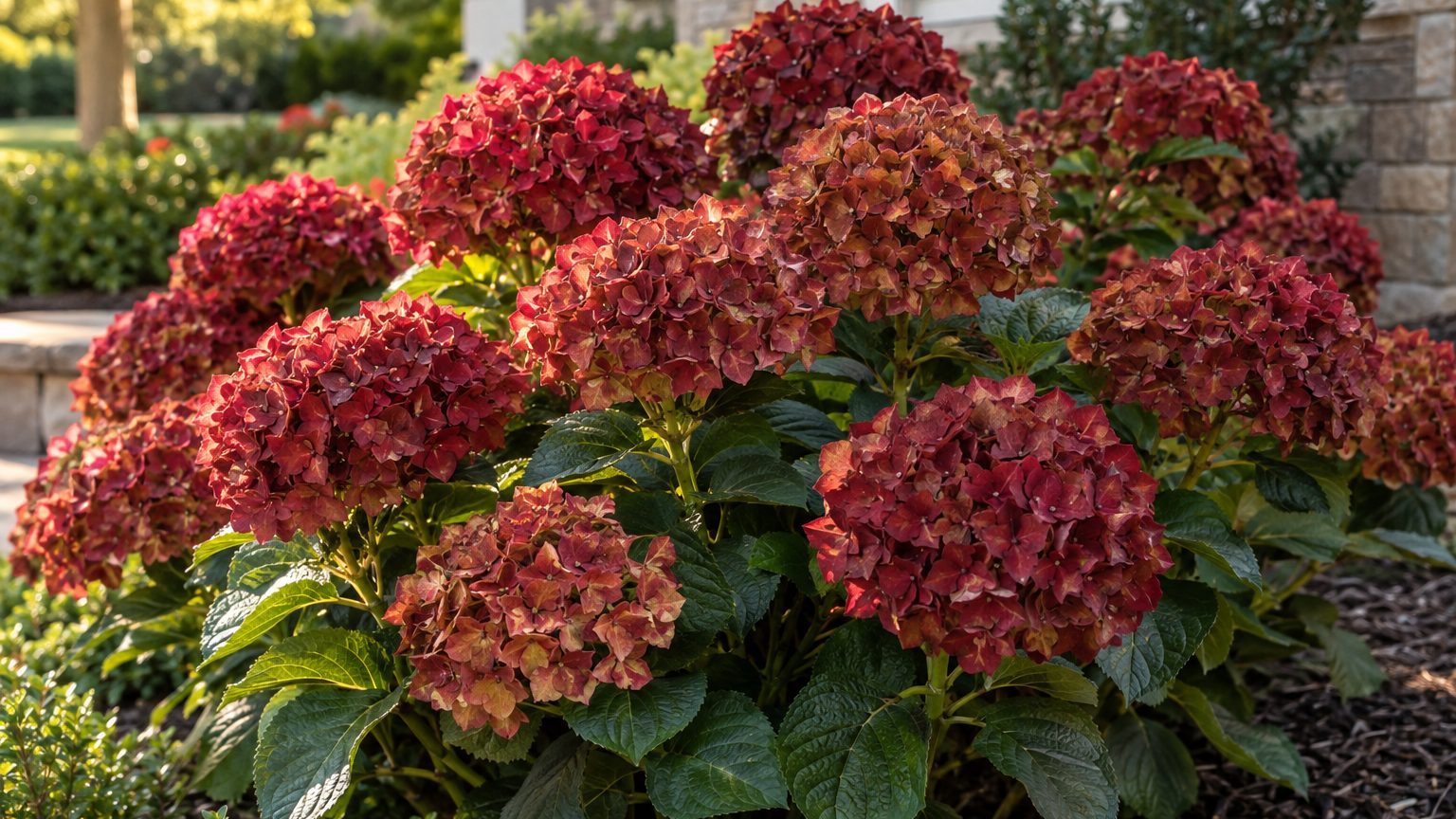
Glowing Embers is a bigleaf hydrangea (Hydrangea macrophylla) grown for its rose-red mophead blooms that deepen toward rust and wine tones as summer fades. It stays a compact, rounded shrub, generally 3 to 4 feet tall and wide, hardy through USDA zones 6 to 9. It flowers on old wood, so pruning timing matters more than pruning frequency.
What This Variety Is
Glowing Embers is a bigleaf hydrangea, Hydrangea macrophylla, in the mophead group rather than the lacecap group. NC State Extension Gardener Plant Toolbox puts bigleaf hydrangea at zones 6a to 9b, and this cultivar sits within that range.
The plant forms a rounded, mounding shrub with sturdy stems and broad, glossy leaves. Mature size runs 3 to 4 feet tall and equally wide, smaller than many older bigleaf types.
Flowers open rose-red and shift toward deeper wine and rust shades as the heads age, which is where the name comes from. Soil pH nudges the color: more acidic soil pulls toward purple-red, more alkaline soil holds the pink-red end.
Buds form on old wood, the stems that grew the prior season, not on new growth pushed in spring. That timing decides when to prune, more than any calendar date.
Compared with the largest mopheads, Glowing Embers stays tidy in beds edged with lawn. It suits foundation plantings and mixed borders without overwhelming a small yard.
From the almanac
Hydrangeas in your state
The dates on this page depend on where you live. Your state's page carries its frost dates, its USDA zones and the year laid out month by month.
Northeast
Southeast
- Alabama
- Arkansas
- Delaware
- Florida
- Georgia
- Kentucky
- Louisiana
- Maryland
- Mississippi
- North Carolina
- South Carolina
- Tennessee
- Virginia
- West Virginia
Midwest
Southwest
West
Pacific Northwest
Canada
Where It Grows: Zones and Regions
Zone tells only part of the story for a shrub that blooms on old wood, since a late frost can erase a season even inside its hardy range.
- Mid-Atlantic and Upper South (Virginia, Maryland, North Carolina): NC State Extension Gardener Plant Toolbox lists bigleaf hydrangea at zone 6a to 9b, and this region sits near the cold edge, from 6b to 7b, where a sheltered spot decides the bloom.
- Deep South and Gulf Coast (Georgia, South Carolina, Louisiana): zone 8 to 9 summer heat calls for afternoon shade and steady moisture, or the big leaves scorch by midsummer.
- Pacific Northwest (Oregon, Washington): mild, damp winters keep old wood buds intact most years, which is a big part of why bigleaf hydrangeas thrive around Seattle and Portland.
- Upper Midwest and northern New England (Minnesota, Wisconsin, Maine): winters routinely drop below the zone 6 floor for bigleaf hydrangea, so buds and often whole stems die back most years.
The state selector below turns this into your own frost dates and zone, worth a check before this one goes in the cart.
The Year With It, Season by Season
Planting
Spring or fall planting gives roots time to settle before summer heat or winter cold arrives, in moist, well-drained soil enriched with organic matter. Part shade, especially shade from afternoon sun, suits the broad leaves better than full sun in most regions.
Spring
New leaves push out from the old wood in the first mild weeks, and this is when a late freeze does the most damage since the flower buds sit right at the stem tips. I hold off on any hard pruning until I see which buds survived.
After bloom
Next year’s buds start forming on the stems soon after the current flowers fade, so any real pruning needs to happen within a few weeks of bloom, not in fall or late winter. Cutting stems back later removes the buds meant for next summer.
Summer
Mophead clusters open rose-red from early to midsummer, then hold their color for weeks in part shade. Full afternoon sun paired with inconsistent water turns the big leaves crisp at the edges by August.
Fall
Spent flower heads dry in place and turn rust and bronze, echoing the name, while the plant slows growth and hardens its stems for winter. I leave the dried heads on rather than deadheading late in the season.
Winter
The exposed buds formed on old wood are the vulnerable part, since the shrub itself tolerates cold within its zone range better than its flowers do. A thick mulch layer over the root zone protects the crown if stems do die back.
Diseases and Pests It Resists
Glowing Embers carries the same weak points as most bigleaf hydrangeas rather than anything unique to the cultivar. Leaf spot and powdery mildew show up in humid summers, especially where air circulation is poor.
The bigger risk is not a disease at all: a late spring frost can kill the exposed flower buds on old wood before they ever open. Deer also browse the foliage and flower buds where populations are heavy.
| Threat | This one | Notes |
|---|---|---|
| Cercospora leaf spot | Susceptible | Worse in humid, still air, per Clemson Cooperative Extension guidance on bigleaf hydrangea |
| Powdery mildew | Susceptible | Shows late summer on crowded plants |
| Late frost bud loss | High risk | Buds sit exposed on old wood all winter |
| Deer browsing | Moderate | Foliage and buds both eaten where deer are common |
Aphids and scale turn up now and then but rarely at damaging levels on a healthy plant. The threats specific to panicle or smooth hydrangea are on their own pages.
Where to Plant It in a Yard
Glowing Embers works best as a focal shrub near a patio or entry where its color show is visible up close, in a spot with morning sun and afternoon shade. Underplant with shallow-rooted shade perennials rather than crowding the root zone.
- Your state page: the zone, frost dates, and pruning window for where you garden.
- Hydrangea types compared: how bigleaf stacks up against panicle and smooth hydrangea for a given spot.
- Pruning hydrangeas: the old-wood versus new-wood timing explained step by step, so the cuts land in the right week.
Common questions
Does Glowing Embers rebloom after the first flush?
It sets buds on old wood and blooms once per season in most gardens, without the repeat flowering seen in newer reblooming mophead types. One full flush from early to midsummer is the usual pattern.
Why did my Glowing Embers hydrangea not flower this year?
A late frost or a hard prune done at the wrong time of year are the two most common causes, since both remove the old-wood buds before they can open. Check the pruning window for your state before cutting stems back.
Can I change the flower color?
Soil pH shifts the shade within the rose-red to purple-red range this cultivar naturally shows, more acidic soil pulling toward purple, more alkaline soil holding the pinker end. It will not turn true blue the way some other bigleaf cultivars can.
Sources : jardindupicvert.com