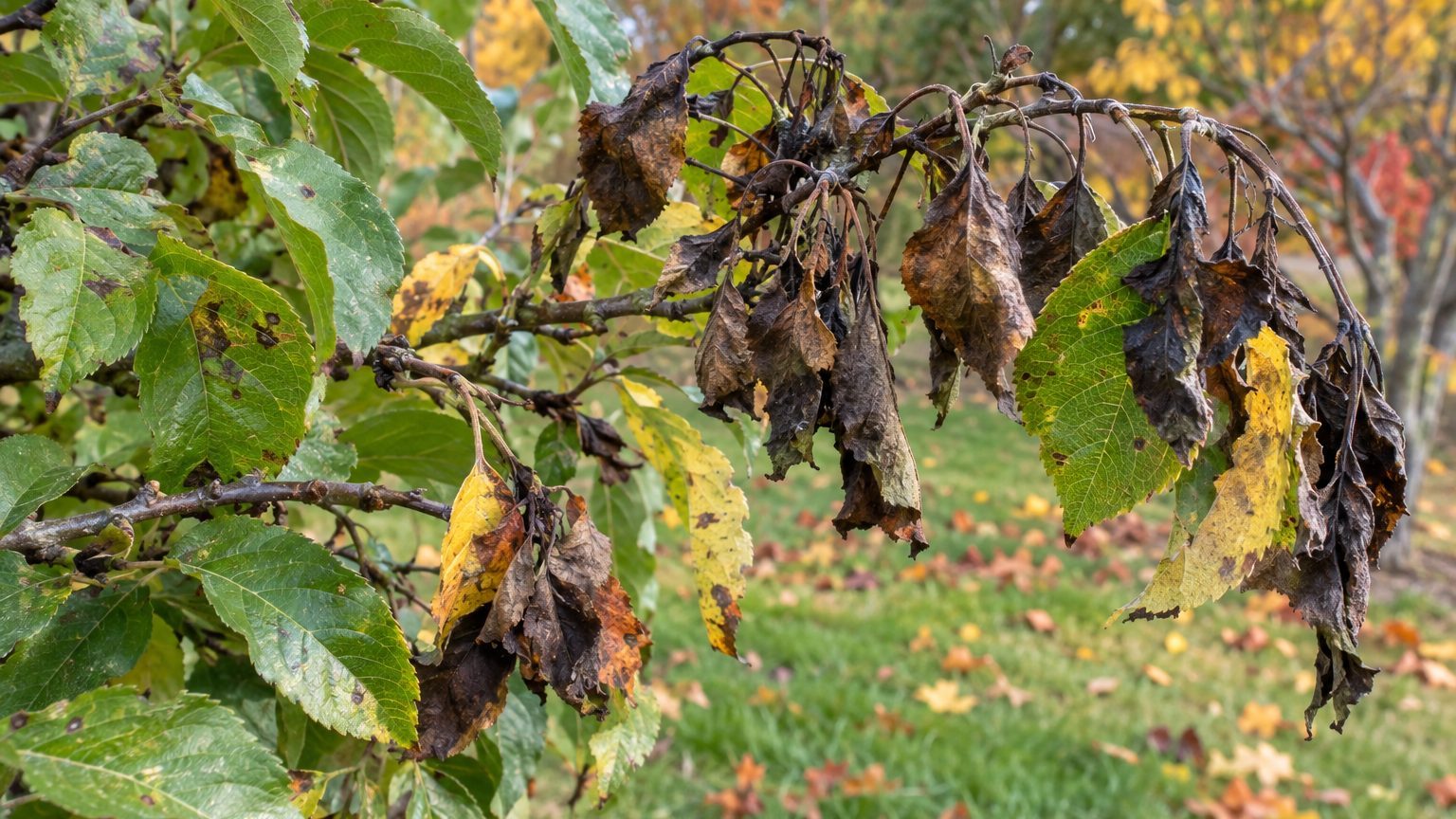
Branch tips that curl over like a shepherd’s crook and leaves that look scorched, yet hang on the tree, point to fire blight in apple and pear trees. A bacterium causes it, and it moves fast through blossoms and young shoots in spring. Backyard trees are best managed by cutting out the infected wood.
Fire Blight: What You See
Look at the newest growth first, because flowers and succulent shoots are usually hit before anything else.
- The current year’s twig wilts and bends about 180°, forming a shepherd’s crook.
- Blossoms and leaves darken to brown or black, as if a torch had passed over the branch, and they tend to stay on the tree instead of falling.
- Infected flowers wilt, shrivel and darken, and the damage then runs from the flower into the fruiting spur, the leaves and the wood around the spur.
- Leaves often blacken along the mid-vein first; apple leaves end up dark orange-brown while pear leaves turn black.
- In New York guidance, fresh tissue looks water soaked at first, then wilts and turns brown or black within 1-3 weeks.
- In spring, cankers on twigs, branches and trunk may show a bacterial ooze.
A canker that girdles the trunk can bring the whole tree down.
From the almanac
Trees in your state
The dates on this page depend on where you live. Your state's page carries its frost dates, its USDA zones and the year laid out month by month.
Northeast
Southeast
- Alabama
- Arkansas
- Delaware
- Florida
- Georgia
- Kentucky
- Louisiana
- Maryland
- Mississippi
- North Carolina
- South Carolina
- Tennessee
- Virginia
- West Virginia
Midwest
Southwest
West
Pacific Northwest
Canada
Fire Blight or Something Else?
Browning branch tips can have other causes, so compare the full pattern of symptoms. Pair what the tissue looks like with where it sits on the tree and when it appears.
Frost injury and drought stress both brown leaves, so they can pass for blight at a glance.
| Looks like | How to tell them apart |
|---|---|
| Frost damage on blossoms and new shoots | Fire blight bends the tip into a crook, and the dead leaves cling to the branch. |
| Drought or root stress scorch | Fire blight starts at flowers and tender shoots, and the leaf midrib blackens. |
Leaf color helps too: diseased apple leaves go brown and pear leaves go black. If the signs still do not line up, take a cut branch to your county extension office.
What Causes Fire Blight, and Where It Is Worst
The bacterium Erwinia amylovora is the cause. In Idaho guidance, it overwinters in cankers on twigs, branches and trunks, which may show bacterial ooze in spring. Insects, birds, splashing rain and contaminated tools all carry it to open blossoms and tender shoots.
Weather decides how fast it moves. In Idaho, rain, high humidity and spring temperatures between 65°F and 85°F create optimum conditions for spread.
In Idaho, warm, wet spring weather favors the spread of fire blight. Because the bacteria ride on pruning tools, careless cuts can carry the disease from a sick branch to a healthy tree.
How to Treat Fire Blight
For backyard trees, the disease is best managed through the physical removal of infected tissue, done carefully so the bacteria do not travel on your tools.
- Find every blighted shoot and canker, so that nothing infected is left to keep spreading.
- Ask your state extension service how far below visible damage to cut, since local guidance can vary.
- Disinfect your pruning tools between cuts, since contaminated tools spread the disease.
- Remove cut branches from the yard and dispose of them, since the disease spreads via insects, birds, splashing rain, and contaminated tools.
- Ask your state extension service how to handle cankers on larger limbs.
- Ask your state extension service which sprays, if any, are approved where you live.
A canker that girdles the trunk can lead to tree collapse and death.
How to Prevent Fire Blight Coming Back
Prevention follows the tree’s year, because the disease moves with blossoms, rain and warmth.
- Inspect twigs, branches and the trunk for cankers, which can harbor the bacteria.
- Clean and disinfect your pruning tools so they are ready and will not carry disease.
- During bloom and warm, wet spring weather, check flowers and tender shoots often, because infection enters there and the weather favors it.
- Water at the base of the tree instead of overhead, so splashing water does not move bacteria from leaf to leaf.
- After any pruning or removal, clean up the cuttings so nothing infected stays in the yard.
Catching a crooked shoot early keeps a small problem small.
Where This Comes From
This guidance comes from university extension materials for different regions. Timing and weather vary by region, so check with your own state’s extension service for local advice.
Common Questions
Can a Tree Recover from Fire Blight?
Removing infected tissue is the main way to manage it on a backyard tree. A canker that girdles the trunk can lead to tree collapse and death.
Do the Dead Leaves Fall Off a Tree with Fire Blight?
No, blighted blossoms and leaves tend to hang on the tree instead of dropping, which makes the scorched look easy to spot from a distance.
Can Pruning Shears Spread Fire Blight?
Yes, contaminated tools are one way the bacteria spread, along with insects, birds and splashing rain. Disinfect your blades between cuts.