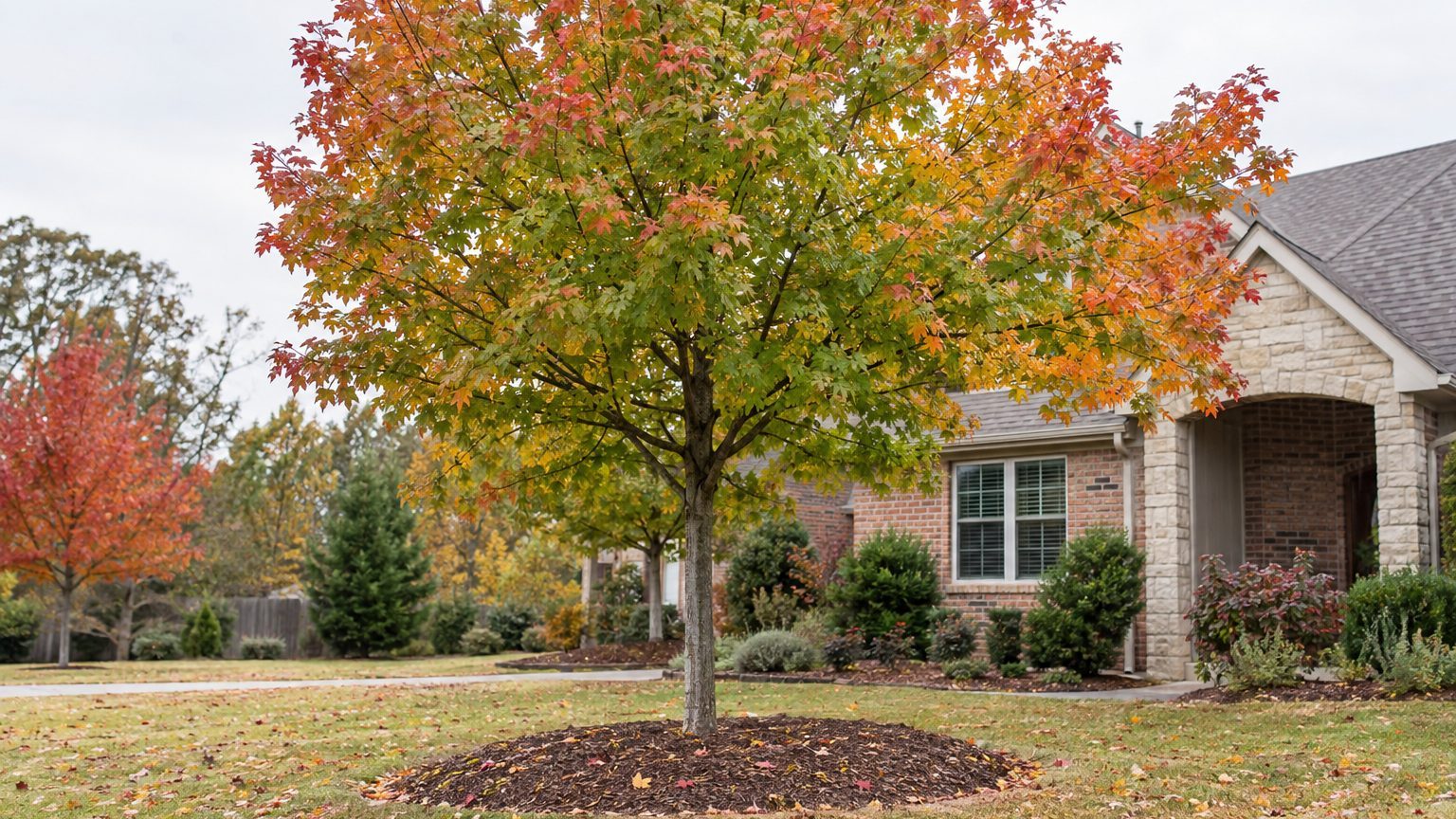
Cool, damp days in autumn are when a freshly planted maple or redbud quietly settles in while the leaves drop around it. That timing works well across Arkansas, where trees go in best when they are dormant or when the soil is workable and roots can still grow.
When Is the Best Time to Plant Trees in Arkansas?

Fall is the best season for shade and ornamental trees in Arkansas, with October and November leading the year, and spring and early winter as fallbacks.
- In early spring, March still works for container and balled-and-burlapped trees, as long as the soil can be worked and the tree is watered through the first warm weeks.
- Through summer, planting is best skipped, because heat and dry soil stress new roots before they have grown out into the surrounding ground.
- In September, planting can begin once the worst heat has eased, and the soil is still warm enough to push root growth.
- In October and November, planting is at its best, since cool air, warm soil and steadier rain let roots grow without summer stress or the rush of spring.
- In December, a tree can still go in while the ground is workable, though roots have less time to settle before hard cold.
Last spring frost falls between March 12 and March 28, and first fall frost arrives between November 7 and November 20, measured at Little Rock in USDA zones 6b to 8a. Other parts of the state differ, so a northern yard may see frost sooner than a southern one. Tender plants should follow the light-frost dates of April 3 and October 31 instead.
Arkansas — the year and the numbers
- State
- Arkansas
- USDA zones
- 6b-8a
- Last spring frost
- March 12 to March 28
- First fall frost
- November 7 to November 20
- Annual rain
- 50 in
- Lawn zone
- warm-season
- Source
- NOAA NCEI 1991-2020 Climate Normals, 32F freeze probabilities · Little Rock
When to Plant Fruit Trees in Arkansas
Fruit trees go in during the dormant season, January through March, with February in the middle of that stretch. Bare-root trees must be planted while dormant, before the buds open, so plant them as soon as the soil can be worked in late winter.
Container-grown fruit trees are more forgiving and can be planted most of the year if you keep them watered. They still settle best when planted in the dormant season.
| Kind of fruit tree | When to plant in Arkansas | Why then |
|---|---|---|
| Bare-root | January through March, while dormant | Roots establish before buds open and growth begins |
| Container | January through March for best results | Dormant-season planting lets the tree settle in, though watering allows planting at other times |
Fruit trees planted in summer face the same heat and dry soil as any other tree, so they are better held back until the dormant season returns.
Best Trees to Plant in Arkansas
Hot, dry summers and soils that sometimes stay wet shape which shade and ornamental trees do well in Arkansas. Matching the tree to the drainage, the sun and the part of the state matters as much as the planting date.
| Tree | How it does in Arkansas | Why |
|---|---|---|
| Sugar maple | Best in the northern tier of the state | It can struggle in hot, dry summers |
| Redbud | Handles wet feet better than many trees | It grows well in part shade in moist, well-drained soil |
| Lacebark elm | A good choice for Arkansas yards | Recommended for the state’s conditions |
| Willow oak | A good choice for Arkansas yards | Recommended for the state’s conditions |
| Littleleaf linden | A good choice for Arkansas yards | Recommended for the state’s conditions |
Where drainage is poor, redbud tolerates it better, though fixing the drainage or raising the planting spot helps. Southern crabapple, a native, grows only to the modest height of a small tree and does best in part shade with moist, well-drained soil. Disease-resistant crabapple cultivars are worth seeking out.
When to Plant, Water and Prune Trees in Arkansas
Planting, watering and pruning each have their own moment, and they do not overlap much. Plant in fall, water through the first seasons while roots spread, and prune fruit trees in late winter. Pruning in fall or early winter is avoided, since new growth may not harden before the cold.
| Task | Best timing in Arkansas | Why then |
|---|---|---|
| Plant shade and ornamental trees | October and November, with March as a fallback | Warm soil and cooler air favor root growth |
| Plant fruit trees | January through March | Trees are dormant and buds have not opened |
| Water a young tree | Regularly after planting, especially in dry spells and while the soil is not frozen | New roots have not yet reached deep moisture |
| Prune fruit trees | February for most, while dormant | Cuts are made before buds swell |
Apples and pears can be pruned from mid-January, while peaches and plums wait until mid-February to early March. Peaches go last, closest to bloom, because their flower buds are easily hurt by cold. Detailed steps are on the page for when to prune fruit trees in Arkansas.
Where to Get Tree Advice in Arkansas
For a tree suited to your soil and sun, or for a soil test, help is close by. The state extension service and your county office can answer questions about species, planting depth and local conditions.
- The University of Arkansas Extension offers guides on tree selection and planting, useful before you buy in fall.
- Your county extension office can take soil samples and advise on drainage, worth a visit before planting day.
Common Questions
Can You Plant a Tree in Summer in Arkansas?
A container tree can survive summer planting with steady watering, but it is the hardest season for new roots. Waiting for fall gives the tree cooler air and warm soil.
Should You Remove Burlap from a Balled-and-Burlapped Tree?
Yes. Remove burlap and any wire basket from the root ball so roots can grow out into the surrounding soil instead of being held in.
Is Mulch Good Around a New Tree?
A layer of mulch over the root zone helps hold moisture. Keep it spread out and away from the trunk, never piled against the bark.