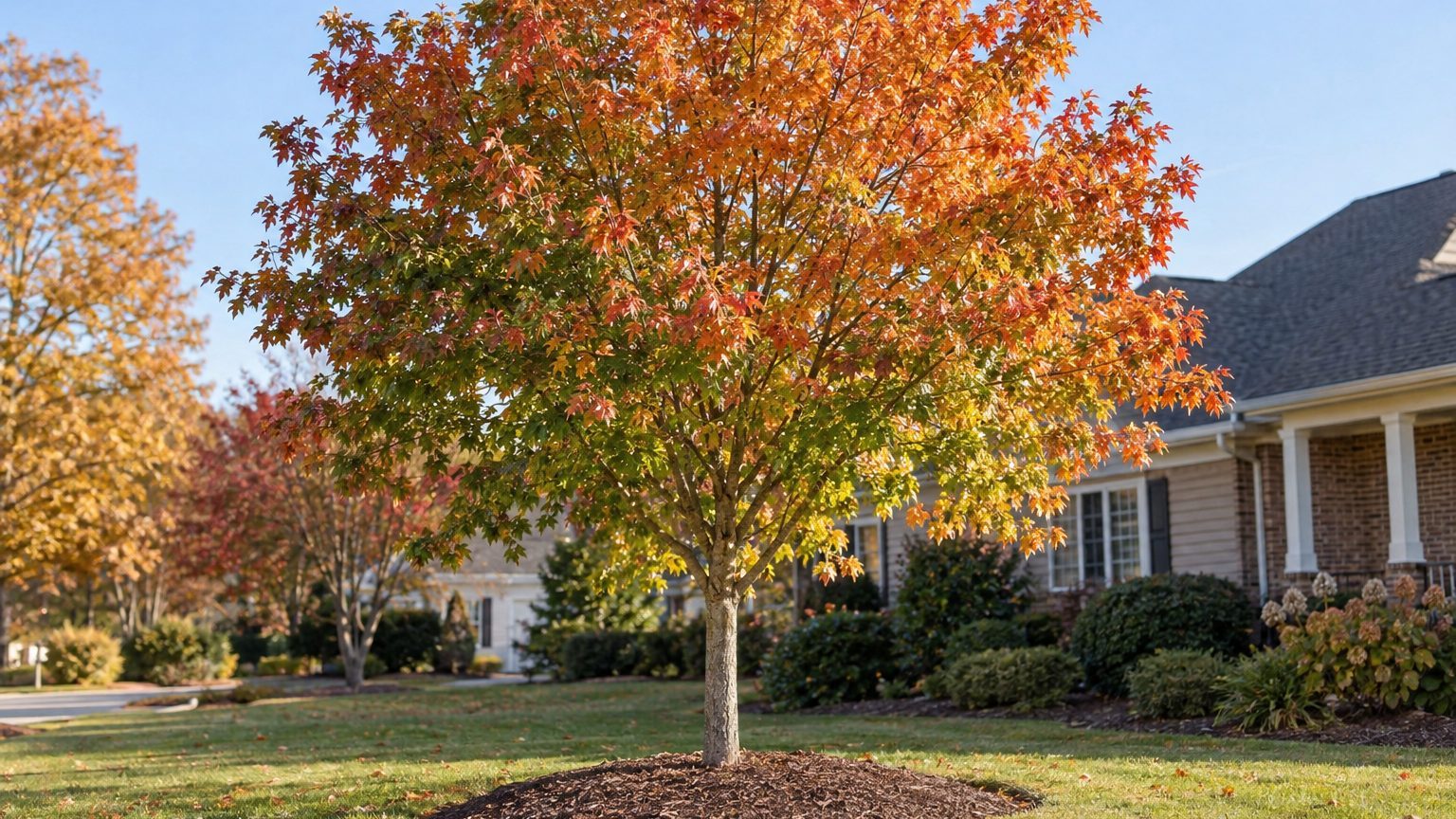
Fall and winter are when new trees go into South Carolina ground, once the leaves drop and the heat of summer has passed. Shade and ornamental trees settle best from October through December, and fruit trees go in a little later, while they sleep. The sections here cover timing for each kind of tree, which species suit the state, and the yearly care that follows.
When Is the Best Time to Plant Trees in South Carolina?

For shade and ornamental trees, plant from October through December, with January and February as a fallback in a mild winter. Those months let roots grow in soil that still holds warmth, so the tree is anchored before summer heat arrives.
- In October, container and balled-and-burlapped trees can go in as the weather cools, and the soil is still warm enough to encourage new root growth.
- In November and December, trees are fully dormant and put their energy into roots instead of leaves, which cuts down on planting stress and on how much water they need.
- In January and February, planting is still fine on days when the soil is workable, and it can also be done in those months if fall slipped by.
- Across the warm months, container trees can survive if you water them regularly, though they settle best when planted in the dormant season.
- In summer, skip planting if you can, because heat and dry soil stress the new roots harder than at any other time of year.
Last spring frost usually falls between February 28 and March 17, and first fall frost between November 20 and December 5, for Charleston. Hardiness zones run from 7a to 9a on the USDA system, and the Upstate runs several weeks tighter at both ends than the coast, so winter planting there needs a closer eye on frozen ground.
South Carolina — the year and the numbers
- State
- South Carolina
- USDA zones
- 7a-9a
- Last spring frost
- February 28 to March 17
- First fall frost
- November 20 to December 5
- Annual rain
- 53 in
- Lawn zone
- warm-season
- Source
- NOAA NCEI 1991-2020 Climate Normals, 32F freeze probabilities · Charleston
When to Plant Fruit Trees in South Carolina
Fruit trees go in from December through February, with March as a fallback. Peach trees in South Carolina are planted while fully dormant, from early December to mid-March, so the roots are working before the buds start to open.
Bare-root trees are planted while dormant and before the buds open, which is why the window closes as spring arrives.
| Kind of fruit tree | When to plant in South Carolina | Why then |
|---|---|---|
| Bare-root | December, January and February, or March if the tree is still fully dormant | The tree is asleep and the buds have not opened |
| Container | December, January and February, or March | Roots settle best in the dormant season, though a watered container tree can go in most of the year |
Pruning fruit trees at planting time follows its own timing, and fall or early winter is avoided because new growth may not harden before the cold.
Best Trees to Plant in South Carolina
Native and adaptable shade and ornamental trees do well across the state, from the Lowcountry to the Upstate. Match the tree to your soil moisture, sun and space, and check which hardiness zone your yard falls in before you buy.
| Tree | How it does in South Carolina | Why |
|---|---|---|
| Eastern redbud | A small, multi-stemmed native with pink to purple flowers in early spring | It likes moist soil but handles most any site |
| Red maple | Fall leaves range from yellow to red | It adapts to a variety of sunlight and soil conditions |
| Pin oak | Holds up in street and yard settings | It tolerates urban environments |
Redbud suits a spot with limited room, while a red maple or pin oak fills a larger space with shade. Whichever you pick, plant it in the fall or winter window so it starts rooting before summer.
When to Plant, Water and Prune Trees in South Carolina
Planting, watering and pruning each have their own moment in the year. Plant in the dormant season, water a young tree through its first dry spells, and prune fruit trees in late winter.
| Task | Best timing in South Carolina | Why then |
|---|---|---|
| Plant shade and ornamental trees | October through December | Roots settle in warm soil before summer heat |
| Plant fruit trees | December through February | The tree is dormant and the buds have not opened |
| Water a young tree | Regularly after planting, and through dry spells | New roots dry out quickly and need steady moisture to establish |
| Prune fruit trees | February, with January or March as a fallback | The tree is dormant and the buds have not swollen |
Peaches are pruned last, closest to bloom, because their flower buds are easily hurt by cold, while apples are pruned first. The full details are on the page for pruning fruit trees in South Carolina.
Where to Get Tree Advice in South Carolina
For help choosing a species or testing your soil, go to Clemson Extension and your county extension office.
- Clemson Extension offers planting guidance and fact sheets, so check there before you buy a tree.
- Your county office can walk you through a soil test, and the fall and winter planting season is the time to ask.
Common Questions
Can You Plant a Tree in Summer in South Carolina?
A container tree can survive a summer planting if you keep it watered, but it is a hard season for new roots. Waiting for the dormant months gives the tree an easier start.
Should You Remove the Burlap When Planting a Balled-and-Burlapped Tree?
Pull back and cut away the burlap and any wire basket from the top of the root ball once the tree sits in the hole, so roots can spread freely. Keep the root flare at ground level and leave mulch off the trunk.
Which Apple Varieties Resist Disease in South Carolina?
In South Carolina, disease resistant apples such as Liberty and Freedom are strongly recommended for the home garden. Both resist scab and cedar apple rust, which helps cut down on sprays.