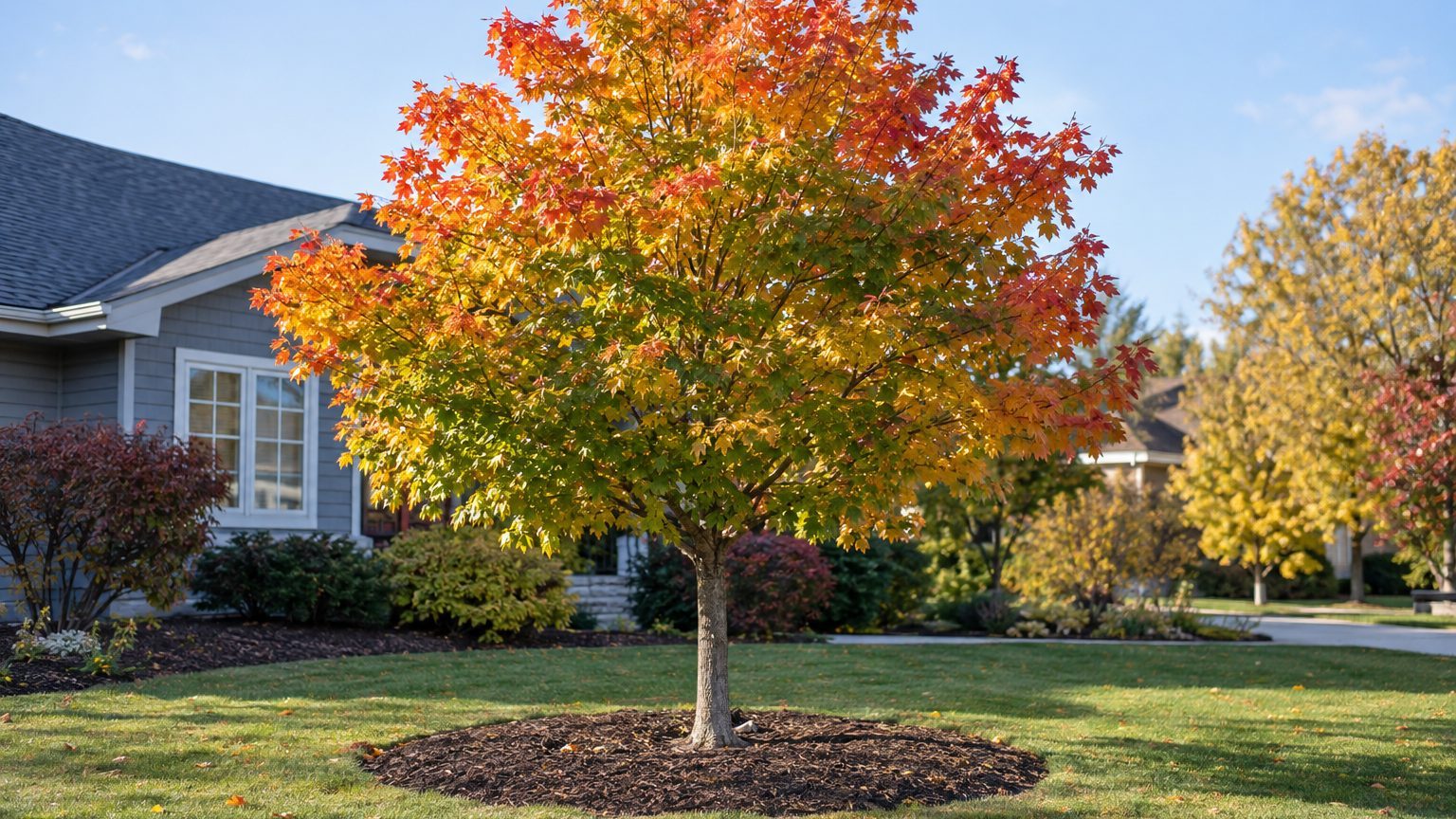
Fall planting gives a new tree the most forgiving start in the Northwest Territories, because the roots can recover before the next growing season. Shade and ornamental trees go in during September, with May as a fallback once the ground thaws.
When Is the Best Time to Plant Trees in Northwest Territories?

September is the time to plant shade and ornamental trees, whether they come in a container or a burlapped root ball, and May works when the ground has thawed. The territory has no local tree-timing guidance of its own, so these months follow a comparable cold climate. Confirm local timing with a garden centre, a garden society or a territorial gardening group.
- In May, once the ground thaws enough to dig, a tree can still go in while dormant, though leaves often start by the time the soil is workable.
- Container-grown trees can go in through much of the growing season if you keep them watered, but they settle best when planted in the dormant season.
- In summer, planting is hardest on a tree, since heat and dry soil stress the new roots.
- In September, the tree is entering dormancy, and a root system damaged by the move has time to regrow and recover before winter.
- After a fall planting, keep watering the tree until the ground freezes.
At Yellowknife, the average last spring frost falls around May 25, and in one year out of two it arrives later. The average first fall frost comes around September 18, and in one year out of two it arrives earlier. Northern districts run weeks behind that station. The Canadian hardiness zone there is 1b, a separate system from USDA zones.
Northwest Territories — the year and the numbers
- State
- Northwest Territories
- Hardiness zones
- 1b
- Last spring frost
- May 25
- First fall frost
- September 18
- Annual rain
- 11 in
- Lawn zone
- cool-season
- Source
- Environment and Climate Change Canada — Canadian Climate Normals 1981-2010, station YELLOWKNIFE A · Yellowknife
When to Plant Fruit Trees in Northwest Territories
Plant a bare-root fruit tree as soon as the soil can be worked in late winter, while the tree is still dormant and before the buds open. Waiting until the buds swell asks the roots to feed new growth they have not yet anchored.
Container-grown fruit trees are more flexible, though the dormant season still suits them best.
| Kind of fruit tree | When to plant in Northwest Territories | Why then |
|---|---|---|
| Bare-root | As soon as the soil can be worked, before the buds open | The tree is dormant and has no leaves to support |
| Container-grown | Most of the year if watered, best in the dormant season | The roots are intact, but they settle more easily without leaves to feed |
For apples, cherries, plums and the varieties that stand up to cold, the page on the best fruit trees to grow in the territory goes into detail.
Best Trees to Plant in Northwest Territories
Crabapples are the ornamental trees that handle a cold northern climate, and breeding has produced many hardy cultivars. Choose by the room you have, the sun the spot gets and the hardiness zone, then confirm the pick with a local garden centre.
| Tree | How it does in Northwest Territories | Why |
|---|---|---|
| Hardy crabapple cultivars | Some survive the deepest winter cold | Breeding work has targeted extreme cold hardiness, so that trees can withstand very severe winter temperatures |
| Siberian crabapple | Grows well in cold northern climates | Bears edible fruit slightly larger than wild crabapples |
| Dolgo crabapple | Grows well in cold northern climates | Also bears edible fruit slightly larger than wild crabapples |
Crabapples give spring bloom and fruit in a single tree, which suits a front yard with limited room. Hardiness varies from cultivar to cultivar, so check the one you pick rather than assuming the whole group will cope with your winters.
When to Plant, Water and Prune Trees in Northwest Territories
A tree’s year here runs on dormancy. Planting and pruning both happen when the tree is asleep, and watering carries a fall planting to the freeze.
| Task | Best timing in Northwest Territories | Why then |
|---|---|---|
| Plant shade and ornamental trees | September, or May once the ground thaws | The tree is dormant and the roots can recover |
| Water a young tree | Regularly after planting, until the ground freezes | New roots need moisture before the soil locks up |
| Prune fruit trees | March to April, while the tree is dormant | Cuts heal before growth starts, and the buds have not swelled |
Avoid pruning a fruit tree in fall or early winter, because new growth may not harden before the cold. Apples are pruned first and peaches last, closest to bloom, since peach flower buds are easily hurt by cold. The page on when to prune fruit trees covers the cuts themselves.
Where to Get Tree Advice in Northwest Territories
Canada has no county extension offices, so tree questions go to the territorial agriculture department, a local garden society or a garden centre. Each can speak to local soil and species choice.
- The Department of Industry, Tourism and Investment handles agriculture in the territory, so start there with questions on hardy species or growing conditions.
- A local garden society or master gardener group can tell you which trees have held up in your neighbourhood, and they are worth contacting well before a September planting.
- A garden centre can confirm timing and stock for your spot, and the weeks before the fall planting window are the time to ask.
Common Questions
Are Apple Rootstocks from Southern Nurseries Hardy Enough?
Not reliably. The Malling, Merton Malling and EMLA dwarfing rootstocks that nurseries commonly sell in the Lower 48 are not dependably winter-hardy in cold interior climates. Ask for a tree on a rootstock known to take hard winters.
Do Tart Cherries Handle Cold Better than Sweet Cherries?
Sour or tart pie cherries are considerably hardier than sweet types. They do best on a well-drained, sandy loam, so a heavy or soggy spot will set them back whatever the winter does.
Which Plum or Apricot Survives in a Cold Interior Climate?
The Manchurian plum is the variety proved winter-hardy in cold southcentral conditions, and it can yield ripe, sweet fruit. Manchurian apricots are also reliably hardy. Both are grown from seed, so fruit quality varies from tree to tree.