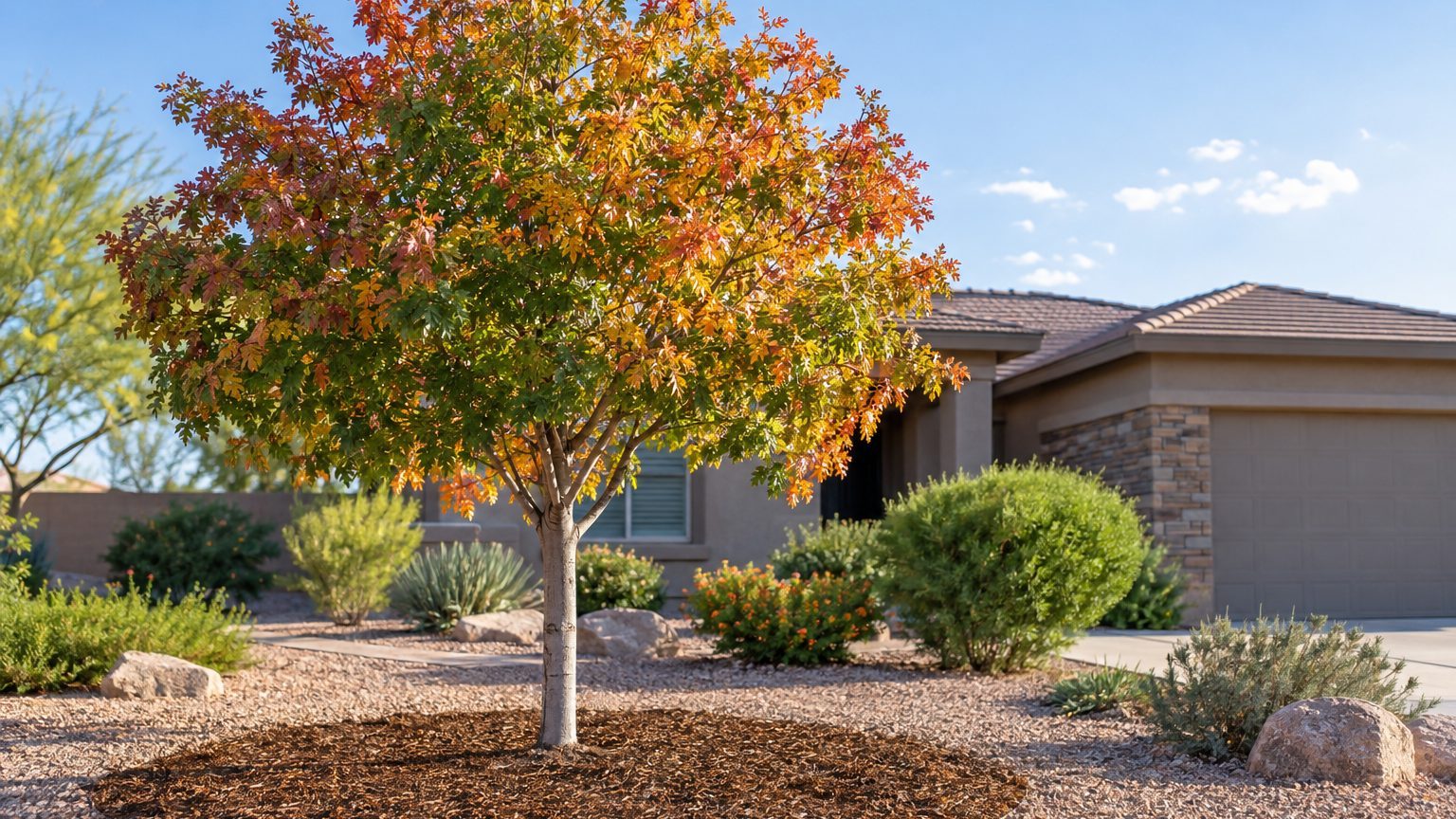
Fall and early winter, when the desert air finally cools and the ground is still warm, is when shade trees go in around Arizona yards. Fruit trees follow in late winter, once bare-root stock reaches the nurseries. The timing here follows summer heat, not frost, and the high country plays by different rules.
When Is the Best Time to Plant Trees in Arizona?

Shade and ornamental trees settle in best from October through December, and the year looks like this for a tree in a container or wrapped in burlap.
- In October, the worst of the summer heat has passed, so new roots can grow in soil that is still warm.
- Through November, a tree planted now spends the cool months building roots before it faces summer heat.
- In December, planting is still on the calendar, and the tree stays dormant above ground while the roots keep working below.
- Outside the main planting window, a container tree can still go in if you water it regularly.
- In summer, planting is hardest on the tree, because heat and dry soil stress young roots.
In Phoenix, a freeze is rare, and a cold snap that touches 32F can come between late December and mid January. The high country around Flagstaff is a different climate and freezes hard. Hardiness zones in the USDA system run from 4b to 10b across the state, so a planting spot in the high country needs a different tree than one in the Phoenix area.
Arizona — the year and the numbers
- State
- Arizona
- USDA zones
- 4b-10b
- Frost
- none in an average year
- Annual rain
- 7 in
- Lawn zone
- warm-season
- Source
- NOAA NCEI 1991-2020 Climate Normals + NOAA RCC ACIS daily records, station USW00023183 — https://www.ncei.noaa.gov/access/services/data/v1?dataset=normals-annualseasonal&stations=USW00023183 · Phoenix
When to Plant Fruit Trees in Arizona
Fruit trees go in during February and March, late winter and early spring, which is when bare-root trees show up for sale. Buy them and plant them soon, while they are still dormant and before the buds open.
Container-grown fruit trees follow the same window, so you can shop for either kind at the same time.
| Kind of fruit tree | When to plant in Arizona | Why then |
|---|---|---|
| Bare-root | February to March | Sold only in late winter and early spring, and planted while dormant |
| Container | February to March | Settles best in the dormant season, though it can go in most of the year with watering |
Chill hours shape which fruit does well here. Stone fruits are much more frost-prone, and their recommended chill hours matter more. Eva’s Pride, a peach with a very low chilling requirement of 100-200 hours, ripens early to late May, and the variety suits mild desert winters. Fruit tree varieties get a fuller look on the page about the best fruit trees to grow in Arizona.
Best Trees to Plant in Arizona
For deciduous shade, desert-adapted trees with moderate to low water needs are the favorites: mesquite, palo verde and sweet acacia. For windbreaks or year-round shade, evergreens such as Afghan pine, Arizona cypress and live oak come in various sizes and shapes.
| Tree | How it does in Arizona | Why |
|---|---|---|
| Mesquite | A favorite deciduous shade tree | Desert adapted, with moderate to low water needs |
| Palo verde | A favorite deciduous shade tree | Desert adapted, with moderate to low water needs |
| Sweet acacia | A favorite deciduous shade tree | Desert adapted, with moderate to low water needs |
| Afghan pine | A good evergreen for windbreaks or year-round shade | Comes in various sizes and shapes |
| Arizona cypress | A good evergreen for windbreaks or year-round shade | Comes in various sizes and shapes |
Live oak also fills the evergreen role. Match any of these to the space you have, the sun it will get and your hardiness zone, since the high country and the low desert differ so much.
When to Plant, Water and Prune Trees in Arizona
Planting, early watering and fruit tree pruning each have their own moment in the year. Watering follows planting, so the schedule starts the day the tree goes in.
| Task | Best timing in Arizona | Why then |
|---|---|---|
| Plant shade and ornamental trees | October to December | Roots grow in warm soil before the heat returns |
| Plant fruit trees | February to March | Bare-root trees are for sale and still dormant |
| Water a young tree | Regularly after planting, especially in hot, dry weather | Heat and dry soil stress new roots |
| Prune fruit trees | January to February | Dormant, before growth starts |
Prune fruit trees while they are dormant and before the buds swell. Peaches come last, closest to bloom, because their flower buds are easily hurt by cold, and apples come first. Pruning in fall or early winter is avoided, since new growth may not harden before the cold. The page on when to prune fruit trees in Arizona goes deeper.
Where to Get Tree Advice in Arizona
For a tree choice that fits your yard or a soil test, start with University of Arizona Cooperative Extension and your county office.
- The extension website carries guides on desert trees and low-desert fruit, worth reading before you shop in fall or late winter.
- Your county office can advise on which tree suits your spot and explain how to send in a soil sample before planting.
Common Questions
Can You Plant a Tree in Summer in Arizona?
A container tree can go in with steady watering, but summer is the hardest season for it. Heat and dry soil stress new roots, so waiting for fall gives the tree an easier start.
Do You Need to Worry About Frost When Planting Trees in the Arizona Desert?
Rarely. A freeze is uncommon in the low desert, so summer heat is the bigger concern. Flagstaff and the high country freeze hard, so trees there need to suit the cold.
How Soon Should You Plant a Bare-Root Tree After Buying It?
Plant it soon after purchase, while it is dormant and before the buds open. Bare-root trees are sold only in late winter and early spring, so the window is short.