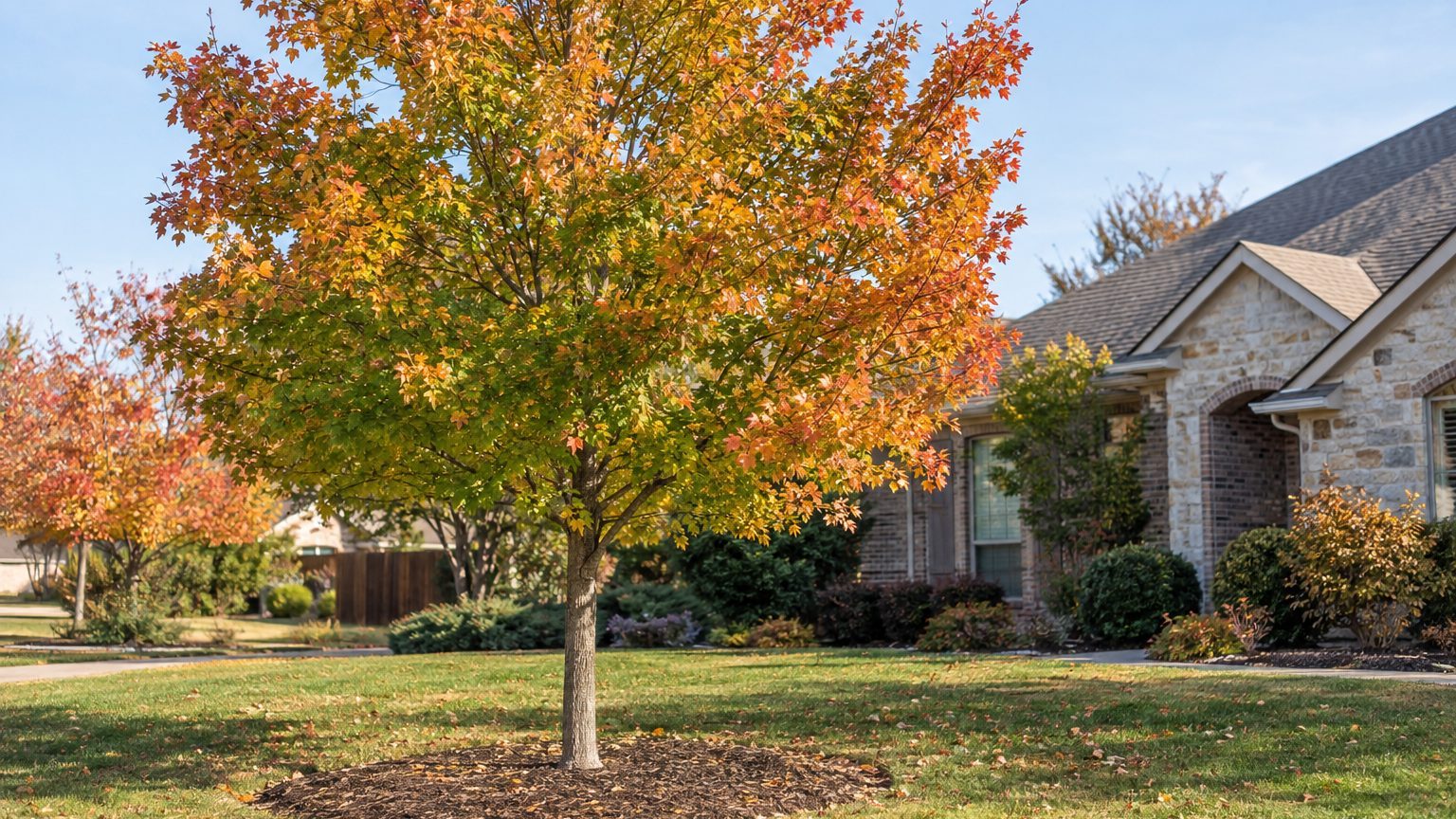
A freshly planted oak or peach tree settles in best when the leaves are down and the ground is cool but still workable. In Texas, that quiet stretch runs from late fall through winter.
When Is the Best Time to Plant Trees in Texas?

Late fall and early winter is the season for shade and ornamental trees in Texas, with November and December leading and January and February as a fallback. Roots keep growing in soil that is still warm while the branches rest, so the tree arrives in spring with a head start.
- In November and December, container and balled-and-burlapped shade and ornamental trees go in while they are dormant and the soil still holds some warmth.
- Through January and February, planting can continue for any deciduous tree that has not yet leafed out.
- In early spring, dormant planting is nearly over, because deciduous trees do best when planted from late fall to early spring, before buds open.
- Through the growing season, container-grown trees can still be planted if you water them well, though they settle best in the dormant season.
- In summer, planting is hardest, since heat and dry soil stress the new roots.
Texas covers hardiness zones 6a-10a on the USDA system, so the calendar above is a general guide and local frost timing varies widely. Around Houston, the last spring frost falls between February 4 and March 1, and the first fall frost arrives between December 1 and December 19. The Panhandle, North Texas and the Hill Country freeze on very different schedules, so check with your county office for your own area.
Texas — the year and the numbers
- State
- Texas
- USDA zones
- 6a-10a
- Last spring frost
- February 4 to March 1
- First fall frost
- December 1 to December 19
- Annual rain
- 52 in
- Lawn zone
- warm-season
- Source
- NOAA NCEI 1991-2020 Climate Normals, 32F freeze probabilities · Houston
When to Plant Fruit Trees in Texas
December through February is when most fruit trees go into Texas ground, while they are dormant. Bare-root trees especially need that window, because they have to be planted before the buds open.
Container-grown fruit trees are more forgiving, but they still settle best when planted in the same dormant season.
| Kind of fruit tree | When to plant in Texas | Why then |
|---|---|---|
| Bare-root | December through February | The tree is dormant and the buds have not opened |
| Container-grown | December through February | Roots settle in cool soil before spring growth |
Citrus is a special case. The smaller types, such as calamondin, limes, kumquats, lemons and limequats, suit container culture best, though all will grow in a pot for a limited time.
Best Trees to Plant in Texas
Native oaks and other hardy natives suit Texas well. They give the shade and fall color people want and handle environmental stress better than many non-native options. Mexican white oak has performed impressively in zone 7 and the warmer parts of zone 6.
| Tree | How it does in Texas | Why |
|---|---|---|
| Mexican white oak | Strong performer in zone 7 and warmer parts of zone 6 | Likes full sun and soil with good drainage |
| Black gum | A hardy native shade tree | Gives fall color and resists environmental stress |
| Swamp chestnut oak | A hardy native shade tree | Gives fall color and resists environmental stress |
With Mexican white oak, choose a spot where oak wilt has not been a problem.
When to Plant, Water and Prune Trees in Texas
Planting, watering and pruning each have their own season. Plant while trees rest, water young trees through dry spells, and prune fruit trees before the buds swell.
| Task | Best timing in Texas | Why then |
|---|---|---|
| Plant shade and ornamental trees | November and December, or January and February | Dormant trees root into cool soil |
| Plant fruit trees | December through February | Trees are dormant and buds are closed |
| Water a young tree | Right after planting, and regularly through dry spells | New roots dry out fast in heat and dry soil |
| Prune fruit trees | January and February, while dormant | Buds have not swelled yet |
Skip pruning in fall or early winter, because new growth may not harden before the cold. Peaches are pruned last, closest to bloom, since their flower buds are easily hurt by cold, while apples are pruned first.
Where to Get Tree Advice in Texas
For a tree suited to your soil and sun, local guidance beats guesswork. Two places are worth knowing.
- Texas A&M AgriLife Extension offers plant guides on shade trees, peaches and citrus, useful before you buy.
- Your county extension office can advise on which species fit your area and how to arrange a soil test, so call before the dormant planting season begins.
Common Questions
Can You Plant a Tree in Texas in the Summer?
Container-grown trees can go in during the growing season if you keep them watered. Dry soil and heat make it a struggle for new roots, so plan on regular watering until the tree is established.
Should You Prune a New Tree Right After Planting?
Fruit trees are pruned while dormant, before the buds swell, so a tree planted in winter can be shaped then. Shade trees mainly need broken or damaged branches removed at planting time.
Do Peach Trees Need Cold Weather in Texas?
Yes. Peaches need winter chilling to break dormancy, and the Zest series suits the medium chill zone with needs of about 500 to 600 chilling hours. The White Delight series needs more, at about 700 hours for Three and Four.