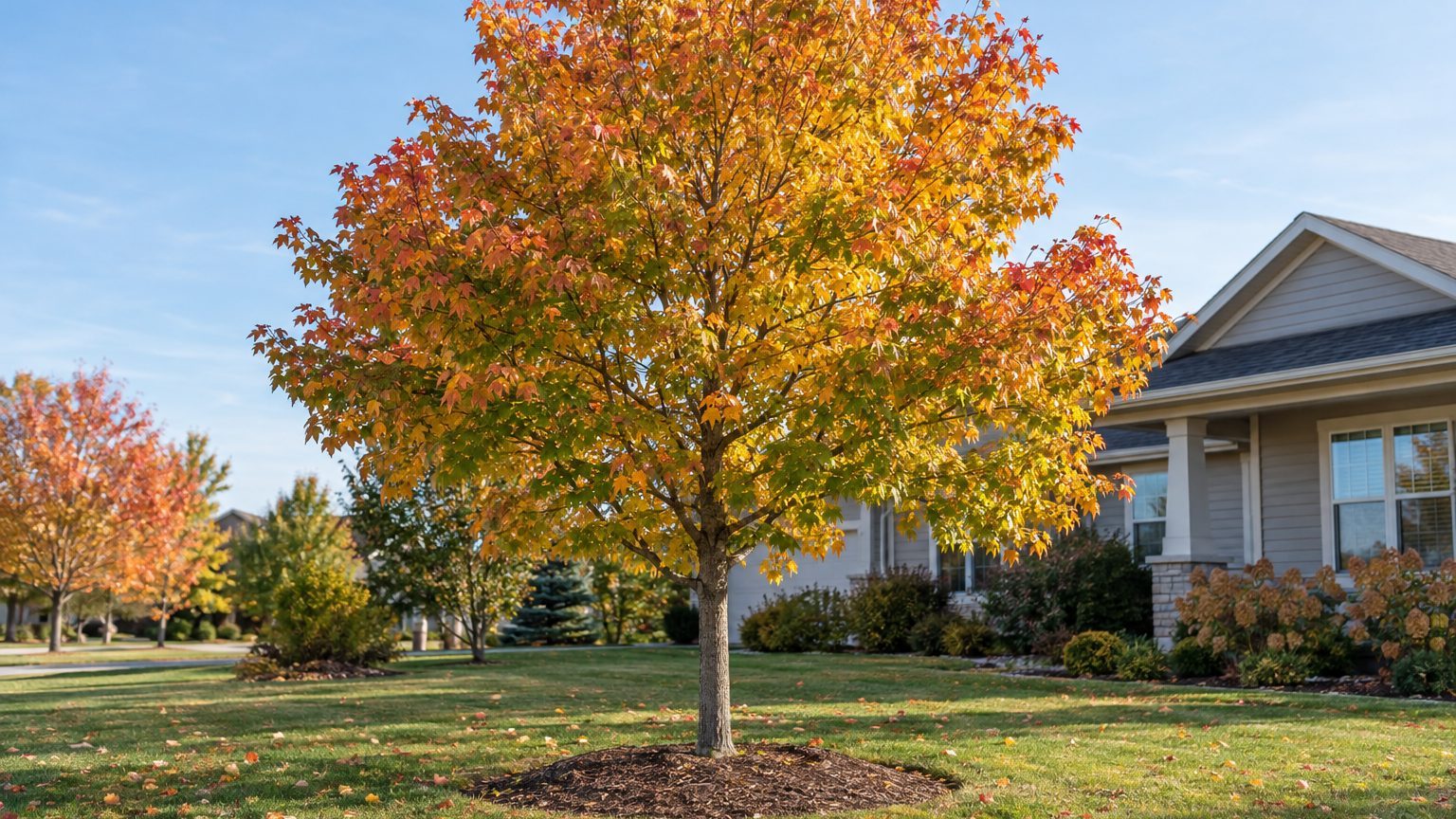
A young maple or crabapple set into cold, workable ground in spring has the whole growing season to settle in before North Dakota winter returns. Getting the timing right for your yard means knowing when to plant shade, ornamental and fruit trees, which ones hold up in North Dakota, and when to water and prune.
When Is the Best Time to Plant Trees in North Dakota?

Plant shade and ornamental trees in April and May, while the buds are still closed and the soil can be worked, with September and October as a fallback.
- In April, once the ground thaws enough to dig, set container and balled-and-burlapped trees before the buds open.
- Through May, planting still works well, because the roots grow into soil that is warming and the tree has the whole season to establish.
- In summer, hold off if you can, since heat and dry soil stress new roots more than at any other time of year.
- From September through early October, fall planting also works for many hardwoods, as long as you water the tree until the ground freezes.
- For magnolia, dogwood, tuliptree, sweet gum, red maple, birch, hawthorn, poplars, cherries, plums and many oaks, spring is the better choice over fall.
Bare-root trees go in while dormant, before the buds open. Container-grown trees can be planted most of the year if watered, though they settle best in the dormant season. At the reference city, the last spring frost falls between May 4 and May 15, and the first fall frost between September 25 and October 5. Gardens outside town usually frost later in spring and earlier in fall, often by one to two weeks, so check your own county. The state sits in USDA zones 3a to 4b, which is why hardiness matters when you choose a tree.
North Dakota — the year and the numbers
- State
- North Dakota
- USDA zones
- 3a-4b
- Last spring frost
- May 4 to May 15
- First fall frost
- September 25 to October 5
- Annual rain
- 24 in
- Lawn zone
- cool-season
- Source
- NOAA NCEI U.S. Climate Normals 1991-2020, 32F freeze probabilities · Fargo
When to Plant Fruit Trees in North Dakota
Plant fruit trees in April and May. Bare-root trees go in as early as the soil can be worked, before the buds open, and container trees follow the same spring window.
Bare-root trees arrive dormant, so they need to be in the ground before they leaf out. Container trees are more forgiving, but spring still gives their roots the longest stretch of growth before winter.
| Kind of fruit tree | When to plant in North Dakota | Why then |
|---|---|---|
| Bare-root | April to May, before the buds open | The tree is dormant and the roots start growing as the soil warms |
| Container | April to May | Roots have the full season to settle before the cold |
Rootstock matters as much as timing in cold country. Rootstocks mostly set an apple tree’s height and how soon it bears, and some also add cold hardiness. The Budagovsky series is known for that hardiness, and the Geneva series includes rootstocks tolerant of replant disease and crown and root rot.
Best Trees to Plant in North Dakota
Choose trees rated for your zone and match them to the space and sun you have. Crabapples are a dependable ornamental choice because they tolerate a wide range of soils, provided the soil drains well.
Cultivar choice matters, since some crabapples are far more disease prone than others. Look for named disease-resistant selections rather than buying on bloom alone.
| Tree | How it does in North Dakota | Why |
|---|---|---|
| Crabapple | Does well in well-drained soil | Tolerates a wide range of soil conditions |
| Columnar Siberian crabapple | Grows as a narrow, upright tree but needs care | Highly susceptible to fireblight |
For other shade trees, let your site decide. Measure the open space, note how many hours of sun it gets, and confirm the tree’s hardiness zone fits the 3a to 4b range before you buy.
When to Plant, Water and Prune Trees in North Dakota
Planting happens in spring, watering follows the tree through its first seasons, and fruit trees are pruned while dormant. Each task has a moment when the tree is best able to take it.
| Task | Best timing in North Dakota | Why then |
|---|---|---|
| Plant shade and ornamental trees | April to May, or September to early October | Roots grow in workable soil before heat or hard cold |
| Plant fruit trees | April to May | Bare-root trees must go in before the buds open |
| Water a young tree | Regularly through the growing season, and in fall until the ground freezes | New roots need steady moisture to establish |
| Prune fruit trees | March to April, while dormant | The coldest weather has passed and the buds have not yet broken |
Skip fruit tree pruning in fall or early winter, because new growth may not harden before the cold. Apples are pruned first, and peaches last, closest to bloom, since their flower buds are easily hurt by cold. Oaks are not pruned from March through October, to limit the spread of oak wilt. The page on when to prune fruit trees covers the details.
Where to Get Tree Advice in North Dakota
NDSU Extension and your county extension office can help with choosing a species for your site and testing your soil.
- Ask the county office about which trees suit your soil and zone, and go before you order stock.
- Bring a soil sample in late winter or early spring, so the results are in hand before planting begins.
Common Questions
Can You Plant a Tree in July?
You can, if the tree is container grown, but summer is the hardest season for it. Heat and dry soil stress the new roots, so the tree needs frequent watering until it settles.
Should You Remove the Burlap from a Balled-and-Burlapped Tree?
Yes. Set the tree at the right height, cut away wire baskets and loosen or remove the burlap from the top of the ball before backfilling, so roots can spread freely into the surrounding soil.
How Long Should You Water a Newly Planted Tree in Fall?
Keep watering a fall-planted tree until the ground freezes. The roots are still active in cool soil, and moisture going into winter helps the tree come through the cold.