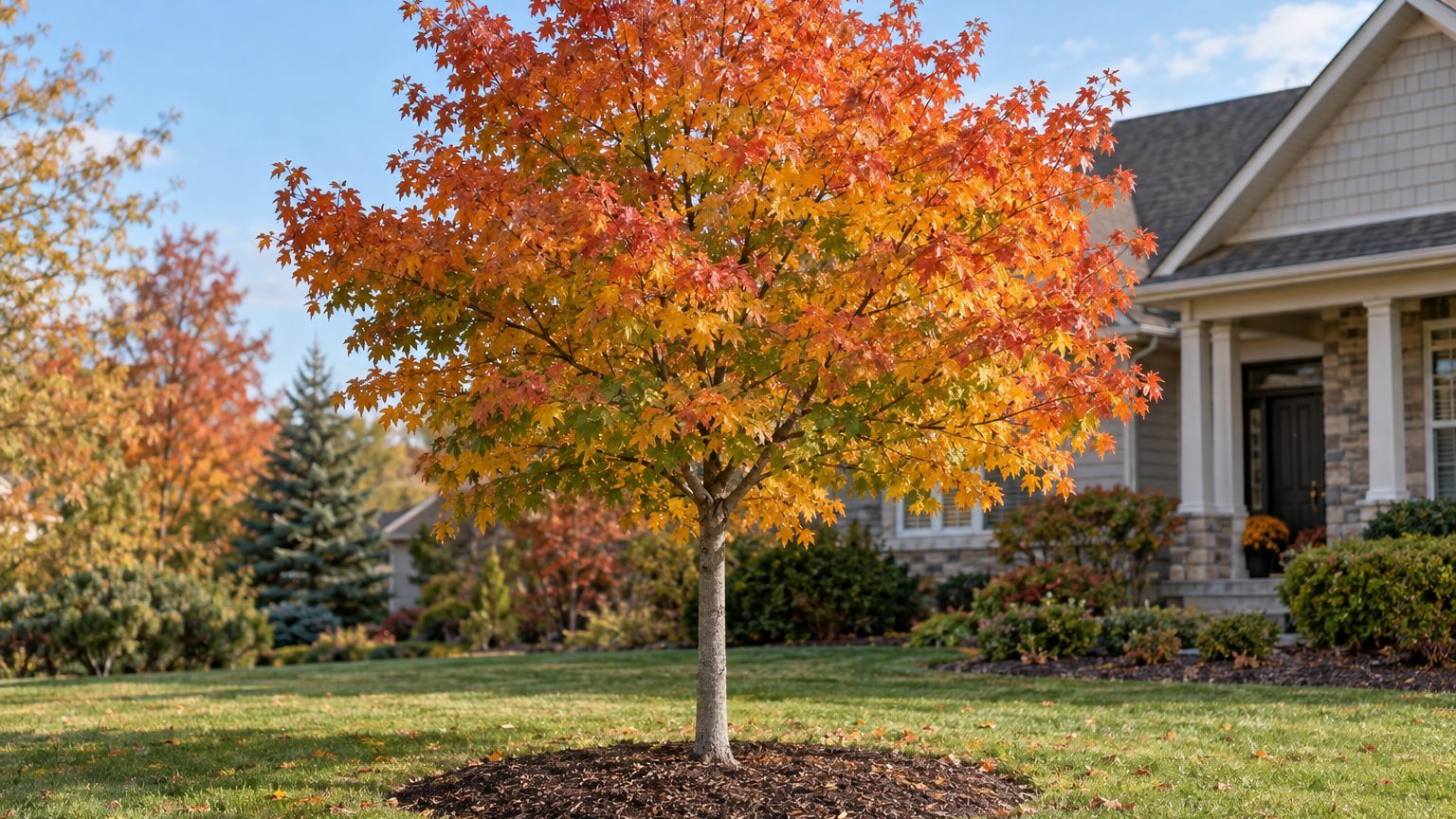
A young maple or redbud settles in best when the ground is cool, moist and workable, and Indiana offers those conditions in both spring and fall. Late April and October are the months to plant shade and ornamental trees, while fruit trees go in earlier, in March and April, when they are still asleep.
When Is the Best Time to Plant Trees in Indiana?

Plant shade and ornamental trees in April or October, and fall planting can stretch into September. Spring planting can also run into May. The year breaks down like this for container and balled-and-burlapped trees.
- In April, and especially late April, the soil is workable and roots have a full growing season ahead to settle in.
- In May, planting still works, though the tree has less time to establish before summer heat arrives.
- During summer, heat and dry soil stress new roots, so this is the hardest time to plant a tree.
- In September, early planting gives roots time to grow while the soil is still warm.
- In October, planting works as long as the soil is still warm enough, which usually holds until early to late October depending on where you live.
- After planting in fall, keep watering until the ground freezes.
Container trees can go in most of the year if you keep them watered, but they settle best in the dormant season. Bare-root trees must go in while dormant, before the buds open. Indianapolis has a last spring frost between April 9 and April 21 and a first fall frost between October 21 and October 30, in hardiness zones 5b to 7a on the USDA system. Southern Indiana runs earlier in spring and later in fall than the north by a fortnight or more.
Some trees do better planted in spring than fall: magnolia, dogwood, tuliptree, sweet gum, red maple, birch, hawthorn, poplars, cherries, plums and many oaks.
Indiana — the year and the numbers
- State
- Indiana
- USDA zones
- 5b-7a
- Last spring frost
- April 9 to April 21
- First fall frost
- October 21 to October 30
- Annual rain
- 44 in
- Lawn zone
- cool-season
- Source
- NOAA NCEI 1991-2020 Climate Normals, 32F freeze probabilities · Indianapolis
When to Plant Fruit Trees in Indiana
Plant fruit trees in March or April, in late winter or early spring. Bare-root trees must go in while they are still dormant, so the moment the soil can be worked is your signal.
Dormant trees put their energy into roots first, then leaves. Planting after the buds open asks a bare-root tree to do both at once with very little root to supply it.
| Kind of fruit tree | When to plant in Indiana | Why then |
|---|---|---|
| Bare-root | March to April, while still dormant | Roots establish before the buds open |
| Container-grown | March to April | Settles best in the dormant season, and spring planting gives a full season to root |
Container fruit trees are more forgiving than bare-root ones and can go in later if watered, though planting them in the dormant season still gives the best start. Apple, pear, peach and cherry all follow the same late winter to early spring rhythm at planting time.
Best Trees to Plant in Indiana
Choose a tree that fits your soil, your sun and the room it will have at full size. In Indiana, common hackberry, sugar maple and Freeman maple have all been recommended for home landscapes, and several tough oaks handle a wide range of conditions.
Hackberry grows fast and tolerates varied soils, but limbs can break in wind and ice. Sugar maple copes with shade while young. Freeman maple grows quickly and has stronger wood than silver maple, one of its parents.
| Tree | How it does in Indiana | Why |
|---|---|---|
| Common hackberry | Fast grower, adapts to many soils | Tolerates a wide variety of soil conditions, though leaf galls and wind or ice damage to limbs can follow |
| Sugar maple | Fine in some shade while young | Tolerates shady situations early in life |
| Freeman maple | Fast growth with stronger wood | Does best in well-drained, slightly acid soils but accepts many conditions |
| Burr oak | Long-lived and adaptable | A tough oak species that suits the Midwest |
| Swamp white oak | Long-lived and adaptable | Tough and adaptable like its oak relatives |
Chinkapin oak and shingle oak belong in the same tough, adaptable group. Slow-to-establish trees such as bald cypress, ginkgo, magnolia, hemlock, sweetgum, tulip tree and willow are best planted in spring.
When to Plant, Water and Prune Trees in Indiana
Planting, watering and pruning each have their own season. Plant in the cool months, water new trees as long as the ground is open, and prune fruit trees only while they are dormant, before the buds swell.
| Task | Best timing in Indiana | Why then |
|---|---|---|
| Plant shade and ornamental trees | April or October | Roots grow in workable soil, away from summer heat |
| Plant fruit trees | March to April | Bare-root trees must go in while dormant |
| Water a young tree | Regularly after planting, and in fall until the ground freezes | New roots need steady moisture to settle in |
| Prune fruit trees | February to March, while dormant | Wounds heal quickly before new growth and pests arrive |
Pruning runs in a set order. Apples and pears go first in late February, and cherries follow in mid-March before the buds swell. Peaches come last, closest to bloom, because their flower buds are easily hurt by cold. Skip fall and early winter pruning, since new growth may not harden before the cold. Oaks are left alone from March through October to limit the spread of oak wilt.
Where to Get Tree Advice in Indiana
Purdue Extension and your county extension office can help you pick a species that suits your site and test your soil before you dig.
- Visit Purdue Extension for tree selection, planting and pruning advice written for Indiana yards.
- Call your county extension office in late winter to ask about a soil test before spring planting.
Common Questions
Can You Plant a Tree in Summer in Indiana?
You can, if the tree is container-grown and you keep it watered, but summer heat and dry soil press hard on new roots. Waiting for April or October gives the tree an easier start.
Should You Plant Bare-Root Trees After the Buds Open?
No. Bare-root trees belong in the ground while dormant. Once buds open, the tree needs leaves and roots working together, and a bare-root tree has little root to feed new growth.
Can Fall Planting Work for Any Tree in Indiana?
Most trees take well to fall planting, but magnolia, dogwood, tuliptree, sweet gum, red maple, birch, hawthorn, poplars, cherries, plums and many oaks do better when planted in spring.