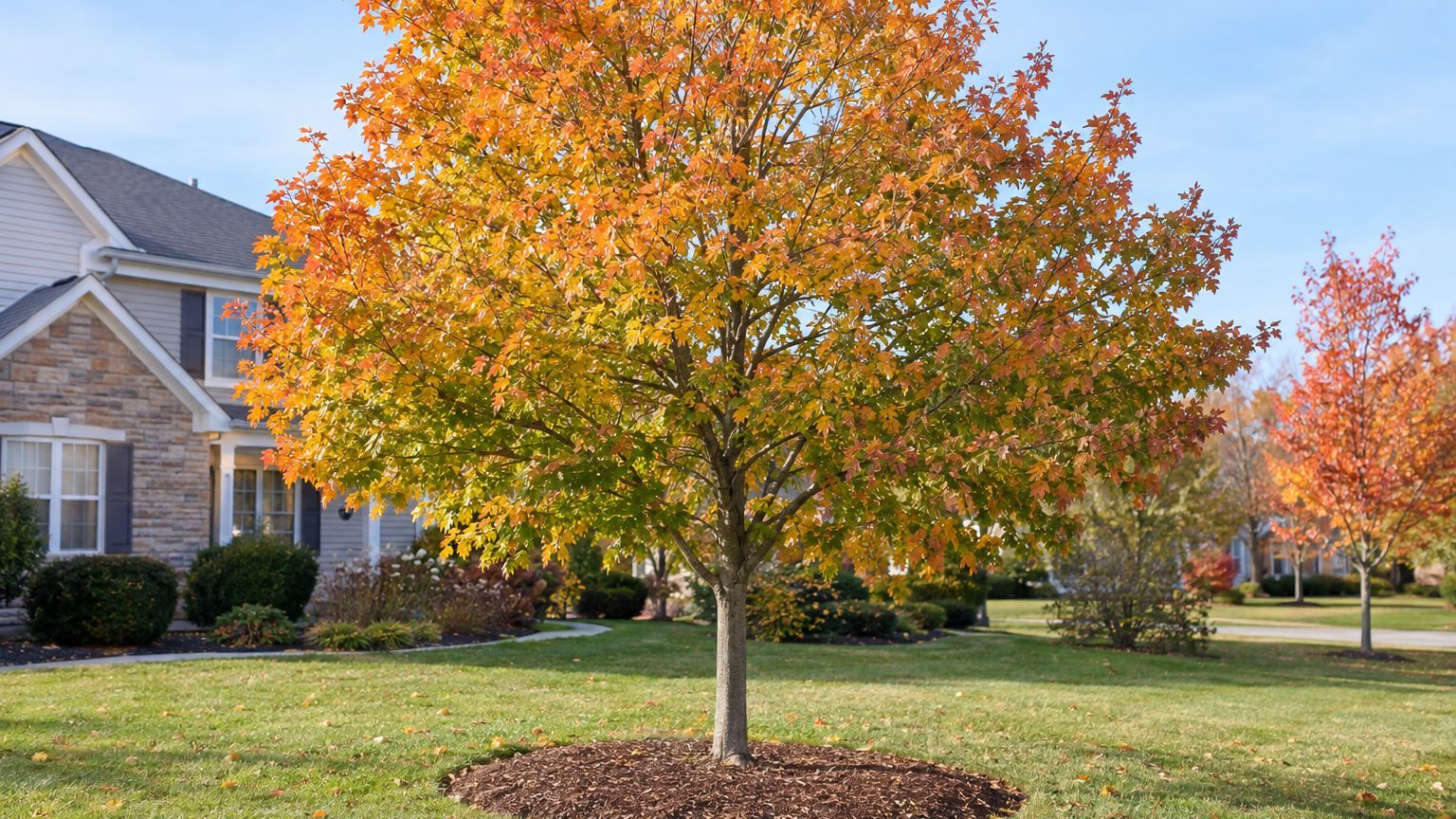
Fall leaves drop, the soil is still workable, and a young maple set in the ground now has time to settle before winter. In Illinois, trees go in best during spring and fall, and the rest of the year asks for more care. Fruit trees, shade trees and ornamentals each have their own timing.
When Is the Best Time to Plant Trees in Illinois?

Shade and ornamental trees do best planted in April or October, with May and September as fallbacks. Roots grow in soil that is workable and not yet baked by summer, which is why those months work.
- In March, the ground begins to thaw and bare-root stock can go in while still dormant, though most shade trees wait for April.
- In April, container and balled-and-burlapped trees can be planted, with late April a good moment for most shade and ornamental trees.
- In May, planting is still fine if you water regularly as the weather warms.
- In summer, planting is hardest, because heat and dry soil stress new roots.
- In September and October, fall planting gives roots time to grow before the ground freezes, and a tree planted then is watered until the ground freezes.
Container-grown trees can be planted most of the year if you keep them watered, but they settle best in the dormant season. Frost dates help you read the season: at the Chicago reference city, the last spring frost falls between April 11 and April 22, and the first fall frost between October 24 and November 3. Suburban and rural yards often see frost later in spring and earlier in fall, so check your own county. Illinois spans USDA hardiness zones 5a to 7b, so the north of the state runs colder than the south.
Illinois — the year and the numbers
- State
- Illinois
- USDA zones
- 5a-7b
- Last spring frost
- April 11 to April 22
- First fall frost
- October 24 to November 3
- Annual rain
- 38 in
- Lawn zone
- cool-season
- Source
- NOAA NCEI 1991-2020 Climate Normals, 32F freeze probabilities · Chicago
When to Plant Fruit Trees in Illinois
Plant fruit trees in March or April. Bare-root trees go in while still dormant, in late winter or early spring, as soon as the soil can be worked and before the buds open.
Container-grown fruit trees follow the same window, and they have more flexibility because their roots arrive in soil. Dormant planting still gives them the easiest start.
| Kind of fruit tree | When to plant in Illinois | Why then |
|---|---|---|
| Bare-root | March to April, while dormant | The tree is asleep and the buds have not opened |
| Container | March to April | Roots settle in cool, workable soil before summer heat |
Peaches tend to do well in central and southern Illinois. Most peach cultivars are not winter hardy, so they cannot survive the cold of northern Illinois. Apple, pear and cherry are planted on the same schedule.
Best Trees to Plant in Illinois
Oaks are a strong pick, especially the species that are tough and adaptable here: burr oak, swamp white oak, chinkapin oak and shingle oak. Other trees suit different soils and sites.
Several trees are slow to establish and are better planted in spring than in fall. These include bald cypress, ginkgo, magnolia, hemlock, sweetgum, tulip tree and willow.
| Tree | How it does in Illinois | Why |
|---|---|---|
| Burr, swamp white, chinkapin and shingle oak | Long-lived and adaptable | These species are tough in Illinois conditions |
| Common hackberry | Grows fast in many soils | Tolerates a wide variety of soil conditions |
| Sugar maple | Handles shade when young | Tolerates shady spots in its younger life |
| Freeman maple | Faster than silver maple | Stronger wood than one of its parents |
| Redbud | Best in moist, well-drained soil | A northern seed source is more likely to be cold hardy |
Hackberry leaves can get galls from an insect, and its limbs can be hurt by wind and ice. Freeman maple prefers well-drained, slightly acid soil but accepts a variety of conditions. Magnolia, dogwood, sweet gum, red maple, birch, hawthorn, poplars, cherries, plums and many oaks are best saved for spring planting.
When to Plant, Water and Prune Trees in Illinois
The year splits into planting seasons, a watering stretch for young trees and a dormant pruning window for fruit trees. Each task follows the tree’s rest or growth.
| Task | Best timing in Illinois | Why then |
|---|---|---|
| Plant shade and ornamental trees | April or October | Roots grow in workable soil, away from summer heat |
| Plant fruit trees | March to April | Trees are dormant, buds have not opened |
| Water a young tree | Regularly after planting, until the ground freezes in fall | New roots dry out fast and need steady moisture |
| Prune fruit trees | February to March, while dormant | Wounds heal fast and buds have not swollen |
Apples and pears are pruned first, in late February and early March in central Illinois. Cherries follow in mid-March before the buds swell, and peaches go last, closest to bloom, because their flower buds are easily hurt by cold. Pruning in fall or early winter is avoided, because new growth may not harden before the cold. Oaks are not pruned from March through October, to limit the spread of oak wilt. More detail is on the page When to Prune Fruit Trees in Illinois.
Where to Get Tree Advice in Illinois
University of Illinois Extension and your county extension office can help with choosing a tree for your yard and testing your soil.
- Extension staff can suggest species that fit your space, sun and hardiness zone, so ask before buying.
- The county office can arrange a soil analysis, and the best time to send a sample is before you plant.
Common Questions
Can You Plant a Tree in Summer in Illinois?
You can, if the tree is container-grown and you water it regularly. Summer is still the hardest season for it, and spring or fall gives a better start.
Should You Plant Oaks in Spring or Fall?
Many oaks do better planted in spring than in fall. Choose a tough, adaptable species such as burr oak or swamp white oak, and skip pruning from March through October.
Is Fall Planting Safe for New Trees?
Yes, for many trees. Plant early enough that roots can grow before winter, while the soil is still warm at planting depth.