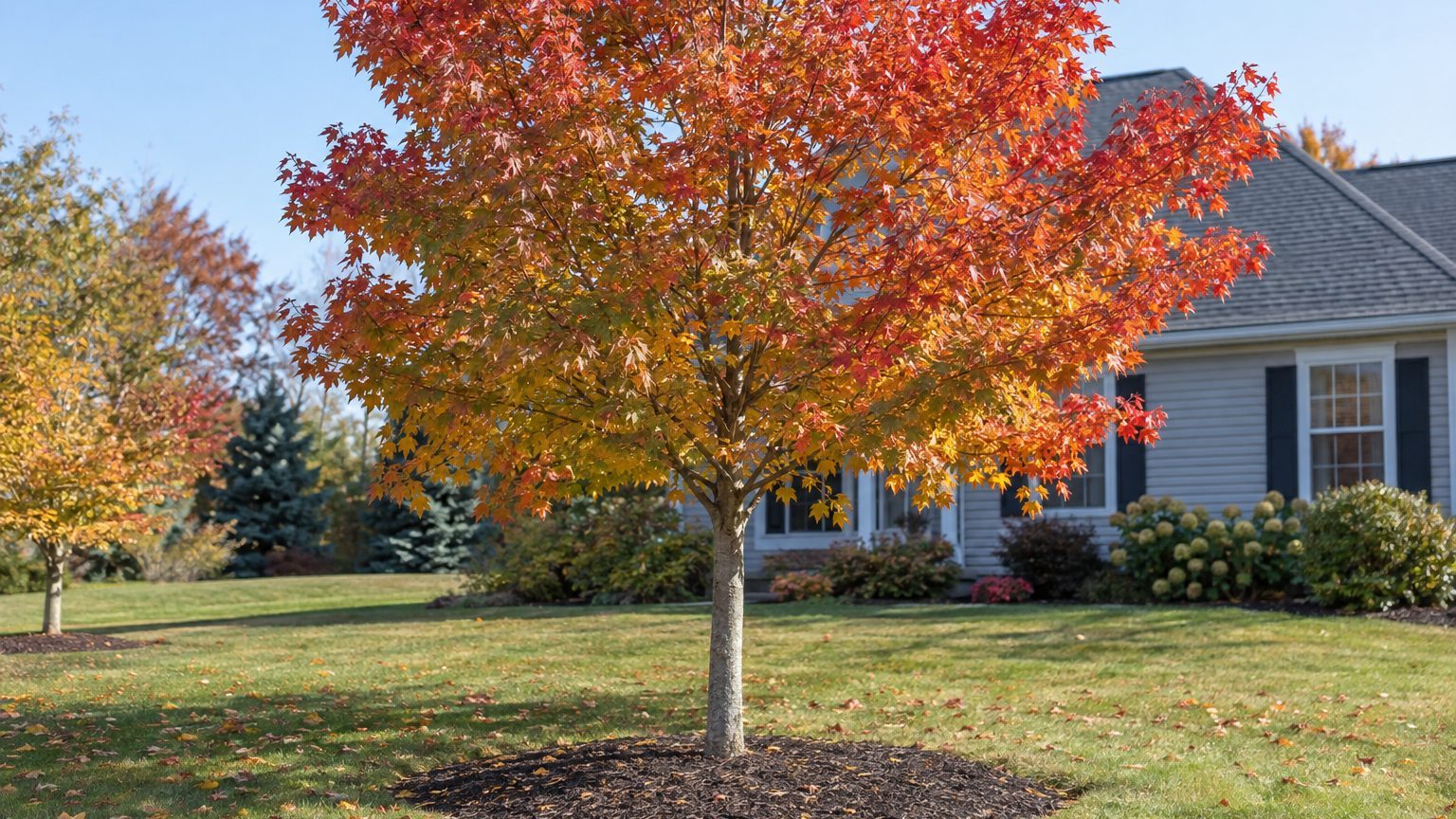
Bare branches in early spring are the signal that a new tree is ready to go in the ground, and on Prince Edward Island that moment comes in April and May. Shade and ornamental trees also take well in September and October. Fruit trees belong to spring only.
When Is the Best Time to Plant Trees in Prince Edward Island?

Spring is the main season for shade and ornamental trees on the island, with fall as a fallback. The dates here follow the nearest comparable climate, so confirm local timing with a garden centre, a garden society or the provincial gardening groups.
- In April, plant as soon as the frost is out of the ground and the soil can be worked, while the tree is still dormant.
- In May, container and balled-and-burlapped trees go in comfortably, and they can wait into late May or early June.
- Through summer, hold off, because heat and dry soil stress new roots.
- In September and October, fall planting works if it is finished before the end of October.
- After planting in fall, water the tree until the ground freezes.
Bare-root trees are planted while dormant, before the buds open. Container-grown trees can go in during most of the growing season if they are watered, but they settle best in the dormant season. At the Charlottetown reference station, the average last spring frost falls on May 16, so half of all years see frost later than that. The average first fall frost arrives on October 17, and in half of all years it comes earlier. Northern and upland districts run weeks behind Charlottetown. The island sits in Canadian hardiness zone 5b, a Canadian system that does not convert to a USDA zone. Some trees do better planted in spring than in fall, including magnolia, dogwood, tuliptree, red maple, birch, hawthorn, cherries, plums and many oaks.
Prince Edward Island — the year and the numbers
- State
- Prince Edward Island
- Hardiness zones
- 5b
- Last spring frost
- May 16
- First fall frost
- October 17
- Annual rain
- 46 in
- Lawn zone
- cool-season
- Source
- Environment and Climate Change Canada — Canadian Climate Normals 1981-2010, station CHARLOTTETOWN A · Charlottetown
When to Plant Fruit Trees in Prince Edward Island
Plant fruit trees in April and May, as soon as the frost has left the ground. Bare-root trees go in during April or early May while they are still dormant, before the buds open.
Fall planting is not an option for fruit trees here. Winters on the island are too cold for a newly planted fruit tree to get established.
| Kind of fruit tree | When to plant in Prince Edward Island | Why then |
|---|---|---|
| Bare-root | April to early May | The tree is dormant and the buds have not opened |
| Container | April and May | The frost is out of the ground and roots can grow |
Container fruit trees are more forgiving than bare-root ones, but spring still gives them a full season to root before the first winter. Skip fall for both kinds.
Best Trees to Plant in Prince Edward Island
Trees that handle cold winters and average, well-drained soil do best on the island. Paper birch, aspen and red maple suit a range of soils, and eastern redbud can work with some protection. Sugar maple dislikes salt, compaction and heat, so give it a roomy, sheltered spot.
| Tree | How it does in Prince Edward Island | Why |
|---|---|---|
| Paper birch | Does well in full sun | It adapts to many soils but does not tolerate shade |
| Aspen | Does well in full sun | It survives best with full sunlight |
| Red maple | Adapts to a variety of soils | It handles sites that once held shade-tolerant softwoods |
| Eastern redbud | Marginal, needs shelter | It sits at the edge of its hardiness and wants a spot away from drying winds and ice |
| Sugar maple | Needs a good site | It dislikes salt, compaction and heat |
Magnolia, tuliptree, oak and ginkgo are better planted in spring than in fall. Redbud grows best in average, medium-moisture, well-drained soil, in full sun to part shade. Match each tree to the room, sun and hardiness zone of your own yard.
When to Plant, Water and Prune Trees in Prince Edward Island
Planting, watering and pruning each have their own moment. Plant when the soil is workable, water through the first seasons and into fall, and prune fruit trees while they are dormant. Pruning fruit trees in fall or early winter is avoided, because new growth may not harden before the cold.
| Task | Best timing in Prince Edward Island | Why then |
|---|---|---|
| Plant shade and ornamental trees | April and May, or September and October | The frost is out of the ground in spring, and fall planting must finish before the end of October |
| Plant fruit trees | April and May | The tree is dormant and winters are too cold for fall planting |
| Water a young tree | Regularly through the growing season, and in fall until the ground freezes | New roots need moisture to settle before winter |
| Prune fruit trees | March and April | Late winter into early spring has the least effect on winter hardiness and tree health |
Among fruit trees, apples are pruned first and peaches last, closest to bloom, because peach flower buds are easily hurt by cold. Summer pruning is harder on a tree, so keep most cuts to winter and spring. Pruning gets a fuller treatment on the page When to Prune Fruit Trees in Prince Edward Island.
Where to Get Tree Advice in Prince Edward Island
The province has no county extension offices, but the provincial agriculture department and local gardening groups can help with choosing a tree or testing soil.
- The Prince Edward Island Department of Agriculture is the place to ask about tree choice and soil testing before spring planting.
- A local garden centre or garden society can confirm timing for your district before the soil thaws.
Common Questions
Can You Plant a Tree in Summer on Prince Edward Island?
A container tree can survive it with steady watering, but summer is a hard time to plant. Roots are slow to take hold in dry soil, so a tree that goes in during April, May, September or October has an easier start.
Should You Remove the Burlap from a Balled-And-Burlapped Tree?
Yes, once the tree sits in its hole, cut away the top of the burlap and any wire basket. Material left around the roots can slow them as they spread into the surrounding soil.
Do You Need to Stake a Newly Planted Tree?
Most trees stand on their own. Stake only a tree that cannot hold itself upright, and remove the ties after the roots have anchored it.