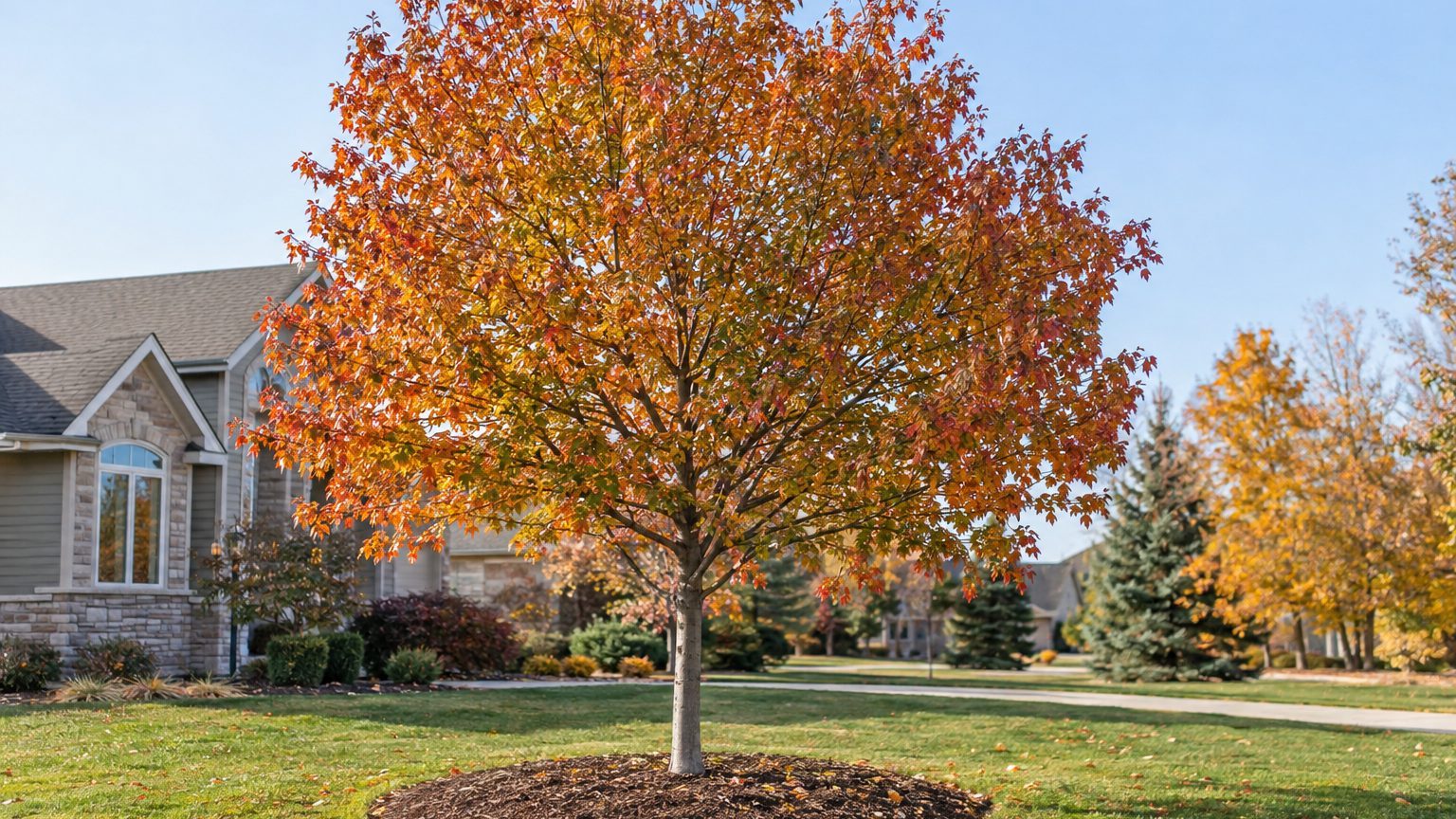
Dormant trees with tight buds are the ones that settle into Wyoming ground best, and that moment comes in spring once the soil has thawed. Shade and ornamental trees go in during April and May, with fall as a fallback. Fruit trees go in earlier, in April, while they are still asleep.
When Is the Best Time to Plant Trees in Wyoming?

Shade and ornamental trees do best planted in April or May, before the buds open, and the year offers a few other openings depending on how the tree is sold.
- In early spring, once the soil has thawed, plant while the buds are still tight and closed. April and May are the months to aim for.
- In late spring, container and balled-and-burlapped trees can still go in, as long as they are watered regularly while the roots spread.
- Through summer, hold off. Heat and dry soil stress new roots more than at any other time of year.
- In September and October, container and balled-and-burlapped trees can also be planted, and roots keep growing in soil that is still warm. Water a fall-planted tree until the ground freezes.
- Bare-root trees wait for spring, because they must go in dormant, before the buds open.
Spring planting is the safer habit for several trees, including magnolia, dogwood, birch, hawthorn, poplars, cherries, plums and many oaks. In Cheyenne, the last spring frost usually falls between May 7 and May 18, and the first fall frost between September 24 and October 5. Hardiness zones run from 3a to 6a on the USDA system, so a yard in a high valley can differ a lot from one on lower ground. At around 6,000 feet there are roughly 130 frost-free days, and frost can arrive in any month at higher elevations.
Wyoming — the year and the numbers
- State
- Wyoming
- USDA zones
- 3a-6a
- Last spring frost
- May 7 to May 18
- First fall frost
- September 24 to October 5
- Annual rain
- 15 in
- Lawn zone
- cool-season
- Source
- NOAA NCEI 1991-2020 Climate Normals, 32F freeze probabilities · Cheyenne
When to Plant Fruit Trees in Wyoming
April is the month for fruit trees in Wyoming, with March and May as workable alternatives when the weather pushes the schedule one way or the other.
Bare-root fruit trees go in during spring only, while they are still dormant and before the buds open. Container-grown trees are more forgiving, though they settle best when planted in the dormant season.
| Kind of fruit tree | When to plant in Wyoming | Why then |
|---|---|---|
| Bare-root | April, or March and May if the ground allows | The tree is dormant and the buds have not opened |
| Container | April, with March and May also working | Dormant-season planting helps it settle, and regular watering carries it through |
Dwarf apple trees need careful training and staking, and they are less cold-hardy than semi-dwarf trees, which matters in a zone 3a or 4 yard.
Best Trees to Plant in Wyoming
Winter cold, dry air and alkaline soil narrow the list in Wyoming. Crabapples and chinkapin oak suit those conditions, though each needs the right pick for the site.
Crabapples are fairly drought tolerant once established. Varieties differ in disease resistance, and some do better at higher elevations than others, so choose with the site in mind.
| Tree | How it does in Wyoming | Why |
|---|---|---|
| Crabapple | Fairly drought tolerant once established | It needs only a modest amount of annual moisture, including any watering you add |
| Chinkapin oak | Suited to zones 4 to 7, so best in the milder parts | It is low-maintenance, long-lived and moderately salt tolerant |
Crabapple varieties are rated nationally for ornamental value and disease resistance, so a rated variety is a sound choice. Chinkapin oak has no serious pests, though it will not suit the coldest zone 3a yards. Match any tree to your space, your sun and your zone before you buy.
When to Plant, Water and Prune Trees in Wyoming
Planting, watering and pruning each have their own season. Spring suits planting, the weeks after planting call for regular watering, and fruit trees are pruned in late winter while still dormant.
| Task | Best timing in Wyoming | Why then |
|---|---|---|
| Plant shade and ornamental trees | April and May, or September and October for container and balled-and-burlapped trees | Buds are closed in spring, and fall soil is still warm for roots |
| Plant fruit trees | April, with March and May as alternatives | Bare-root trees must go in dormant |
| Water a young tree | Regularly after planting, and until the ground freezes for a fall planting | New roots dry out quickly in heat and dry soil |
| Prune fruit trees | February and March, with April as a late option | After the worst cold and before the buds swell |
Pruning in fall or early winter is avoided, because new growth may not harden before the cold. Peaches are pruned last, closest to bloom, since their flower buds are easily hurt by cold, while apples come first. The full routine is on the page for pruning fruit trees in Wyoming.
Where to Get Tree Advice in Wyoming
University of Wyoming Extension and the county extension office can help with choosing a tree for your elevation and soil.
- The county office can advise on which species suit your elevation, and a visit in late winter gives you time to decide before April planting.
- A soil test from the extension service shows whether alkaline soil may cause trouble, and it is worth doing before you dig.
Common Questions
Can You Plant a Tree in July in Wyoming?
You can, if the tree is container-grown and you water it faithfully, but the heat and dry soil make it a hard start. Waiting for spring or early fall gives the roots an easier time.
Do Bare-Root Trees Need to Be Planted Right Away?
They should go into the ground soon after you bring them home, while dormant. Keep the roots covered and moist until planting day.
Should You Water a Tree Planted in Fall?
Yes, keep watering until the ground freezes. Roots are still growing in soil that has not yet turned cold, and they need moisture to settle in.