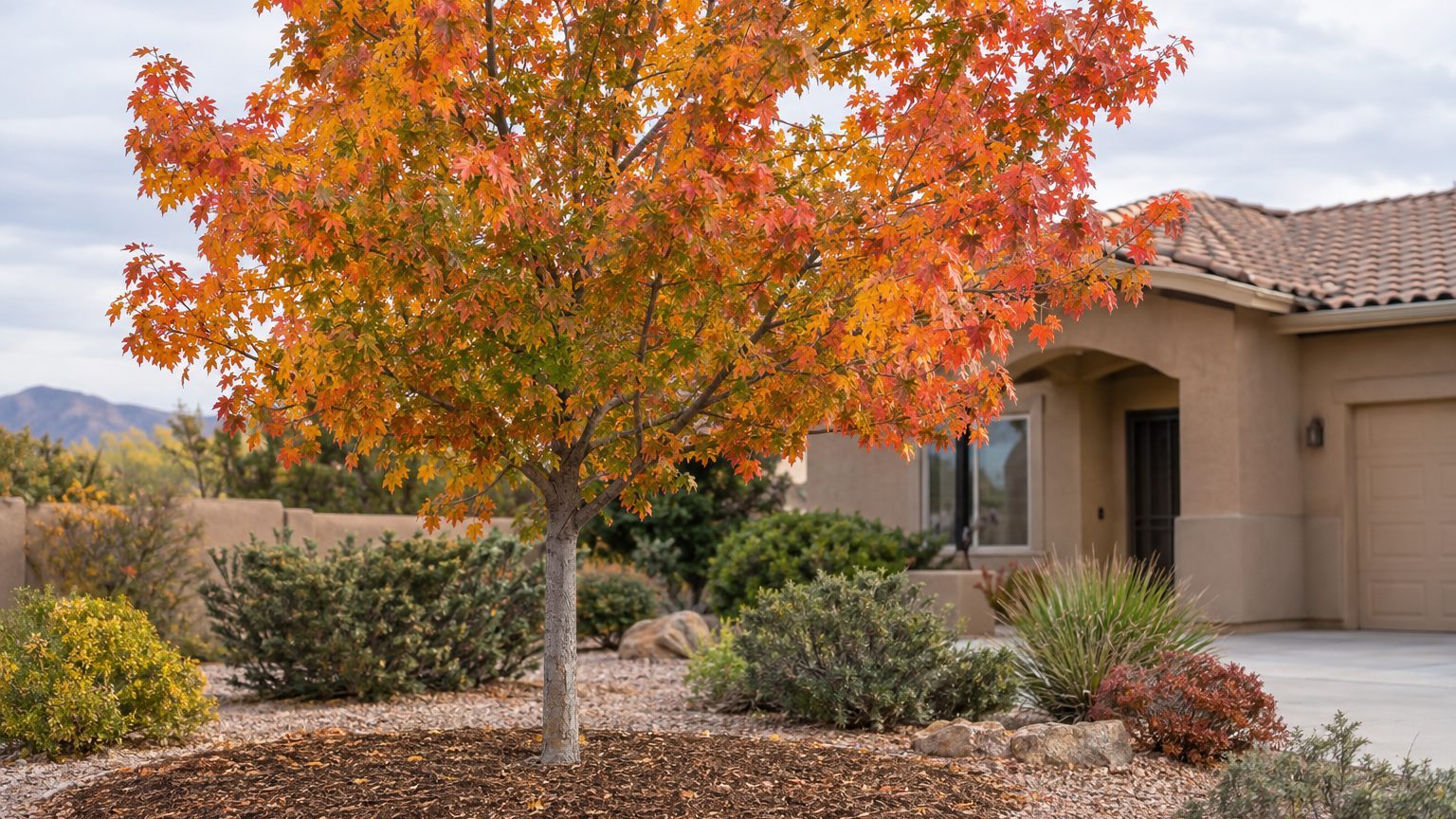
Trees planted in New Mexico settle best when the ground is cool and the tree is asleep, which points to the cooler half of the year rather than the heat of summer. Shade, ornamental and fruit trees across the state: when to plant them, which ones do well, and when to water and prune.
When Is the Best Time to Plant Trees in New Mexico?

Shade and ornamental trees go in the ground from October through December, in fall and early winter, whether they come in a container or balled and burlapped.
- In October, the soil still holds summer warmth, so roots keep growing while the leaves above begin to drop and demand little water.
- In November, a balled-and-burlapped tree can go in once it is fully dormant, and the roots still get time to settle before the hardest cold.
- In December, planting is still fine on any day the soil is workable and not frozen, and a container tree set out then has months of cool weather to establish.
- From late winter through spring, container trees can still be planted if you water them regularly, though they settle best when planted in the dormant season.
- In summer, skip planting if you can, because heat and dry soil stress new roots more than at any other time of year.
Frost dates vary a lot across the state. In Albuquerque, the last spring freeze usually falls between March 31 and April 12, and the first fall freeze between October 29 and November 9. Suburban and rural yards often see frost later in spring and earlier in fall, and higher elevations see more, so check your own county. The state spans USDA hardiness zones 4b to 9a, so a mountain town and a southern desert valley plant for very different winters.
New Mexico — the year and the numbers
- State
- New Mexico
- USDA zones
- 4b-9a
- Last spring frost
- March 31 to April 12
- First fall frost
- October 29 to November 9
- Annual rain
- 9 in
- Lawn zone
- transition-season
- Source
- NOAA NCEI U.S. Climate Normals 1991-2020, 32F freeze probabilities · Albuquerque
When to Plant Fruit Trees in New Mexico
Fruit trees go in during February and March, in late winter and early spring, which is when bare-root trees are sold. Bare-root trees must be planted while dormant, before the buds open, and they do best when planted soon after you buy them.
Container-grown fruit trees follow the same window and are the more forgiving choice. They can be planted most of the year if watered, but they settle best in the dormant season.
| Kind of fruit tree | When to plant in New Mexico | Why then |
|---|---|---|
| Bare-root | February to March | The tree is dormant and the buds have not opened |
| Container | February to March | Roots establish in cool soil before the heat arrives |
Stone fruits such as peaches, apricots and plums bloom early and are more prone to frost damage, so planting them dormant and choosing the spot with care matters. Apples and pears need more winter chill than apricots and peaches, which is worth knowing before you pick a variety for a warm low-desert yard.
Best Trees to Plant in New Mexico
Trees that handle heat, dry spells and alkaline desert soil do best here. Desert-adapted shade trees with moderate to low water needs are favorites in dry Southwest yards, and several evergreens work for windbreaks or year-round shade.
Match the tree to the space, the sun and your hardiness zone. A mountain yard and a Rio Grande valley yard are different places, so a tree that thrives in one may struggle in the other.
| Tree | How it does in New Mexico | Why |
|---|---|---|
| Mesquite | A deciduous shade tree for dry Southwest yards | Desert adapted, with moderate to low water needs |
| Palo verde | A deciduous shade tree for dry Southwest yards | Desert adapted, with moderate to low water needs |
| Sweet acacia | A deciduous shade tree for dry Southwest yards | Desert adapted, with moderate to low water needs |
| Afghan pine | An evergreen for windbreaks and year-round shade | Comes in various sizes and shapes |
| Cypress | An evergreen for windbreaks and year-round shade | Comes in various sizes and shapes |
Mesquite, palo verde and sweet acacia suit the warmer southern valleys best, so check your winter lows against your zone before planting them at higher elevations. Live oak is another evergreen that comes in various sizes and shapes.
When to Plant, Water and Prune Trees in New Mexico
The year runs in a simple order. Plant shade trees in fall and early winter, plant fruit trees in late winter, and prune fruit trees just before growth starts. Watering follows the tree, not the calendar, so a young tree needs attention whenever the soil dries out.
| Task | Best timing in New Mexico | Why then |
|---|---|---|
| Plant shade and ornamental trees | October to December | Roots grow in warm soil while the top rests |
| Plant fruit trees | February to March | Bare-root trees are sold then and must go in dormant |
| Water a young tree | Regularly, and any time the soil is not frozen | New roots stay shallow and dry out fast, especially in summer heat |
| Prune fruit trees | January to February, before growth starts | The tree is dormant and the buds have not swelled |
Skip pruning fruit trees in fall or early winter, because new growth may not harden before the cold. Peaches are pruned last, closest to bloom, since their flower buds are easily hurt by cold, and apples are pruned first. The page When to Prune Fruit Trees in New Mexico goes deeper on cuts and timing.
Where to Get Tree Advice in New Mexico
Local soil, elevation and water vary a great deal, so a quick conversation with a local expert can save you a tree.
- New Mexico State University Extension offers guidance on tree choice and planting, and it is a good first stop before you buy.
- Your county extension office can advise on which species suit your elevation and can arrange a soil test, ideally before fall planting begins.
Common Questions
Can You Plant a Tree in Summer in New Mexico?
A container tree can survive summer planting if you keep it well watered, but it is a hard season to start. Heat and dry soil stress the roots, so a tree planted in October gets a far easier start.
Should You Plant Bare-Root Trees Right Away?
Yes. Bare-root trees are sold only in late winter and early spring, and they do best when planted soon after purchase, while still dormant and before the buds open.
Do Frost Dates Tell You When to Plant a Tree?
Frost dates mark when cold may damage tender growth, but tree planting follows dormancy and workable soil. Fall and early winter suit shade trees, and late winter suits fruit trees, while your county’s frost dates help you judge when new spring growth is at risk.