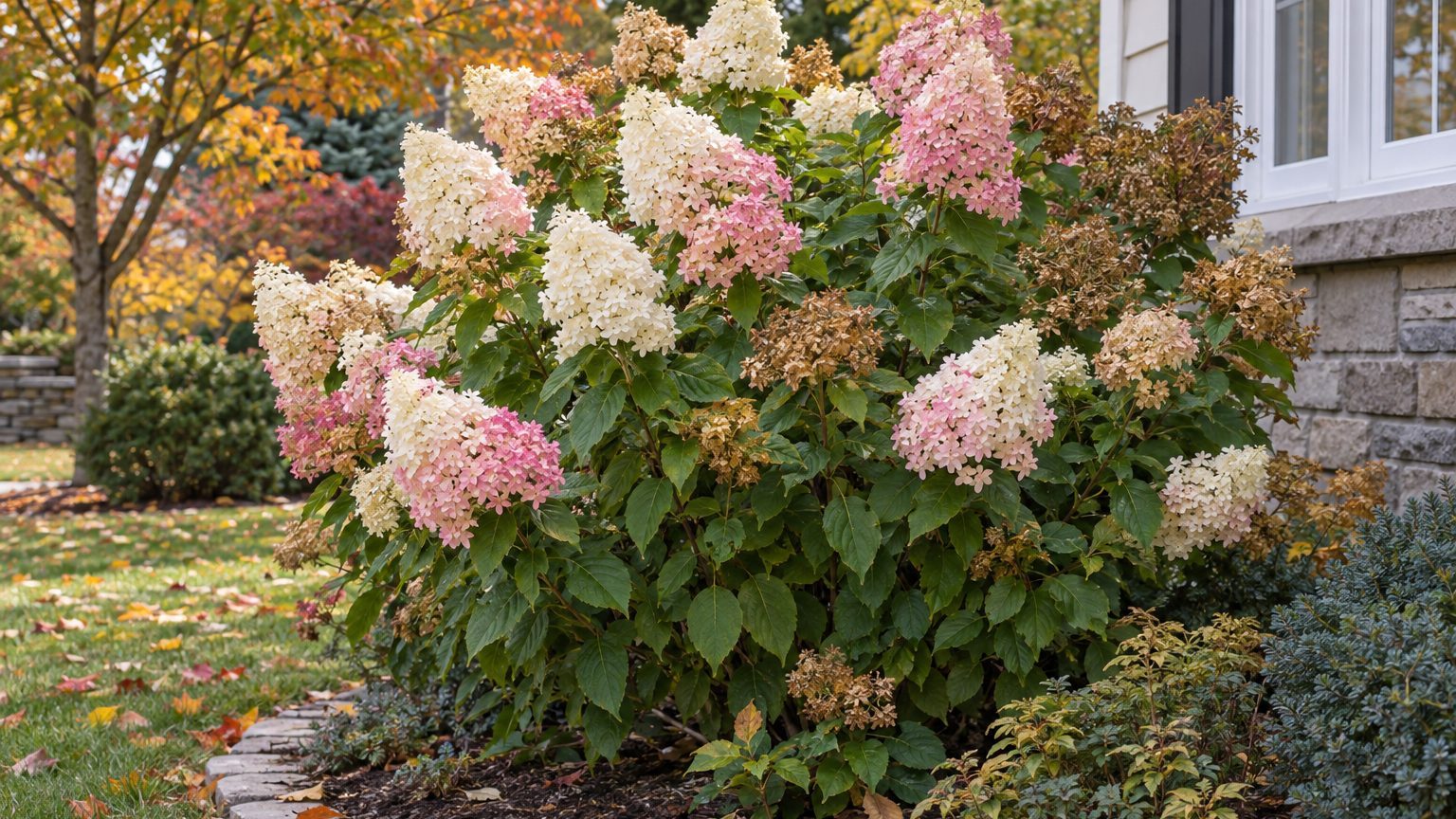
Phantom is a panicle hydrangea that blooms on new wood, so winter cold rarely costs you the flowers. It suits a sunny yard where bigleaf types sulk, and it takes a hard cutback in late winter without complaint. Its weak spots are heat and dry soil, and both are manageable.
What This Variety Is
Phantom is a deciduous panicle hydrangea that carries its flowers in large cone-shaped clusters at the tips of new stems. It grows as a rounded, upright shrub rather than the low mound of a mophead.
The flower head is what sets it apart: big, dense and creamy white in summer, aging toward pink as nights cool. The stems are stout enough to hold that weight upright through most summer storms.
Because it flowers on the current season’s growth, a late-winter cutback does not cost you a single bloom. That habit explains why it settles into cold yards where bigleaf hydrangeas often leaf out and never flower.
Three traits to check on the plant tag:
- Flowers form on new wood
- Best bloom in sun, with tolerance for light afternoon shade
- Leaves drop in fall, leaving a woody frame for winter
From the almanac
Hydrangeas in your state
The dates on this page depend on where you live. Your state's page carries its frost dates, its USDA zones and the year laid out month by month.
Northeast
Southeast
- Alabama
- Arkansas
- Delaware
- Florida
- Georgia
- Kentucky
- Louisiana
- Maryland
- Mississippi
- North Carolina
- South Carolina
- Tennessee
- Virginia
- West Virginia
Midwest
Southwest
West
Pacific Northwest
Canada
Where It Grows: Zones and Regions
Phantom belongs to the cold-tolerant panicle group, so it reaches much farther north than most hydrangeas and fades out where summers turn hot and dry.
- Great Lakes and the North (Michigan, Minnesota, Wisconsin): among the most dependable hydrangeas here, since bloom does not rely on buds surviving winter.
- Northeast (New York, Pennsylvania, Vermont): a good match for cold winters and moderate summers, with full sun giving the strongest flowering.
- Plains and Mountain West (Nebraska, Kansas, Colorado): it copes with the cold, but wind, dry air and alkaline soil call for mulch and steady deep watering.
- The South (Georgia, Texas, the Carolinas): it grows, though heat and humidity reward afternoon shade and regular moisture.
- Pacific Coast (Washington, Oregon, northern California): mild, damp summers suit it, and it wants sun to keep the stems firm.
- Desert Southwest (Arizona, Nevada, inland southern California): the stretch where it struggles most, with scorch and water demand working against it.
The state picker just below this section takes you to the page for your state, with local frost dates and the pruning window for your area.
The Year With It, Season by Season
Planting
Fall and spring both work, because the roots need time to settle before heat or hard frost. Dig a wide hole at the same depth as the pot, then water deeply and mulch a few inches away from the stems. Compare it against Hydrangea Varieties Compared before you commit to a spot.
Spring
New stems push out late, often after neighboring shrubs have leafed out, and that is normal. Make the cut before buds swell, trimming back to a framework of strong stems. Scatter a slow-release fertilizer once growth starts, and skip heavy nitrogen, which softens the stems that must carry the blooms.
Summer
Flower heads open cream to white and grow heavy. Deep weekly watering matters more than frequent sips, especially in the first seasons. If a storm bends the stems, stake loosely or cut a few blooms for a vase rather than letting them drag the branches to the ground.
Heat
Leaf edges crisping on the sunny side mean the plant is losing water faster than roots can supply it. Water at the base in the morning, refresh the mulch, and in the hottest states move a struggling plant toward morning sun with afternoon shade.
Fall
The blooms age from white to pink and then to a papery tan as nights cool. Leave the heads on the plant, since they add color and texture for weeks. Stop fertilizing by late summer so growth can harden before the first frost.
Winter
Bare, woody stems are the plant resting, not dying. Leave the dried flower heads through the cold, then prune in late winter once the worst freezes are behind you. In the coldest states, a layer of mulch over the roots is all the protection it needs.
Diseases and Pests It Resists
What the plant itself tells you is more practical. Wilting in midday heat usually points to dry roots rather than disease. Poor airflow and wet leaves invite fungal spotting on most hydrangeas. Spacing plants generously and watering at the base cuts that risk more than any spray.
If disease resistance is a deciding factor for you, ask your local extension office what has shown up on hydrangeas in your county, and treat the other kinds on their own pages the same way.
Where to Plant It in a Yard
Give it a spot with open sun and room to spread, such as a foundation corner, a property line or a focal point in a mixed border. Check your state page first for local timing.
- Hydrangea Varieties Compared: how Phantom stacks up against the other hydrangeas you might plant beside it.
- Fire Light Hydrangea: Size, Zones, Pruning and Care: another panicle type with a similar late-winter pruning routine and a different bloom color.
- Grandiflora Hydrangea: Size, Zones, Pruning and Care: a related panicle form worth comparing before you buy.
Common questions
When should I prune a Phantom hydrangea?
Prune in late winter, before new growth starts. It flowers on new wood, so this cut removes nothing you need. Your state page gives the window for your area.
Does Phantom need full sun?
Sun gives the strongest flowering and firmest stems. In hot southern states, light afternoon shade protects the leaves without sacrificing much bloom.
Why are the blooms turning pink?
That is the natural aging of the flower head as nights cool in late summer and fall. It is not a nutrient problem, and you don’t need to treat it.
Sources : mikesbackyardnursery.com | bygl.osu.edu