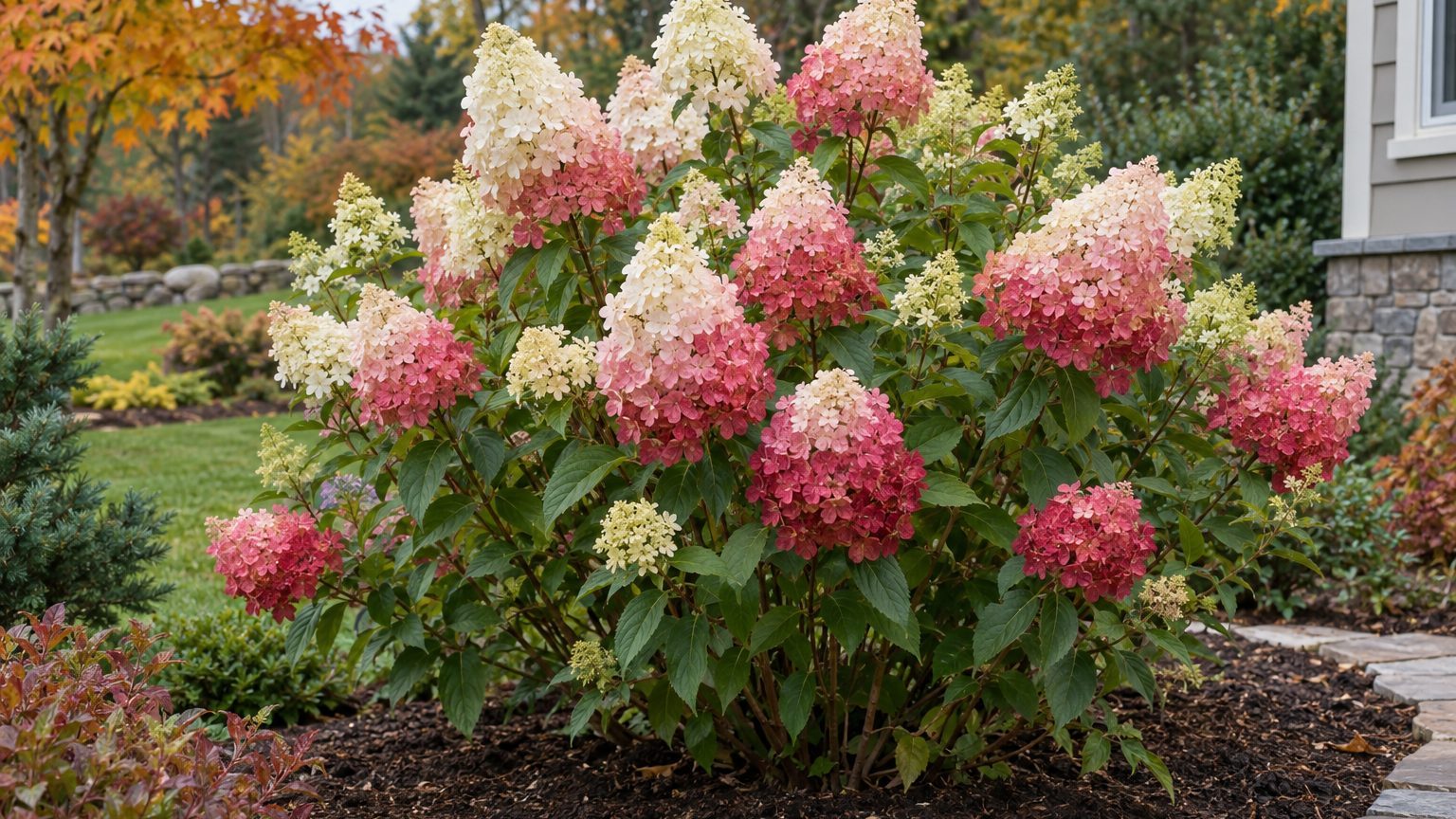
Vanilla Strawberry is a panicle hydrangea, so it blooms on the growth it makes this year and skips the winter-kill heartbreak of bigleaf types. Its cone-shaped flowers open creamy white and slowly deepen to pink and red. Give it sun, water it well the first season, and prune in late winter.
What This Variety Is
Vanilla Strawberry is a cultivar of panicle hydrangea, a deciduous shrub with an upright, vase-shaped habit. It flowers on new wood, so this spring’s growth carries the blooms rather than last year’s stems.
The color change is what sets it apart. Cone-shaped clusters open creamy white in summer, then blush pink and finish a deeper strawberry red as nights cool.
Because the shift happens over weeks, one shrub often shows several shades at once. That layered look is the reason to choose it over a plain white panicle.
The tag on the pot gives the mature size and hardiness range for the plant you buy. Your state page translates that into frost dates and a pruning window.
From the almanac
Hydrangeas in your state
The dates on this page depend on where you live. Your state's page carries its frost dates, its USDA zones and the year laid out month by month.
Northeast
Southeast
- Alabama
- Arkansas
- Delaware
- Florida
- Georgia
- Kentucky
- Louisiana
- Maryland
- Mississippi
- North Carolina
- South Carolina
- Tennessee
- Virginia
- West Virginia
Midwest
Southwest
West
Pacific Northwest
Canada
Where It Grows: Zones and Regions
Panicle hydrangeas are the cold-tolerant branch of the family, which is why this one shows up in far more yards than a bigleaf does. The real variable is summer heat, not winter cold.
- Great Lakes and the North (Michigan, Minnesota, Wisconsin): panicles are the dependable hydrangea here, because they bloom on new wood and winter dieback costs them nothing.
- Northeast and Mid-Atlantic (New York, Pennsylvania, Massachusetts): a comfortable fit in full sun to part shade, with color that deepens as autumn nights cool.
- The South (Georgia, Texas, the Carolinas): it can perform, but it wants afternoon shade and steady moisture, since hot afternoons scorch leaves and fade cones.
- Plains and Mountain West (Nebraska, Colorado, Utah): cold is rarely the problem, so watch dry air, wind and alkaline soil, and mulch to hold moisture.
- Pacific coast (Washington, Oregon, inland California): mild coastal areas suit it well, while hot inland valleys need shade and irrigation.
The exact hardiness range for this cultivar is on the plant tag. The state selector just below this section leads to the page for your state, with the timing that fits where you live.
The Year With It, Season by Season
Planting
Roots need time to settle before heat or hard frost, so plant when the soil is workable and the weather is mild. Set the crown level with the ground and water deeply after planting. Your state page gives the planting window for your area.
Spring
Panicles wake late, so a bare stick in April is normal. Scratch a stem to check for green, then prune to healthy buds before growth starts. Because it blooms on new wood, the cut costs no flowers. The state page shows your pruning window.
Summer
Blooms open white and need steady moisture to hold their shape. Hot afternoons wilt leaves and brown the cone edges, especially in Texas or Georgia. Water deeply at the base rather than often and shallow, and lay mulch to keep the roots cool.
Fall
Cool nights push the cones from pink toward red, the payoff of this variety. Leave the blooms on the shrub, because fall pruning invites tender growth that frost will hit. Stop fertilizing by late summer and ease off watering as the leaves drop.
Winter
Dried cones hold through winter and look good under frost or snow. Wait until late winter, before buds swell, to trim them and shape the plant. In cold states a layer of mulch over the roots is all the protection it needs.
Diseases and Pests It Resists
Panicle hydrangeas as a group have a reputation for being easier than bigleafs, but that is a family trait, not a rating for this cultivar. Look over the leaves every week or two and treat what you actually find.
The other kinds of hydrangea are on their own pages.
Where to Plant It in a Yard
Give it enough sun for good color, room to reach mature size, and a spot where the cones show from the street or a window. The state selector above leads to your state page, which sets the timing.
- Hydrangea Varieties Compared: the side-by-side view of the main kinds, useful before you decide how many to buy.
- Phantom Hydrangea: Size, Zones, Pruning and Care: another panicle to weigh against this one for a sunny border or a foundation bed.
- Angel Blush Hydrangea: Size, Zones, Pruning and Care: a panicle with its own color story, worth reading before you pick a spot for either one.
Common questions
When should I prune Vanilla Strawberry hydrangea?
Prune in late winter to early spring, before new growth starts. Since it flowers on new wood, that cut does not remove this year’s blooms. Avoid fall pruning, which can trigger tender growth that frost then damages.
Will the flowers really turn red?
The cones usually move from white through pink toward a deeper red, but the depth of color depends on your climate and how cool the nights get. Expect the strongest color in autumn.
Does it need full sun?
Sun to part shade suits it. In hot regions such as Texas or the inland South, afternoon shade and steady watering protect the leaves and keep the blooms from fading early.
Sources : firsteditionsplants.com