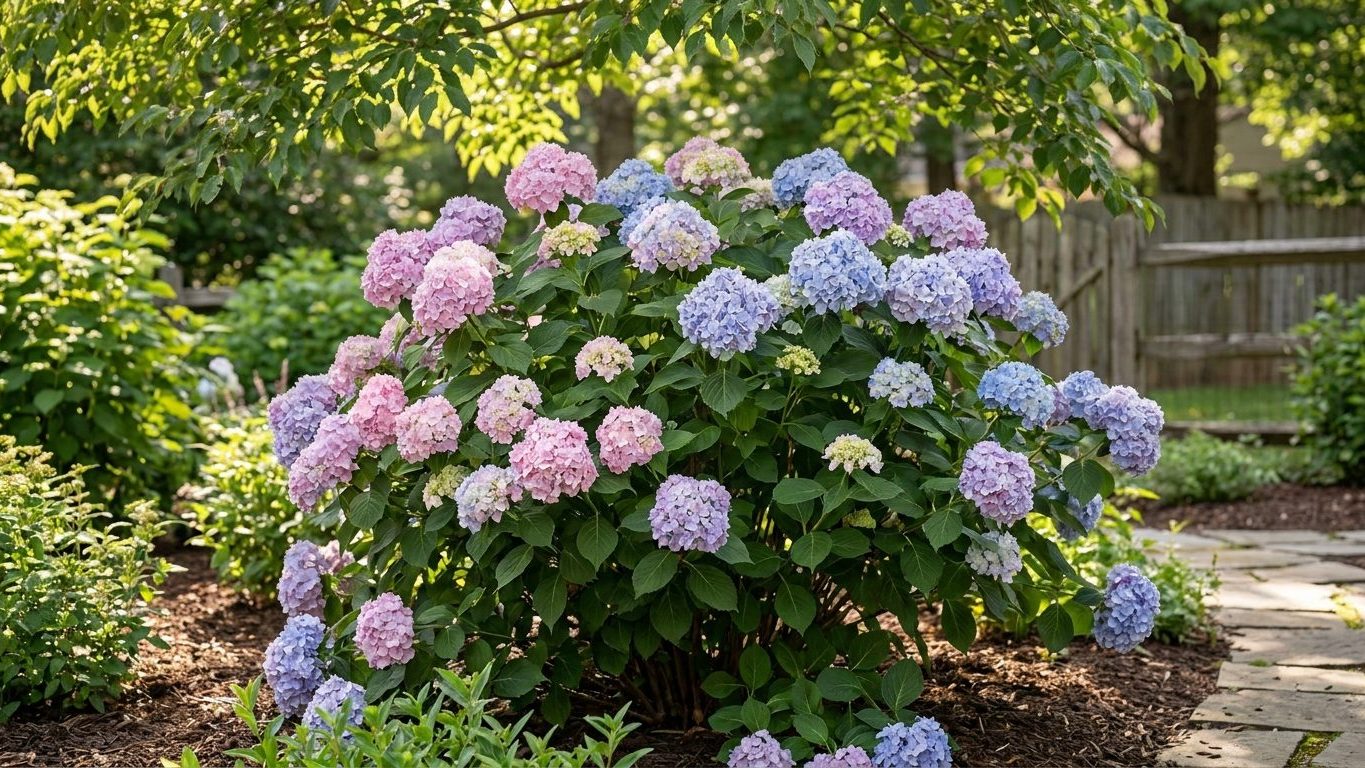
All Summer Beauty is a bigleaf hydrangea (Hydrangea macrophylla) that grows 3 to 4 feet tall and 3 to 4 feet wide, and stays hardy in USDA zones 6 through 9. Its edge over most mophead types is that it sets flower buds on new wood as well as old, so a hard winter or a rough pruning cut rarely wipes out the whole season’s bloom.
What This Variety Is
All Summer Beauty is a mophead cultivar of Hydrangea macrophylla, the bigleaf hydrangea group known for round flower clusters. The Missouri Botanical Garden Plant Finder lists it as a rounded, deciduous shrub reaching 3 to 4 feet tall with an equal spread.
Most bigleaf hydrangeas flower only on stems grown the previous year, so a late frost or a bad pruning cut can erase the whole show. This one sets buds on both old and new wood, which is the trait behind its name.
Flower color follows soil chemistry rather than the tag on the plant. Acidic soil pushes the mophead blooms toward blue, alkaline soil pushes them toward pink.
Bloom runs from June into September, a longer stretch than many bigleaf types manage. Part shade suits it best, since full sun in hot climates scorches the leaves and stresses the shrub.
From the almanac
Hydrangeas in your state
The dates on this page depend on where you live. Your state's page carries its frost dates, its USDA zones and the year laid out month by month.
Northeast
Southeast
- Alabama
- Arkansas
- Delaware
- Florida
- Georgia
- Kentucky
- Louisiana
- Maryland
- Mississippi
- North Carolina
- South Carolina
- Tennessee
- Virginia
- West Virginia
Midwest
Southwest
West
Pacific Northwest
Canada
Where It Grows: Zones and Regions
The Missouri Botanical Garden Plant Finder puts All Summer Beauty at USDA zones 6 through 9, a band that runs from the mid-Atlantic down through the Gulf Coast and across to the Pacific Northwest.
- Mid-Atlantic and Upper South (Virginia, North Carolina, Tennessee): zone 6 and 7 winters are mild enough that old-wood buds usually make it through, so the shrub blooms on both wood types with little help from the gardener.
- Deep South and Gulf Coast (Georgia, Louisiana, the Florida panhandle): zone 8 and 9 heat is the bigger risk here, and part shade keeps the leaves from scorching by midsummer.
- Pacific Northwest (Oregon, Washington): mild, damp winters sit inside zone 8, and cool summers stretch the June to September bloom window even further.
- Northern edge (zone 6 pockets in Ohio, Pennsylvania, Missouri): winter cold can still kill some old-wood buds, but new-wood flowers keep the display going, which is the whole point of this cultivar.
The state selector below this section leads to the frost dates and pruning window for the state where you garden.
The Year With It, Season by Season
Spring
New growth breaks from both the woody stems that overwintered and any old wood that survived the cold. Spring is the window to plant a container-grown shrub, giving roots a full season to settle in before summer heat arrives.
Summer
The Missouri Botanical Garden Plant Finder lists bloom from June to September, a longer run than the typical bigleaf hydrangea manages in one stretch. Medium, even moisture keeps the mophead heads from wilting during the hottest weeks.
Deadheading spent blooms tidies the shrub but isn’t required for rebloom, since new-wood buds keep forming through the season on their own. A layer of mulch over the root zone holds moisture and eases the watering load.
Fall
Stems slow their growth and set the buds that will open as old-wood flowers next year, so a heavy pruning cut now removes blooms before they open. A light shaping cut, if needed at all, is safer right after the summer flowers fade.
Winter
Zone 6 gardens can lose some old-wood buds to a hard freeze, but new-wood growth in spring keeps the shrub flowering anyway. A few inches of mulch over the crown protects the roots through the coldest stretch of the year.
Diseases and Pests It Resists
All Summer Beauty carries no serious insect or disease problems, according to the Missouri Botanical Garden Plant Finder, a cleaner record than most mophead hydrangeas get.
That doesn’t mean it’s untouchable. A handful of common hydrangea pests and diseases still turn up often enough to watch for through the growing season.
| Threat | Risk on this cultivar |
|---|---|
| Aphids | Occasional, minor foliage feeding |
| Spider mites | Occasional, worse in dry heat |
| Scale | Occasional |
| Leaf spot | Occasional |
| Powdery mildew | Occasional, more common in humid summers |
None of these threats rate as serious for this cultivar, and it doesn’t call for a spray program. Rust and viral problems show up in the same source’s list but are rare enough that other hydrangea types carry the bigger burden, and those are covered on their own pages.
Where to Plant It in a Yard
Part shade suits All Summer Beauty best, ideally morning sun with afternoon shade, since full sun in hot climates scorches the leaves by midsummer. A bed near a patio or foundation shows off the long June to September bloom.
- Your state page: the frost dates and pruning window for where you live.
- Hydrangea types compared: how All Summer Beauty stacks up against panicle and smooth hydrangeas for size and bloom timing.
- Soil pH and flower color: how to nudge blooms toward blue or pink in your own beds.
Test the soil before planting, since that single step decides which color shows up on the shrub each summer.
Common questions
Does All Summer Beauty bloom on old wood or new wood?
Both, according to the Missouri Botanical Garden Plant Finder, which is why a rough winter rarely erases the whole season’s flowers.
How tall does All Summer Beauty hydrangea get?
It reaches 3 to 4 feet tall and 3 to 4 feet wide at maturity, a compact size for foundation plantings or a mixed border.
What zone is best for All Summer Beauty hydrangea?
Zones 6 through 9 cover it, with part shade and even soil moisture mattering more day to day than the exact zone number.
Sources : mikesbackyardnursery.com