Winter protection for hydrangeas depends less on your zip code than on which type is growing in your yard. Bigleaf and mountain hydrangeas need real cover, since NC State Extension Gardener Plant Toolbox rates them borderline hardy in the colder pockets of their range.
Panicle and smooth hydrangeas in that same bed often need nothing at all. Match the type to the zone first, and the rest of the decision gets much simpler.
Winter Protection for Hydrangeas: The Short Answer
NC State Extension Gardener Plant Toolbox puts the hydrangea genus at USDA zones 3a through 9b, but that range covers six very different plants. Bigleaf and mountain hydrangeas bloom on last year’s wood and need real winter protection where the source rates them borderline hardy.
Panicle and smooth hydrangeas bloom on new wood and shrug off cold that would wreck a bigleaf’s flower buds. Oakleaf and climbing hydrangeas sit in between, hardy in the trunk but touchy in the bud.
The state selector below sorts this by your zip code, not by guesswork. It opens the page built for your state, with the frost window and pruning date that apply where you live.
What decides your approach is simple: type first, zone second. Get the type wrong and even careful mulching won’t save a spring’s worth of flowers.
From the almanac
Hydrangeas in your state
The dates on this page depend on where you live. Your state's page carries its frost dates, its USDA zones and the year laid out month by month.
Northeast
Southeast
- Alabama
- Arkansas
- Delaware
- Florida
- Georgia
- Kentucky
- Louisiana
- Maryland
- Mississippi
- North Carolina
- South Carolina
- Tennessee
- Virginia
- West Virginia
Midwest
Southwest
West
Pacific Northwest
Canada
Winter Protection for Hydrangeas, Step by Step

Winter protection follows an order, and doing a later step before an earlier one usually costs a season of flowers on the types that bloom on old wood.
- Confirm which wood carries the flowers: NC State Extension Gardener Plant Toolbox rates bigleaf an old-wood bloomer hardy from 6a to 11b, while panicle blooms on new wood and survives down to 3a, so the same winter treats them in opposite ways.
- Stop feeding by late summer: high-phosphorus fertilizer ties up aluminum in the soil and pushes out new growth that won’t have time to ripen before frost.
- Mulch the root zone before the ground locks up: bigleaf and panicle hydrangeas are both shallow-rooted, and a layer put down while soil is still workable protects roots through repeated winter thaws.
- Leave old flower heads and hollow stems standing: native bees nest inside those dead stems over winter, so cutting them back to 12 to 24 inches waits until spring, not fall.
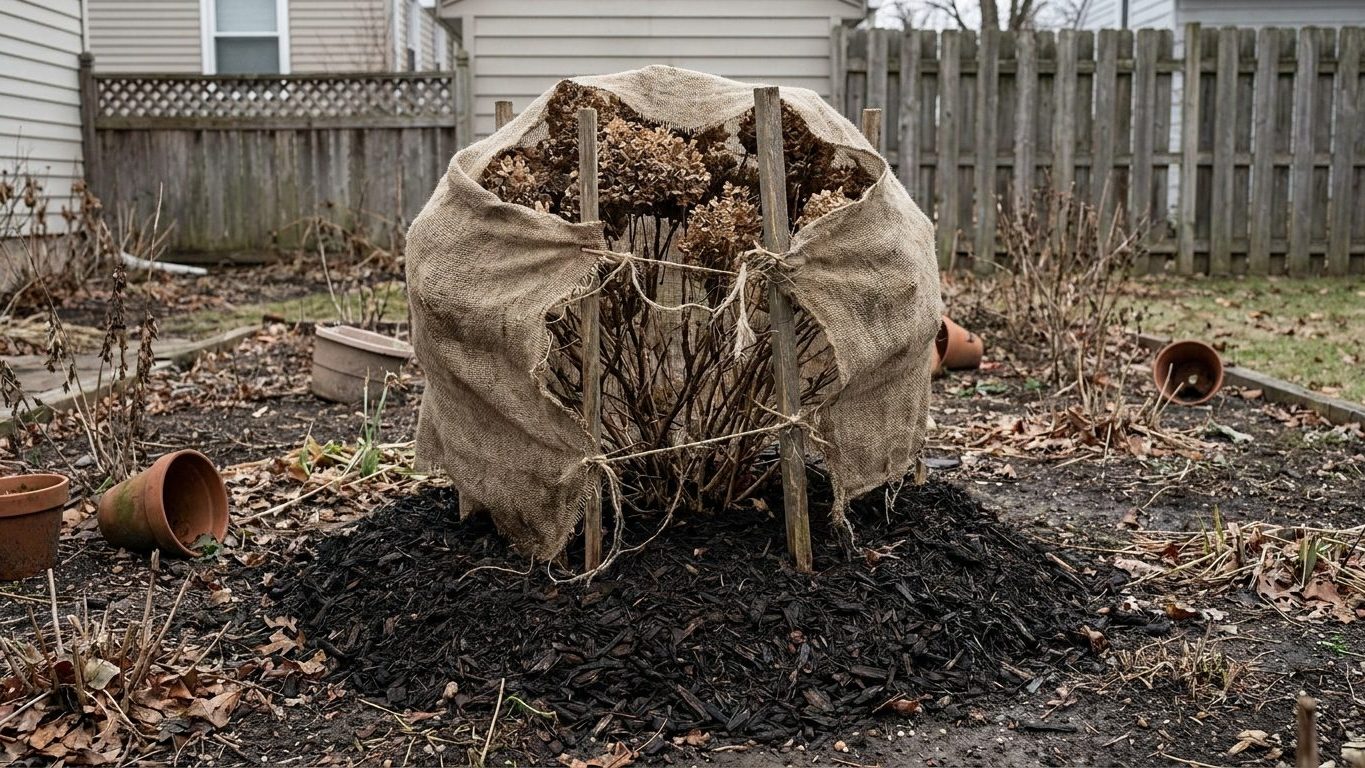
- Screen bigleaf buds from wind and afternoon sun: a burlap wrap or a simple fabric screen keeps buds formed the previous summer from drying out on an exposed site.
- Hold pruning until new growth shows: cutting an old-wood bloomer back in winter removes next year’s flowers outright, since those buds already formed last summer, while panicle types tolerate a hard cut because they bloom on wood that hasn’t grown yet.
None of these six steps needs a calendar date at the national level, and forcing one here would be wrong for someone. Zone and type set the actual timing, and that’s exactly what the state pages spell out one county at a time.
Winter Protection for Hydrangeas by Hydrangea Type
NC State Extension Gardener Plant Toolbox rates bigleaf and mountain hydrangeas as old-wood bloomers, meaning the flower buds already exist by the time frost arrives. Panicle and smooth hydrangeas bloom on new wood, so a hard freeze that kills the top growth doesn’t touch next summer’s flowers.
Bigleaf tops out at 3 to 6 feet and prefers dappled or partial shade, shielded from afternoon sun. Panicle grows anywhere from 8 to 25 feet and is the only type in the genus that takes full sun well.
| Kind | Flowers on | USDA zones | Sun |
|---|---|---|---|
| Bigleaf | Last year’s wood | 6a–11b | Dappled or part shade, protect from afternoon sun |
| Panicle | Current season’s growth | 3a–8b | Full sun |
Smooth, oakleaf, mountain and climbing hydrangeas are on their own pages, where zone and pruning specifics get an entry each. Only bigleaf and mountain flowers shift color with soil pH. Panicle stays white, cream, pink or green as it ages, regardless of soil.
Winter Protection for Hydrangeas: Mistakes That Cost a Season
No flowers after a fall prune

Bigleaf hydrangeas set flower buds the summer before, so cutting them back in fall or early spring removes next year’s show. NC State Extension Gardener Plant Toolbox puts the safe pruning cutoff at before August 1. Prune right after the flowers fade instead, and check the by-type section above for which types this rule even applies to.
Roots left bare going into freeze

Bigleaf and panicle hydrangeas are both shallow-rooted, and skipping mulch before the ground locks up leaves those roots exposed to repeated winter thaws. Laying mulch once in fall, before freeze-up, protects the whole root system. Do it early, not mid-winter when the ground is already frozen solid.
Coffee grounds instead of aluminum sulfate

Coffee grounds and citrus peel are the home remedy for blue flowers, but the pH shift they cause is too small to matter. What moves color is available aluminum, which acid soil releases, and only bigleaf and mountain types respond to it. High-phosphorus fertilizer locks that aluminum up and pushes blue toward pink instead.
Winter Protection for Hydrangeas in Your State
This page covers the whole country, but neither the zone map nor the type alone tells you when to act where you live. The state page combines both for your county.
- Your state page: the frost dates and the pruning window where you live.
- Which types hold up here: the varieties that survive your winters without wrapping.
- Your local extension office: county-level advice for soil, pests and site conditions the national page can’t cover.
Common questions
Do all hydrangeas need winter protection?
No. Panicle and smooth hydrangeas bloom on new wood and tolerate a hard cut back in late winter without losing next year’s flowers, per NC State Extension Gardener Plant Toolbox. Bigleaf and mountain types need protection because their buds already exist going into winter.
Can coffee grounds turn a hydrangea blue?
Not reliably. The pH shift from coffee grounds is too small to matter. Aluminum sulfate acidifies soil enough to release the aluminum that turns bigleaf and mountain flowers blue, and only those two types respond to soil pH at all.
Are hydrangeas toxic to pets?
Only bigleaf hydrangea is documented toxic, and only if eaten in quantity, causing nausea, stomach pain, vomiting and sweating in cats, dogs and horses. The other types in the genus aren’t listed as toxic by the source.