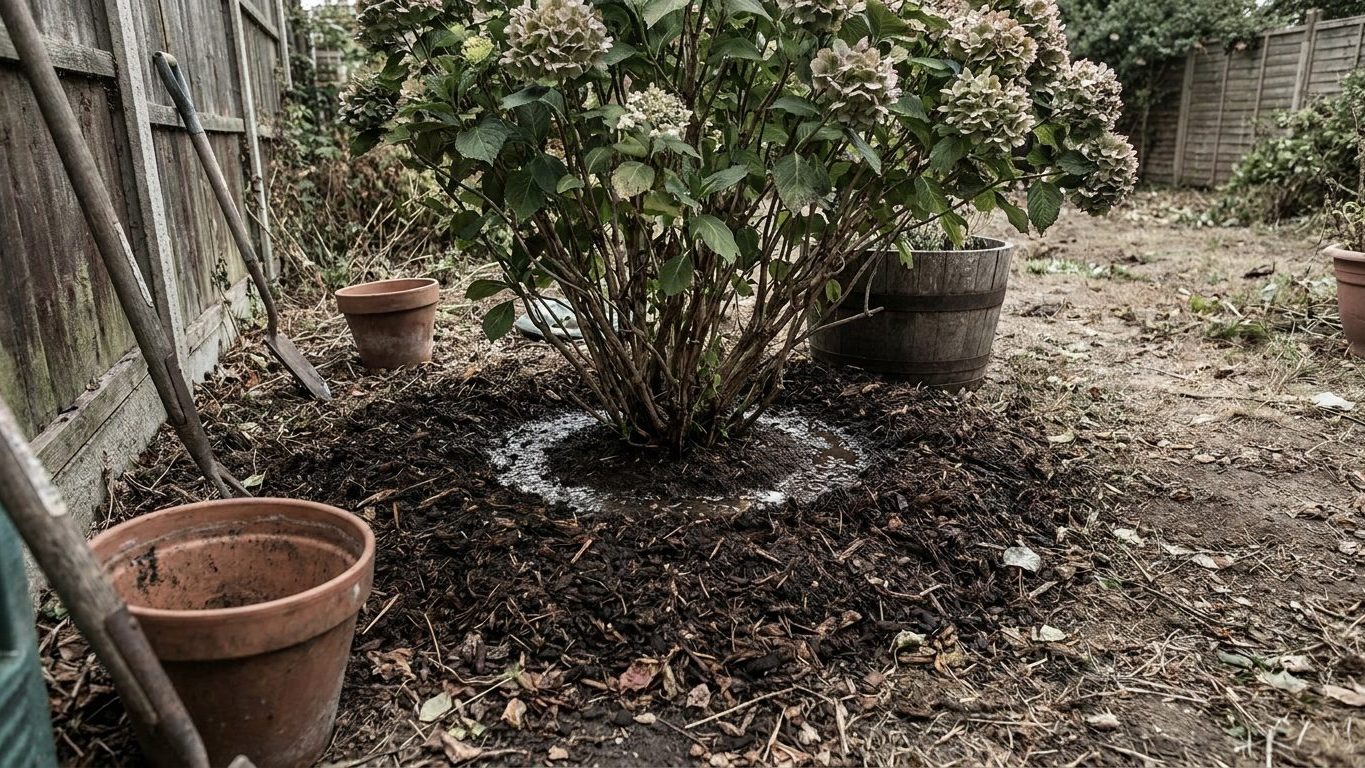
How much and how often you water depends less on the calendar than on which hydrangea is growing in your yard. A shaded bigleaf mophead holds soil moisture far longer than a full-sun panicle type reaching eight feet, and both tolerate soil that drains well but stays occasionally damp. The type in the ground decides the schedule, not the date on the wall calendar.
Watering Hydrangeas: The Short Answer
The general rule holds across the genus: keep soil evenly moist and well drained, and water more often where the plant sits in full sun. NC State Extension Gardener Plant Toolbox puts the genus at USDA zones 3a through 9b, but that range only means something once you know the type.
Three things change the answer more than any fixed schedule ever could.
- Which type is planted, since bigleaf and panicle handle sun and drought differently
- The USDA zone at your address, which sets the length of the growing season
- The region’s rainfall pattern, since a wet spring changes what the hose needs to do
The state selector just below this section opens the page built for your zip code, with the rainfall and frost pattern that apply where you live.
From the almanac
Hydrangeas in your state
The dates on this page depend on where you live. Your state's page carries its frost dates, its USDA zones and the year laid out month by month.
Northeast
Southeast
- Alabama
- Arkansas
- Delaware
- Florida
- Georgia
- Kentucky
- Louisiana
- Maryland
- Mississippi
- North Carolina
- South Carolina
- Tennessee
- Virginia
- West Virginia
Midwest
Southwest
West
Pacific Northwest
Canada
Watering Hydrangeas, Step by Step

The method changes with the seasons, but the order of the gestures stays the same from the day you plant to the height of summer.
- Check the top few inches of soil before you turn on the hose: hydrangeas are shallow-rooted, according to NC State Extension Gardener Plant Toolbox, so the surface dries out long before the deeper soil does.
- Water at the base, not over the flowers: wet foliage in humid weather invites the leaf spot and powdery mildew the same source names as common problems.
- Give full-sun panicle types more water than shaded bigleaf types: panicle is the only hydrangea that takes full sun well, and that exposure pulls moisture out of the soil faster.
- Lay mulch over the root zone: both bigleaf and panicle are shallow-rooted and benefit from a mulch layer that buffers soil moisture between waterings.
- Let the soil stay on the moist side of dry, not soggy: the genus tolerates occasionally wet soil but needs good drainage, so standing water is the bigger risk, not a missed watering day.
- Adjust for size as the shrub matures: a panicle can reach 8 to 25 feet, and a wider canopy shades a wider root zone that needs water at its edges, not just at the trunk.
Growth rate plays a part too. The genus carries a low maintenance rating overall, but bigleaf and panicle grow at a rapid pace once established, and rapid growth in a hot month means the roots are pulling more water out of the same patch of soil than they did in spring.
None of this changes with the month printed on a calendar so much as with what’s overhead and underfoot: the sun exposure, the drainage, and the size of the plant this particular summer.
Watering Hydrangeas by Hydrangea Type
Every hydrangea’s water needs trace back to two things, how much sun it sits in, and whether it blooms on last year’s wood or on wood the plant is growing right now.
NC State Extension Gardener Plant Toolbox puts bigleaf at 6a to 11b, with buds formed the previous summer, so a late frost or a spring prune removes flowers that already set. Panicle sits at 3a to 8b, blooms on the current season’s growth, and is the only hydrangea in the genus that takes full sun well.
| Kind | Flowers on | USDA zones | Sun |
|---|---|---|---|
| Bigleaf | Last year’s wood | 6a-11b | Dappled sun, partial shade |
| Panicle | Current season’s growth | 3a-8b | Full sun |
Smooth, oakleaf, mountain and climbing hydrangeas each set buds on old wood and handle light on their own terms, the other kinds are on their own pages.
Watering Hydrangeas: Mistakes That Cost a Season
No flowers on a healthy shrub

Bigleaf and mountain hydrangeas set flower buds the previous summer, so a late frost or a prune outside the type’s window removes a season’s blooms before they open. No amount of watering brings them back once the buds are gone, so check the bloom wood before reaching for pruners.
Leaves scorched on the sunny side

Bigleaf hydrangea wants dappled sun or partial shade and struggles in direct afternoon light, so scorched edges usually point to placement rather than a watering can that isn’t keeping up. Panicle is the type built for a sunny bed, since it’s the only one that takes full sun well.
Soil that stays soggy after rain

The genus tolerates soil that’s occasionally wet, but that’s not the same as ground that never drains between storms. Standing water around shallow roots invites the stress that gets blamed on drought, so fix drainage first and save the hose for soil that has actually dried at the surface.
Watering Hydrangeas in Your State
The national rule covers soil and sun exposure, not a date, because frost timing and rainfall shift from a coastal yard to a mountain one.
- Your state page: the frost dates and the pruning window that apply where you garden.
- Which types hold up there: the zone range for bigleaf, panicle, and the rest, matched against your USDA zone.
- Your local extension office: a soil test and a rainfall pattern more exact than any national average.
Start with the state page, then call the extension office if the soil test raises a question the page can’t answer.
Common questions
Does watering more make hydrangea flowers bluer?
No, colour on bigleaf and mountain hydrangeas tracks soil pH, not water volume, blue below about pH 5.5 and pink above about pH 6.5. Coffee grounds are a widely held belief for turning flowers blue, but the pH shift from grounds alone is small.
What actually moves colour is available aluminum in the soil, which acidity releases, so aluminum sulfate does more reliably than a kitchen remedy. Panicle, smooth, oakleaf and climbing hydrangeas don’t shift with pH at all.
Can I water a hydrangea back into bloom after a frost?
Not if the buds were already lost. Bigleaf and mountain types form flower buds the previous summer, so a late frost that damages them removes that year’s blooms no matter how much water follows, the plant simply resets for next season.
Does mulch mean I can water less often?
Mulch buffers soil moisture around the shallow roots that both bigleaf and panicle hydrangeas rely on, so it stretches the time between waterings. It doesn’t replace watering during a dry, hot stretch, it just softens how fast the surface soil dries out.