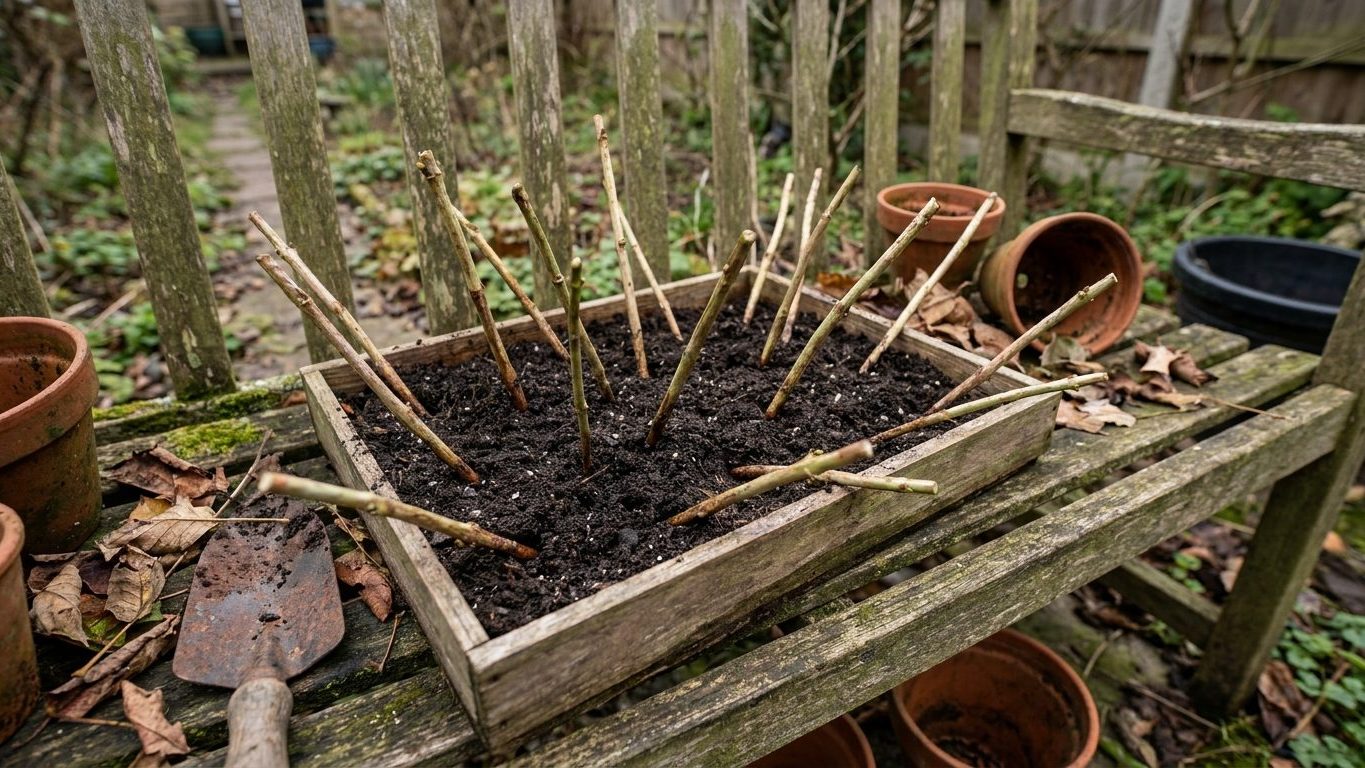
Most hydrangeas root well from a softwood stem cutting or from layering a low branch pinned to the soil, and the method that works best depends on the type in your yard. Bigleaf and panicle hydrangea root fastest, while old-wood types like oakleaf and climbing hydrangea often layer better than they cut.
Propagating Hydrangeas: The Short Answer
Stem cuttings and layering both work on hydrangeas, and NC State Extension Gardener Plant Toolbox names both as the genus’s propagation methods, with panicle hydrangea also growing from seed. The general rule holds across zones 3a through 9b, but the type in your yard decides the wood you cut and when.
A bigleaf cutting comes from softwood taken before the shrub sets next year’s flower buds, since bigleaf blooms on last year’s wood. Panicle hydrangea roots just as easily but blooms on the current season’s growth, so cuttings and a hard prune can happen the same year.
Your own zone decides how long a cutting has to root before frost, and that window shifts widely across the country. The state selector just below this section opens the page built for where you garden, with the frost dates that apply there.
From the almanac
Hydrangeas in your state
The dates on this page depend on where you live. Your state's page carries its frost dates, its USDA zones and the year laid out month by month.
Northeast
Southeast
- Alabama
- Arkansas
- Delaware
- Florida
- Georgia
- Kentucky
- Louisiana
- Maryland
- Mississippi
- North Carolina
- South Carolina
- Tennessee
- Virginia
- West Virginia
Midwest
Southwest
West
Pacific Northwest
Canada
Propagating Hydrangeas, Step by Step

The steps are the same whether you’re rooting a mop-head or layering an oakleaf, only the wood and the calendar change.
- Cut a stem tip just below a leaf node: choose a non-flowering shoot, since a shoot that’s already budding puts its energy into blooms instead of roots.
- Strip the lower leaves: keep only the top set, and halve any leaf that’s still large, so the cutting loses less moisture before roots exist to replace it.
- Set the cutting in damp, loose mix: sand, perlite, or a light potting blend all drain well enough, and drainage matters more than fertility at this stage.
- Cover it to hold humidity: a clear bag or a plastic dome keeps the air moist without soaking the mix, and it comes off once new leaves appear.
- Layer a low, flexible branch instead: for oakleaf, mountain, or climbing hydrangea, bend a branch to the ground, wound the underside where it touches soil, and pin it down, since these old-wood types root slowly from cuttings but layer reliably over a full season.
- Move a rooted plant only once it resists a gentle tug: a cutting that pulls free easily hasn’t rooted yet, and moving it too soon undoes weeks of work.
NC State Extension Gardener Plant Toolbox rates macrophylla and paniculata as rapid growers, which is why their cuttings often show fresh growth sooner than the rest of the genus. Panicle is also the one hydrangea listed as growing from seed, though a seedling takes longer to flower than a cutting and won’t match its parent exactly.
Propagating Hydrangeas by Hydrangea Type
NC State Extension Gardener Plant Toolbox puts bigleaf at 6a to 11b and panicle at 3a to 8b, and the two also flower on completely different wood, which is the detail that decides whether a cutting taken this summer even has flowers to lose.
Smooth hydrangea, sold as Annabelle, blooms on new wood and is the hardiest of the genus, so its cuttings tend to strike fastest of all. Climbing hydrangea clings by aerial rootlets and is famously slow to start flowering, even once it’s rooted and planted out.
| Kind | Flowers on | USDA zones | Sun |
|---|---|---|---|
| Bigleaf | Last year’s wood | 6a-11b | Dappled or part shade, protect from afternoon sun |
| Panicle | Current season’s growth | 3a-8b | Full sun |
Smooth, oakleaf, mountain, and climbing hydrangea all propagate the same way, but the source doesn’t pin a zone range or a sun preference to each of them, so the other kinds are on their own pages in this guide.
Propagating Hydrangeas: Mistakes That Cost a Season
No blooms after a spring prune

Bigleaf and mountain hydrangea set their flower buds the previous summer on old wood, so a spring cut, or a late frost, removes those buds before they ever open. Prune right after flowering instead, and take cuttings from the new growth that follows rather than from stems you’ve just cut back.
Coffee grounds that never turn flowers blue

Coffee grounds and citrus peel barely shift soil pH, and colour only changes in bigleaf and mountain hydrangea anyway, never in panicle, smooth, oakleaf, or climbing types. What actually moves blue toward pink is available aluminum, which acidic soil releases and high-phosphorus fertilizer locks away.
A cutting that never calluses

A stem cut from hardwood, the woody growth from a season or two back, roots far slower than a softwood tip, since macrophylla and paniculata are rated as rapid growers mainly on new growth. Choose a bendable, non-flowering shoot instead, and keep the mix damp rather than wet while roots form.
Propagating Hydrangeas in Your State
NC State Extension Gardener Plant Toolbox puts the genus at zones 3a through 9b nationwide, but that hides real gaps between a bigleaf shrub near the coast and a panicle hydrangea further inland, so timing depends on where you garden.
- Your state page: the frost dates and the pruning window where you live.
- Which ones hold up here: the types rated for your zone, from bigleaf to panicle.
- Your local extension office: a soil test before you decide to acidify anything for colour.
Common questions
Can I propagate a hydrangea from a flower stem?
Better to skip it. A flowering stem is putting its energy into the bloom, not into new roots, so a non-flowering shoot roots faster and more reliably.
How long does a hydrangea cutting take to root?
NC State Extension Gardener Plant Toolbox rates macrophylla and paniculata as rapid growers, and new leaf growth on those cuttings often shows up within a few weeks. The source doesn’t give an exact day count, and the pace still shifts with zone, season, and the type you’re rooting.
Does layering work for every type?
The source lists layering for the genus as a whole, and it tends to suit old-wood types especially well. Oakleaf, mountain, and climbing hydrangea, all slower to root from cuttings, often layer more reliably over a full season.