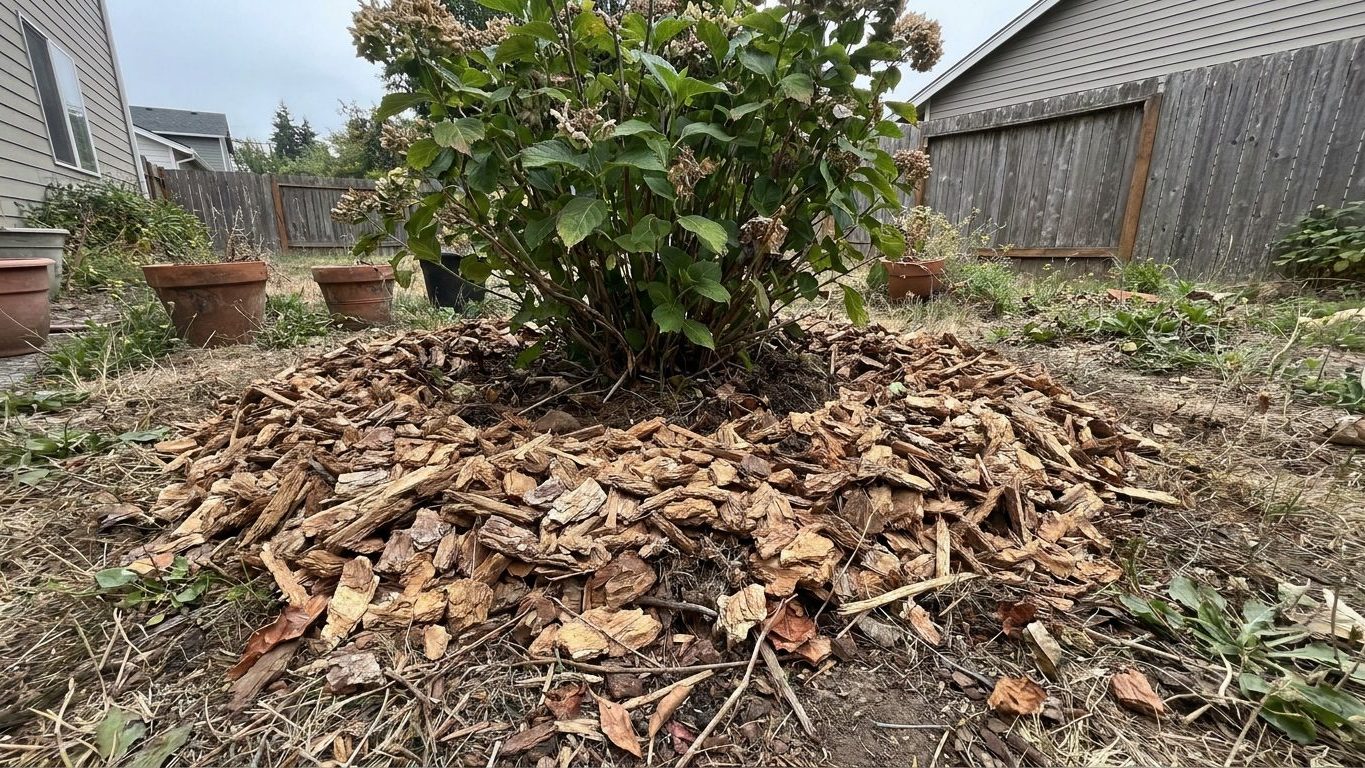
A 2 to 4 inch layer of shredded bark or chopped leaves, pulled back an inch from the stems, is the standard for every hydrangea type. When you lay it down shifts with your zone: cool-climate gardeners mulch in late fall to protect the root zone through winter, while warm-zone gardeners often mulch again in late spring to hold moisture through summer heat.
Mulching Hydrangeas: The Short Answer
NC State Extension Gardener Plant Toolbox lists the hydrangea genus across USDA zones 3a through 9b, but that range means little on its own. The right zone, and the right mulching window, depend entirely on which hydrangea you grow.
Bigleaf and panicle hydrangeas are both shallow-rooted, so a mulch layer protects the roots from heaving and drying out. The genus overall needs low maintenance once it’s established and mulched.
The state selector below this section carries the frost dates and mulching window for where you garden. Pick your state and skip straight to the numbers that apply to your yard.
From the almanac
Hydrangeas in your state
The dates on this page depend on where you live. Your state's page carries its frost dates, its USDA zones and the year laid out month by month.
Northeast
Southeast
- Alabama
- Arkansas
- Delaware
- Florida
- Georgia
- Kentucky
- Louisiana
- Maryland
- Mississippi
- North Carolina
- South Carolina
- Tennessee
- Virginia
- West Virginia
Midwest
Southwest
West
Pacific Northwest
Canada
Mulching Hydrangeas, Step by Step

Mulching a hydrangea is less about a single date and more about a sequence, six gestures done in order, whichever type you grow.
- Wait until the soil matches the season: mulch a cool-climate shrub once the first hard frost has stopped active growth, and mulch a warm-zone shrub as summer heat sets in, never onto frozen or bone-dry ground.
- Clear the base first: rake back old leaves and last year’s mulch to the drip line so the crown is visible, since bigleaf and panicle hydrangeas are both shallow-rooted and their surface roots sit close to whatever gets piled on top.
- Lay 2 to 4 inches, no more: a thicker layer holds too much moisture against shallow roots and invites the leaf spot and powdery mildew this genus is prone to.
- Keep an inch of bare soil at the stem: mulch touching the crown traps moisture against the bark and encourages bacterial wilt, so pull the layer back before walking away.
- Water once, deeply, after spreading: this settles the mulch and closes the air pockets that dry out shallow feeder roots faster than bare soil would.
- Check the layer again before the wood ripens: a hydrangea’s wood ripens through the season, it doesn’t harden off, and a layer washed thin by then won’t protect the root zone through whatever comes next.
None of this changes what goes under the mulch. Shredded bark, chopped leaves and pine straw all work; what matters is the depth and the gap at the stem, not the brand of material. Skip fresh wood chips that haven’t started breaking down, since they can tie up nitrogen right at the surface where the shallow roots are feeding.
Mulching Hydrangeas by Hydrangea Type
The table below only fills in where the type has both a zone range and a light preference on record. Two hydrangea types meet that bar, and they’re also the two gardeners mulch most differently across the year.
NC State Extension Gardener Plant Toolbox puts bigleaf at 6a to 11b, flowering on last year’s wood, so a hard freeze after bud set removes the blooms. Panicle spans 3a to 8b and flowers on the current season’s growth, so a hard late-winter cutback won’t cost a single bloom.
| Kind | Flowers on | USDA zones | Sun |
|---|---|---|---|
| Bigleaf (mop-head, lacecap) | Last year’s wood | 6a–11b | Part shade, protect from afternoon sun |
| Panicle (peegee) | Current season’s growth | 3a–8b | Full sun, the only one that takes it well |
Smooth, oakleaf, mountain and climbing hydrangeas each mulch the same way, 2 to 4 inches, kept off the crown, but their pruning windows and cold tolerance differ enough that they’re covered on their own pages within the hydrangea guide rather than squeezed into this table.
Mulching Hydrangeas: Mistakes That Cost a Season
Mulch piled against the crown

A thick cone of mulch against the stems holds moisture right where the bark meets the soil, and bacterial wilt, one of the diseases named for this genus, starts in exactly that kind of damp. Pull the layer back an inch from every stem, and check the diseases page if leaves wilt despite regular water.
Fresh wood chips spread too deep

Unaged chips piled past 4 inches tie up nitrogen at the surface and stay wet against bigleaf and panicle’s shallow roots, the same damp conditions behind leaf spot and powdery mildew. Keep the layer at 2 to 4 inches and let chips sit a season before spreading them fresh.
Treating every type on one calendar
Mulching a panicle and a bigleaf on the same date ignores that one flowers on new wood and the other on last year’s growth, so a schedule built for one costs blooms on the other. Check the pruning page for the window that actually matches what’s growing in the yard.
Mulching Hydrangeas in Your State
The national window here won’t tell you when to mulch in your own yard. Your state’s frost dates and the hydrangea types sold locally change both the timing and the depth, so the numbers live on the state page instead of here.
- Your state page: the frost dates and the mulching window for where you live.
- Which types hold up here: whether bigleaf survives your winters unprotected or needs the extra insulation mulch provides.
- Your extension office: the local service that can confirm soil pH and disease pressure specific to your county.
Common questions
Does the mulch color change flower color?
No. Mulch dye has no effect on bloom color. Only bigleaf and mountain hydrangeas shift between blue, purple and pink, and that shift tracks soil pH and available aluminum, not what sits on top of the soil. Panicle, smooth, oakleaf and climbing hydrangeas keep their color regardless of pH.
Can I use grass clippings instead of bark mulch?
Fresh clippings mat down and can smother the shallow roots that bigleaf and panicle depend on, so a thin, dried layer works better than a thick, fresh one. Shredded bark or chopped leaves still make the more reliable choice around the crown.
Should I remove mulch in spring?
Pull back the old layer to check the crown for rot, then refresh it rather than stripping it away entirely. A hydrangea’s wood ripens through the season, and a bare root zone right as new growth starts leaves shallow roots exposed to swings in moisture.