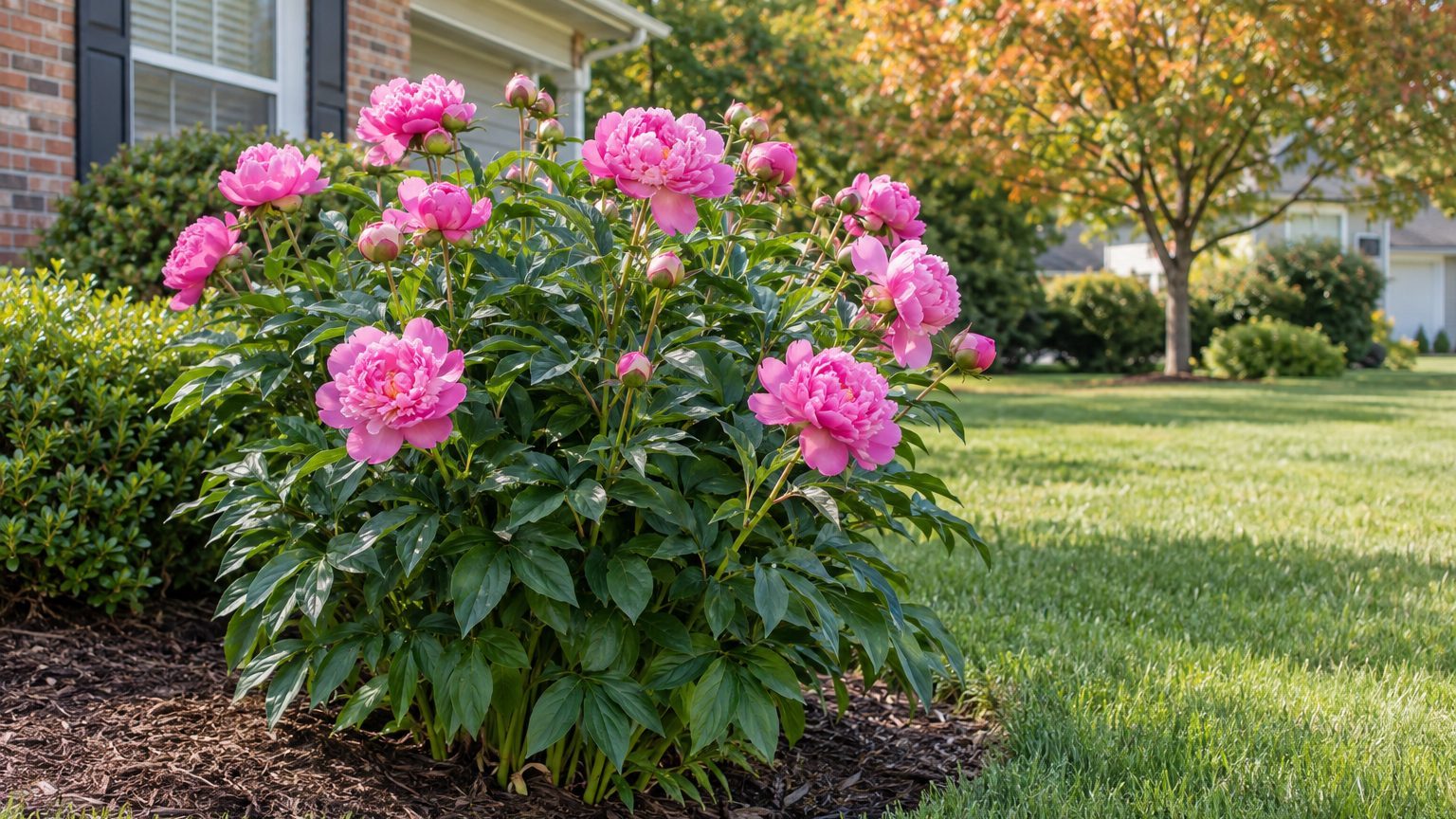
Peony stems come up red and pushy in a Southern spring, and soon the first fat buds open before the heat settles in. For peonies in Alabama, the work that sets up those blooms happens in autumn, with roots in the ground well before winter.
When to Plant Peonies in Alabama

Plant or divide peonies in late September or October, and the roots get a full season of cool soil to settle in before spring growth. The year then unfolds in a clear order.
- In March, the earliest cultivars can begin to flower, though bloom runs as late as May depending on the cultivar and the weather.
- In April and May, most peonies open, and early bloomers get their show in before hot weather arrives.
- Through summer, the foliage works quietly, feeding the roots that will carry next year’s buds.
- In late September and October, the plant is ready to be planted, moved or divided, with the eyes set near the soil surface.
- In November, once frost has blackened the stems, herbaceous peonies get cut back to the ground. October and December also work if frost has already come.
Frost dates give the outer edges of that calendar. In Huntsville, the last spring freeze usually falls between March 19 and April 3. In Huntsville, the first fall freeze usually falls between November 2 and November 16. Gardens in the suburbs and the country often freeze later in spring and earlier in fall, sometimes by a week or two, so check your own county. Alabama spans USDA zones 7a to 9a, but that range describes extreme winter lows rather than the winter chilling peonies need.
Alabama — the year and the numbers
- State
- Alabama
- USDA zones
- 7a-9a
- Last spring frost
- March 19 to April 3
- First fall frost
- November 2 to November 16
- Annual rain
- 54 in
- Lawn zone
- warm-season
- Source
- NOAA NCEI 1991-2020 Climate Normals, 32F freeze probabilities · Huntsville
Which Peonies Grow Best in Alabama?
Peonies can grow in Alabama, but they are working against the climate. They need a cold winter rest to set flowers, and mild Southern winters can leave them blooming poorly. Extension advice from the South points to early-blooming, single and Japanese types as the best bets.
Early bloomers open before summer heat sets in, and they are also less prone to botrytis blight. The extra-full doubles tend to struggle more in the South than singles do.
| Peony type | How it does in Alabama | Why |
|---|---|---|
| Early-blooming cultivars | Most reliable choice | They flower before hot weather and resist botrytis blight better |
| Single bloom types | Usually perform much better than doubles | Open flowers cope better with Southern conditions |
| Japanese bloom types | Usually perform much better than doubles | Same advantage as the singles in a warm climate |
| Double bloom types | Often disappointing | They fare worse in the South than singles and Japanese forms |
In the warmest, southernmost parts of the state, winter chilling is often too short for peonies to flower well, so expect weaker results there. Whatever you choose, plant shallow: a peony set too deep may bloom poorly or never come up. A newly planted or transplanted peony may also skip its first spring.
When to Plant, Cut Back and Feed Peonies in Alabama
The tasks are few, and they cluster in fall. Planting and dividing happen in autumn, while cutting back waits for frost to do its part. Tree peonies are the exception, since they keep their woody stems and are never cut back.
| Task | Best timing in Alabama | Why then |
|---|---|---|
| Planting or dividing | Late September or October | Roots settle in cool soil before winter |
| Cutting back herbaceous peonies | November, after frost (October or December also work) | The stems have died back and the plant is dormant |
| Bloom | April and May, from March for early cultivars | Early types flower before heat arrives |
Cut herbaceous stems down to the soil surface once frost has killed them, and clear the debris away from the bed. Feeding does not have a month in the calendar, so a soil test through your county office is the sensible way to decide whether the bed needs anything at all.
How Peony Planting Dates Change Across Alabama
The months above hold statewide, but the weather around them shifts from the mountains to the Gulf. Peonies reward the cooler parts of the state most.
- North Alabama and the Tennessee Valley: Peonies need a cold winter rest to flower, and they do best where winters are cold. Aim for the start of the planting window.
- Higher ground around the Appalachian foothills: Elevation brings later spring freezes and earlier fall ones, which pushes the season a little later in spring and earlier in fall.
- Gulf Coast and Mobile Bay: Mild winters mean less chilling, so peonies may flower poorly here. Cutting back often waits until later in the fall window.
Central Alabama, around Birmingham and Montgomery, sits between those extremes.
Where to Get Peony Advice in Alabama
The Alabama Cooperative Extension System, reached through Alabama Extension, offers advice written for Alabama soils and weather. Your county office handles the local questions.
- County extension offices can run a soil test before you dig planting holes.
- Extension agents can help diagnose a peony that won’t bloom or shows leaf blight, so bring a sample of the stems or leaves.
- Extension plant lists point you toward cultivars suited to your county before you order.
Common Questions
Can You Plant a Peony in Spring in Alabama?
Fall is the time that suits peonies, and the calendar for Alabama puts planting in late September or October. A peony set out in spring gives the roots less time to settle, and it may not bloom the first spring.
Why Won’t Your Peony Bloom in Alabama?
Look at these together. Dig a little at the crown, because eyes buried too deep often mean leaves with no buds. Then think about the winter, since a mild one in the southern part of the state may not give enough chilling. A recently moved plant may also need time to recover.
Do Tree Peonies Get Cut Back in Fall?
No. A tree peony keeps its woody stems through winter, so leave them in place. Only herbaceous peonies get cut to the soil surface after frost, usually in November.