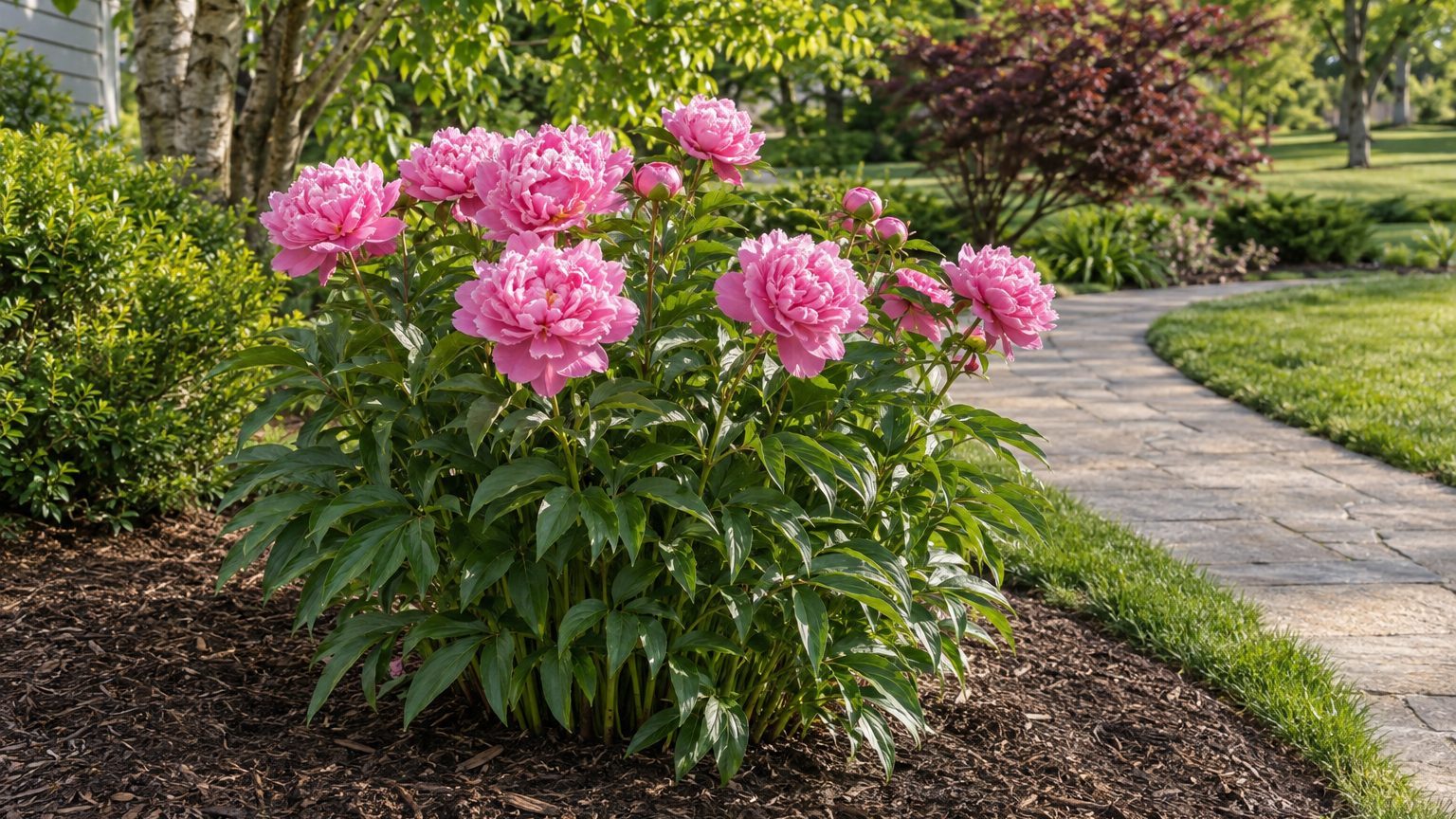
Red shoots push out of cold soil in spring, followed by heavy blooms in early summer: that is a familiar peony year. The plant’s routine is simple, but it depends on a few habits, such as planting depth, a cold winter rest and a tidy fall cleanup. Those habits change with the type you grow and the region where you garden.
Peony Care Calendar by Season
An herbaceous peony follows the same loop every year, and each step has a reason behind it. The state selector just below this section leads to the page for your state, where the months are spelled out.
- In early spring, red shoots break through the soil and unfurl into green stems. Leave them alone and keep mulch pulled back from the crown, since cold, wet cover around new growth invites rot.
- As buds swell, the stems start to lean under their own weight. Set a support ring or cage around the clump before the blooms get heavy, because it is hard to lift stems once they have flopped.
- When the flowers open in late spring to early summer, enjoy them or cut a few for a vase. Spent blooms can be snipped off so the plant puts its energy into the roots and leaves rather than seed.
- Through summer, the foliage works as a solar panel that feeds next year’s buds. Water during dry spells and keep air moving around the leaves so mildew has a harder time settling in.
- In fall, the leaves yellow and brown. Cut herbaceous stems down near the ground and take the debris away from the bed, since leftover leaves carry disease into the next season.
- Through winter, the crown rests under the soil. That cold is not a nuisance, because buds need a stretch of winter chill before they will bloom well in spring.
Tree peonies break from this loop, since their woody stems stay standing all year, and the next section explains how.
From the almanac
Peonies in your state
The dates on this page depend on where you live. Your state's page carries its frost dates, its USDA zones and the year laid out month by month.
Northeast
Southeast
- Alabama
- Arkansas
- Delaware
- Florida
- Georgia
- Kentucky
- Louisiana
- Maryland
- Mississippi
- North Carolina
- South Carolina
- Tennessee
- Virginia
- West Virginia
Midwest
Southwest
West
Pacific Northwest
Canada
Types of Peonies and How to Tell Them Apart
The main peony families found in home gardens have distinct growth habits. Herbaceous peonies are the familiar ones, dying to the ground each winter. Tree peonies are shrubs with woody stems. Intersectional peonies, often called Itoh hybrids, cross the two and borrow from each.
Check the stems in winter and you will know which one you have. Bare ground means herbaceous, stiff bare sticks mean tree or intersectional.
| Peony type | How it grows | What it needs |
|---|---|---|
| Herbaceous | Dies to the ground in winter and returns in spring, with blooms lasting a few weeks | Stems cut down in fall, support for heavy flowers, debris removed from the bed |
| Tree | Long-lived woody shrub, some growing quite tall | No cutting to the ground and no fall pruning |
| Intersectional (Itoh) | Stems linger above ground over winter but do not keep growing taller | In North Carolina, some trimming of dead tips after spring bud break |
Flower form is a separate trait from type. Blooms come single, semi-double or fully double, in white, pink, red and other colors depending on the cultivar, and double blooms may need a support ring after rain. Early, midseason and late bloomers also exist within each family, so a mix of cultivars stretches the display across late spring into early summer. Tree and intersectional peonies need different pruning, so check your plant’s label before reaching for the shears.
Best Peonies by Region and Hardiness Zone
Peonies reward cold winters, and the main question across the country is whether winter delivers enough chill or summer brings too much heat and humidity. These regions group states by how that balance tips.
- Upper Midwest and northern plains: Check local peony guidance before choosing a cultivar for winter conditions.
- Northern New England and New York: Choose a site with good airflow and drainage.
- Great Lakes, Iowa and the lower Northeast: Follow local peony guidance for planting depth.
- Mid-Atlantic and the upper South: Prioritize airflow and drainage when choosing a site.
- Rocky Mountain states: Use local peony guidance to account for elevation and frost exposure.
- Pacific Northwest and warm-winter states: Check local peony guidance before choosing a cultivar.
For Alaska and northern Canada, rely on local peony guidance for planting depth and site selection.
Common Peony Problems and What Causes Them
Healthy Plant, No Flowers

A lush clump with plenty of leaves and no buds usually points to a crown planted too deep. In Illinois, keep the crown no more than two inches below the soil surface. Plants set deeper may grow into handsome shrubs but never bloom, so lift the clump in fall and reset it at the right depth.
Blackened Buds

Buds that turn brown or black before opening, often with gray fuzz after a wet spell, are botrytis blight. The fungus overwinters on old stems and leaves. Keep peony debris out of compost because disease may be transferred to the mix. Do not reuse mulch that touched infected plants because it may contain pathogens.
White Powder on Leaves
A white film on leaves in late summer can be powdery mildew. It looks worse than it harms, since blooms are long over by then. Wider spacing and thinning nearby plants let air move through, while fall cleanup helps reduce spores.
Flopping Stems
Stems that bend to the ground after rain, especially under double blooms, are carrying more weight than they can hold. Set a ring or cage while shoots are still young and let the foliage grow through it. Shade also leaves stems weak, so a bed with more sun helps.
Peony Care Guides by State
Peony-care timing changes from one state to the next. Use the selector placed after the calendar to open your state, and look at the planting and bloom pages in particular.
- When to Plant Peonies in your state explains the planting window, so check it before ordering bare roots in late summer or fall.
- When Do Peonies Bloom in your state gives the bloom window, which helps you plan cutting, support and cultivar choices before the shoots rise in spring.
Common Questions
Are Tree Peonies Long-Lived?
Yes, they are long-lived woody shrubs, and some grow quite tall. Give them space and skip the fall pruning that herbaceous types get.
Can You Cut Peonies for a Vase?
Yes. Take a few stems when buds show color and feel soft, and leave plenty of foliage behind so the plant can keep feeding its roots.
Can You Move an Established Peony?
Peonies resent disturbance, so move one only when needed. Fall is the usual time, while the plant is dormant. Replant it with the crown at the proper depth, since a clump set too deep may stop blooming.
Sources : peonysenvy.com