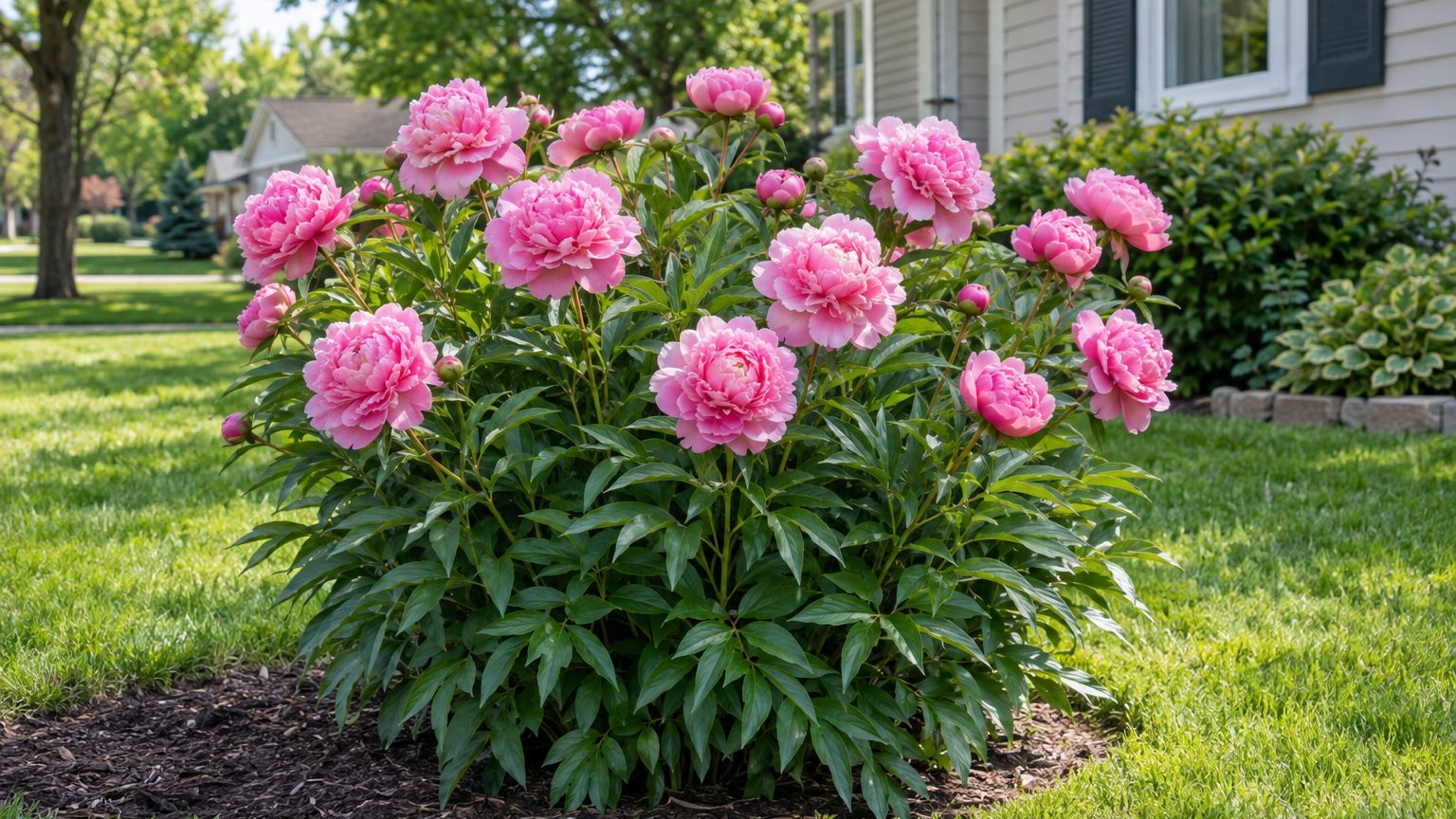
Red shoots push through cold South Dakota soil each spring, and by June the buds open on plants that went into the ground the autumn before. That is the rhythm of peonies in South Dakota: planted in early fall, cut back after a hard freeze, and tough enough for prairie winters.
When to Plant Peonies in South Dakota

Plant peonies in September to early October, so the roots settle in before the ground freezes. The rest of the year, the plant keeps a steady rhythm that is easy to work around.
- In early spring, red shoots push up as the soil thaws, and any heavy winter mulch around herbaceous plants can be pulled back so they break through cleanly.
- In late spring, the last freeze at the reference city of Sioux Falls falls between April 29 and May 9. Suburban and rural yards usually see it later, and higher ground later still, so check the date for your own county before trusting a single number.
- In June, the buds open, and flowering can run into early July depending on the variety.
- Through summer, the leaves work quietly, feeding the roots that will carry next year’s flowers, so leave the foliage alone until it has died back.
- From September to early October, plant new roots or divide crowded clumps. The first fall freeze at the same reference city arrives between September 24 and October 4, and gardens outside the city usually get it sooner, which is a good reason not to put the job off.
- In October and November, once a hard freeze has killed the foliage, cut herbaceous stems back and clear the debris away.
Across the state, the USDA hardiness zone runs from 3b-5b, and frost dates vary with location.
South Dakota — the year and the numbers
- State
- South Dakota
- USDA zones
- 3b-5b
- Last spring frost
- April 29 to May 9
- First fall frost
- September 24 to October 4
- Annual rain
- 28 in
- Lawn zone
- cool-season
- Source
- NOAA NCEI 1991-2020 Climate Normals, 32F freeze probabilities · Sioux Falls
Which Peonies Grow Best in South Dakota?
Peonies suit South Dakota well. They need a cold winter rest to flower, and prairie winters supply it. In mild-winter climates the same plants often flower poorly.
Herbaceous peonies and Itoh hybrids are the dependable choices for most yards. Tree peonies are possible but ask for a little more care.
| Peony type | How it does in South Dakota | Why |
|---|---|---|
| Herbaceous (garden) peony | Reliable and easy | Dies back to the ground each fall and sends up new growth in spring |
| Itoh (intersectional) peony | Reliable and easy | A hybrid of garden and tree peonies that is grown the same way as the herbaceous type |
| Tree peony | Workable with protection | Not as hardy, so it needs a protected site or winter mulch |
Tree peonies keep their woody stems all winter, which is why a spot out of the wind makes such a difference. A place near a wall or a windbreak, plus a layer of mulch after the ground freezes, gives them a far better chance of leafing out well in spring.
When to Plant, Cut Back and Feed Peonies in South Dakota
Planting and cutting back both belong to fall, which keeps the job list short. When planting, set the roots so the eyes sit near the soil surface. A peony planted too deep may bloom poorly or not come up at all.
| Task | Best timing in South Dakota | Why then |
|---|---|---|
| Plant or divide peonies | September to early October | Roots settle in before the ground freezes |
| Cut back herbaceous peonies | October to November, after a hard freeze has killed the foliage | The leaves are finished, and clearing them lowers the risk of disease carrying over |
| Leave tree peonies uncut | Never cut back | They keep their woody stems from year to year |
| Remove spent flowers | Once the blooms fade | Keeps the plant tidy and the foliage healthy |
When you cut herbaceous stems, take them down to within a couple of inches of the ground and bin the debris rather than composting it. Use a soil test to guide feeding.
How Peony Planting Dates Change Across South Dakota
Peonies keep to the same fall window statewide, but where you sit within that window depends on how soon winter arrives in your part of the state.
- Aim for the start of the planting window so the roots have time to anchor before the ground hardens.
- Plant on the early side of the window and expect shoots to appear a little later than in the south.
- Yankton and the Missouri River valley: The southeast corner runs warmer, so the season stretches longer; check your county extension office for local frost dates.
Your own yard may also differ from the nearest town, since low spots and open fields hold cold air longer than sheltered lots near buildings.
Where to Get Peony Advice in South Dakota
When a peony sulks or will not flower, local help is close at hand. Your county extension office and the state university can sort out questions about soil, site and disease.
- South Dakota State University Extension offers peony guidance for the state’s climate, and its pages are worth reading before you buy roots for fall planting.
- Your county extension office can advise on a soil test and look at photos or samples of troubled plants, so call when leaves spot or stems wilt.
- Before planting day, send in a soil sample so the results arrive in time to adjust the bed.
Common Questions
Can You Plant Peonies in Spring in South Dakota?
Garden centers in South Dakota sell peonies in spring as potted plants, but planting belongs in the September-to-early-October window. Bare roots are sold in fall, which is when the main planting window falls.
Why Is a New Peony Not Blooming?
A newly planted or transplanted peony may not bloom the first spring, so a healthy green plant with no buds that spring is normal. Look at the planting depth as well. If the foliage is vigorous but flowers stay missing and the eyes sit well below the soil surface, the plant may be set too deep and needs lifting and replanting in the fall window.
Can You Move a Peony in Summer?
Summer is the wrong time. Wait for September to early October, then lift the clump and replant it. Older, crowded clumps that have started to flower less are good candidates for dividing at that time. Leave the foliage in place until a hard freeze has killed it, then cut it back in October or November.