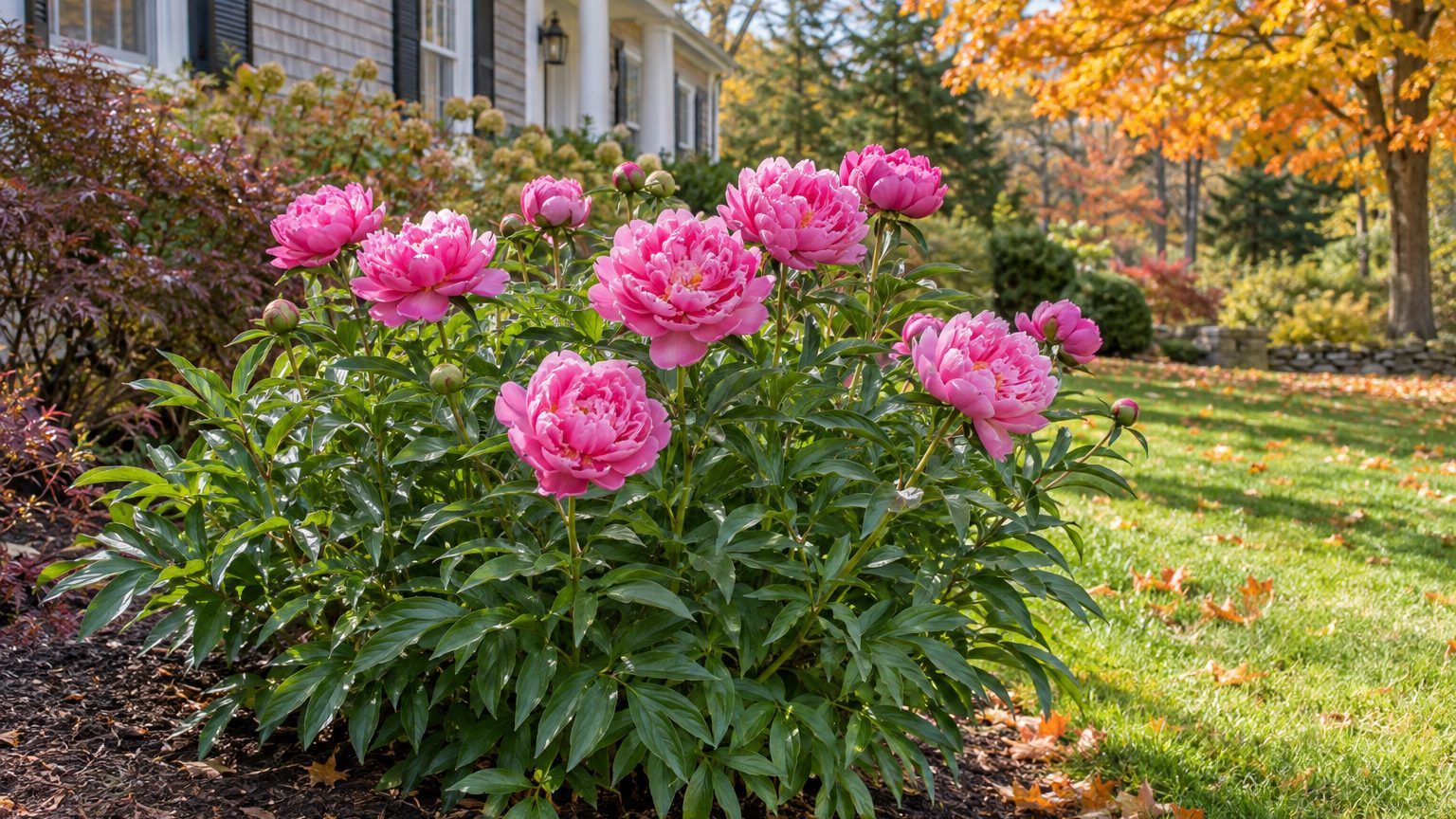
A peony clump in late spring carries fat, fragrant blooms, and the work that made them happen was done the autumn before. Planting, dividing and cutting back all follow the calendar of a cold-winter plant.
When to Plant Peonies in New Hampshire

Plant or divide peonies in August and September, with October as a fallback, so the roots settle before the ground freezes. Here is how a peony’s year runs in New Hampshire.
- In March and April, a herbaceous peony that was left standing over winter can be cut back.
- In May and June, the plants bloom, with the timing shifting by type from late spring into June.
- Through summer, the foliage builds the energy stored in the roots for next year’s buds.
- In August and September, the soil is warm and moist enough for new roots, which makes this the time to plant or divide, and it can still be done in October.
- In November and December, after the foliage has died back, herbaceous peonies can be cut to the ground.
Frost dates guide the edges of that year. At the reference weather station, the last spring frost falls between April 16 and April 27, and the first fall frost arrives between October 13 and October 26. Home gardens usually see the last spring frost later and the first fall frost earlier, often by one to two weeks and more at elevation, so check your own county. The state spans USDA zones 3b to 6a.
New Hampshire — the year and the numbers
- State
- New Hampshire
- USDA zones
- 3b-6a
- Last spring frost
- April 16 to April 27
- First fall frost
- October 13 to October 26
- Annual rain
- 40 in
- Lawn zone
- cool-season
- Source
- NOAA NCEI U.S. Climate Normals 1991-2020, 32F freeze probabilities · Manchester
Which Peonies Grow Best in New Hampshire?
Peonies suit New Hampshire well. They need a winter rest to flower, and New Hampshire winters provide more than enough cold to meet that need. Mild-winter climates are where peonies flower poorly, not here.
Four types are generally grown in home landscapes, and all of them are worth considering for a New Hampshire yard.
| Peony type | How it does in New Hampshire | Why |
|---|---|---|
| Herbaceous (garden) peony | Reliable, blooms in late spring into June | Dies back each year and relies on cold winters to set buds |
| Tree peony | Grows well, blooms ahead of the herbaceous types | Keeps woody stems, so it is never cut back |
| Intersectional (Itoh) peony | Suited to the state, flowers last of the four | A hybrid of garden and tree peonies, so it extends the season |
The woodland peony (Paeonia japonica) is a white-flowered type that opens first. In New Hampshire, the types bloom in overlapping turns, which gives a long run of flowers when different kinds share the garden.
When to Plant, Cut Back and Feed Peonies in New Hampshire
Peony work follows the seasons. Planting and dividing happen in late summer and early fall, while cutting back waits until the foliage has died down. Depth matters at planting: a peony set too deep may bloom poorly or not come up, so keep the eyes near the soil surface.
| Task | Best timing in New Hampshire | Why then |
|---|---|---|
| Planting or dividing | August and September, or October if needed | Roots establish in warm soil before winter |
| Spring planting | As soon as the soil is workable | Possible, but flowers may be delayed a year |
| Cutting back herbaceous peonies | November and December, or March and April | Foliage has died back, and removing it clears out disease |
| Feeding | When growth starts in spring | Supports the new shoots as they emerge |
A newly planted or divided peony may not bloom the first spring, so patience is part of the job. Tree peonies skip the cutback entirely, since their woody stems carry next year’s growth.
How Peony Planting Dates Change Across New Hampshire
The state runs from the coast to the mountains, and the season shifts with it. Plan around your own conditions rather than a single date.
- Seacoast: Check local frost timing before deciding how late to plant in fall.
- Lakes Region: Check your county’s frost timing before choosing a planting date.
- White Mountains and the North Country: Elevation brings an earlier first fall frost and a later spring thaw, so aim for the start of the planting window and do not wait until October.
In the southern valleys, check local frost timing before setting your planting schedule.
Where to Get Peony Advice in New Hampshire
When a peony refuses to bloom or the soil is a question mark, local help is close. University of New Hampshire Extension answers garden questions and can point you to your county office.
- The extension service offers plant diagnosis, and a photo of the foliage along with a note on planting depth helps.
- Your county office can guide a soil test, best collected before planting.
Common Questions
Why Won’t My Peony Bloom?
Planting too deep is a common cause, and shade is another. Check that the eyes sit near the surface, and that the plant gets sun for much of the day. A newly moved plant may also need a year to settle.
Can You Move a Peony in Spring?
Yes, as soon as the soil is workable. Expect fewer flowers that year, since the plant is rebuilding its roots. Late summer moves usually recover better.
Do Tree Peonies Need Cutting Back?
No. A tree peony keeps its woody stems through winter. Remove only dead or damaged wood once new growth shows in spring.