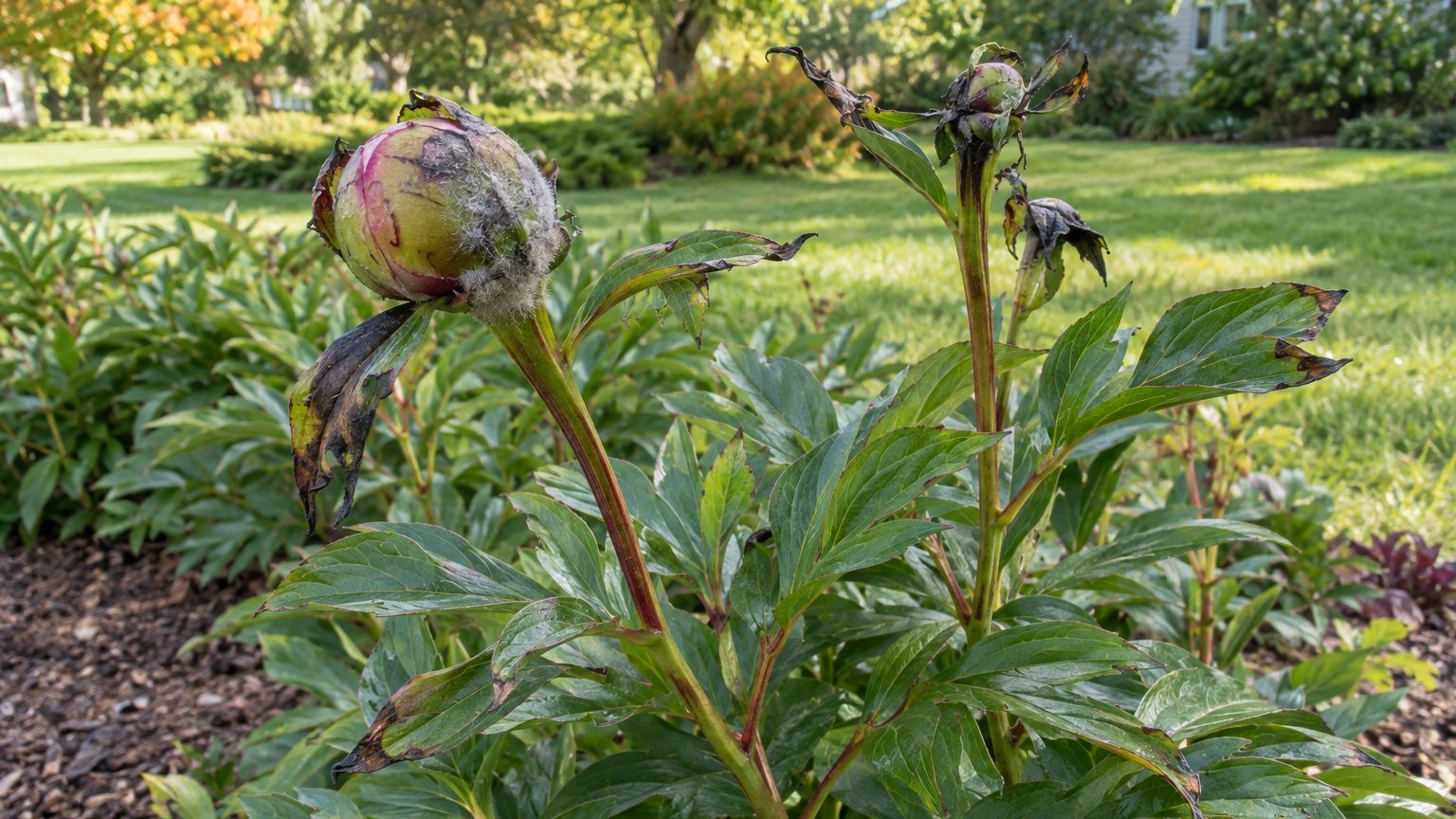
Black, wilted shoots in spring, a gray fuzz on the stems, or reddish purple blotches on the leaves by the end of summer: each of these points to a different peony disease. Botrytis, powdery mildew and leaf blotch can be confused, and telling them apart helps you choose the right response.
How Do You Recognize a Peony Disease?
You recognize a peony disease by pairing what the plant looks like with when it shows up. Shoots and leaves can show different symptoms, and damp or crowded conditions can favor fungal problems.
- Botrytis: in Minnesota, new shoots may turn black, wilt and die as they emerge in spring; in Ohio, a fine, velvety gray mold can cover newly emerging shoots.
- Leaf blotch: in Minnesota, irregular to round reddish purple blotches measure 1 inch or larger and are most common from late summer to early fall.
- Powdery mildew: a white, dusty film on the leaf surface that wipes off with a finger, usually late in the season.
Peony type and local weather shift the picture, so the state selector just below this section takes you to the page for your state.
From the almanac
Peonies in your state
The dates on this page depend on where you live. Your state's page carries its frost dates, its USDA zones and the year laid out month by month.
Northeast
Southeast
- Alabama
- Arkansas
- Delaware
- Florida
- Georgia
- Kentucky
- Louisiana
- Maryland
- Mississippi
- North Carolina
- South Carolina
- Tennessee
- Virginia
- West Virginia
Midwest
Southwest
West
Pacific Northwest
Canada
How to Treat Peony Diseases

Fungal peony diseases are managed through cleanup and timing far more than rescue sprays, so the gestures below follow the order of the gardening year.
- In Indiana, remove and destroy wilted or rotted shoots in spring, and pull off winter mulch before new shoots emerge.
- Spray a protective fungicide before any symptoms appear, since in North Dakota it is advised that these products will not cure a fungal disease once it has started.
- In North Dakota, the fungicide can be reapplied at 14-day intervals until mid-June.
- Water at the soil and keep the foliage dry, as Iowa advice suggests, and space peonies three to four feet apart.
- Cut off dead buds in late spring, since in Iowa this is one of the main prevention habits.
- In Iowa, remove diseased foliage at the end of the growing season and carry the debris away from the bed.
Keep the cleared debris out of the compost pile. In Washington, the advice is that Botrytis can be carried into the compost mixture and back to the garden.
Peony Diseases by Peony Type
Not every peony grows in the same setting, and the setting decides which disease risks you manage. A peony in a pot, under a tunnel or in open ground gets a different mix of moisture, airflow and exposure.
| Peony Type | What changes | Why it matters |
|---|---|---|
| Garden peonies in the ground | In Arkansas, they stay healthy with a minimum of 6 hours of sun and well-drained soil. In Iowa, plants are spaced three to four feet apart. | Sun and airflow dry the leaves quickly, which gives fungal spores less time to take hold. |
| Container-grown peonies | In Virginia, crowns get a broad spectrum fungicide before potting and again 2 weeks after. | Crowns start in a confined, moist mix, so protection begins before roots and shoots are growing. |
| High tunnel cut-flower peonies | In Utah, humid conditions inside the tunnel favor Botrytis, which rots young shoots at ground level when they are 5 to 8 inches tall. | Humidity can build under cover and favor shoot rot. |
Peonies grown for cut flowers also face viral diseases, which have been reported in Europe, the USA, Japan, China and New Zealand. For a home garden, the practical lesson is simple: match your care to how and where the plant grows, and begin with healthy crowns.
Peony Disease Mistakes to Avoid
Composting Diseased Debris

Tossing cut stems and leaves on the compost pile feels tidy, but Botrytis can ride along and return with the finished compost. In Washington, the advice is to keep peony debris out of the pile. Bag it for the trash or take it off the property.
Spraying After Symptoms Show

Waiting for black shoots or gray mold before reaching for a fungicide means the window has closed. In North Dakota, these products protect rather than cure, so they go on before symptoms appear in spring. Put the first spray on the calendar, and let spots or mold trigger cleanup instead.
Reusing Old Mulch
Mulch that sat over a diseased peony can hold the pathogens, and in Indiana the advice is not to reuse it. After a bad year, Illinois advice is to pull the old layer and put down 2-3 inches of fresh mulch.
Peony Diseases in Your State
The sign that starts the work is a black, wilting shoot in spring or the first reddish purple blotch on a leaf. Timing for spraying and cleanup shifts with local weather, so each state has its own months.
- Open the page for your state to see the months that fit your climate for spring spraying and fall cleanup.
- Check the bed when shoots first break the soil, and clear any blackened ones right away.
Common Questions
What Temperatures Does Botrytis Need to Infect Peonies?
In Illinois, Botrytis can infect plants when temperatures are between 32 and 84 degrees. Spores are released as humidity rises as well as when it falls, so a mild, damp spell is enough to put young growth at risk.
Does More Sun Help Prevent Peony Diseases?
It helps. In Arkansas, peonies stay very healthy when planted with a minimum of 6 hours of sun in good garden soil with excellent drainage. Sun dries the foliage after rain and dew, and drained soil keeps the crown from sitting wet.
Can Peonies Get Viruses?
Yes. Viral diseases of peony have been reported in Europe, the USA, Japan, China and New Zealand. Viral diseases have been reported in Europe, the USA, Japan, China and New Zealand.
Sources : bygl.osu.edu | yardandgarden.extension.iastate.edu