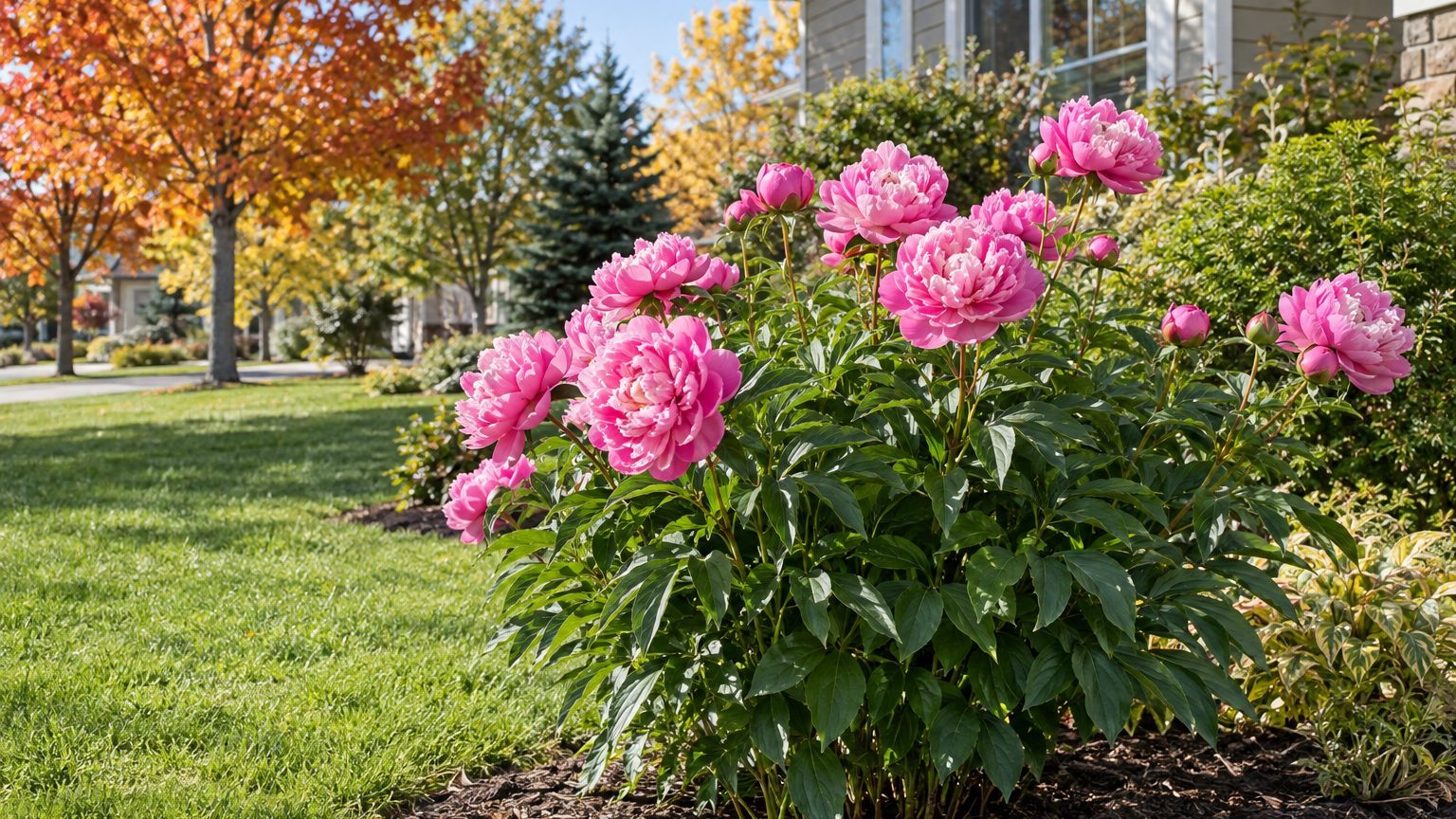
Peony shoots push up red through cold spring soil, and the roots that feed them are set in the ground the autumn before. For peonies in Saskatchewan, that means planting while the soil still has some warmth and the winter is still ahead. The timing is simple once you see the year as a whole.
When to Plant Peonies in Saskatchewan

Plant or divide peonies from September into early October, so the roots settle in before the ground freezes. Here is how the rest of the year runs around that window.
- In early spring, red shoots break through the soil and grow quickly.
- In late spring, frost can still return. Around Saskatoon, the last frost falls on May 18 on average, so in about half of all years it comes later than that.
- In June, the main bloom opens, and flowering can carry into July depending on the variety and the season.
- Through summer, the plant builds the leaves and roots that will feed next year’s flowers, so the foliage is worth keeping healthy.
- From September into early October, bare-root divisions and new plants go into the ground. This planting window gives the roots time to settle before winter.
- In October and November, once a hard freeze has killed the foliage, herbaceous peonies are cut back to just above the soil.
Saskatoon sits in Canadian hardiness zone 3a. That is a Canadian rating, not a USDA zone, and it describes that city, not the whole province. No local source publishes peony timing for Saskatchewan, so these dates follow the nearest comparable climate. Confirm local timing with a garden centre, a garden society or a provincial gardening group.
Saskatchewan — the year and the numbers
- State
- Saskatchewan
- Hardiness zones
- 3a
- Last spring frost
- May 18
- First fall frost
- September 18
- Annual rain
- 14 in
- Lawn zone
- cool-season
- Source
- Environment and Climate Change Canada — Canadian Climate Normals 1981-2010, station SASKATOON SRC · Saskatoon
Which Peonies Grow Best in Saskatchewan?
Peonies suit this province well. They need a cold winter rest to flower, and Saskatchewan winters supply it. Herbaceous and intersectional (Itoh) types are the easiest to grow; they die back to the ground each fall and return in spring.
Tree peonies are the harder case. Their woody stems stay above ground all winter, which exposes them to the cold in a zone 3a garden.
| Peony type | How it does in Saskatchewan | Why |
|---|---|---|
| Herbaceous (garden) | Reliable and easy | Dies back to the ground each fall, leaving no woody stems exposed through winter |
| Itoh (intersectional) | A good choice | Grows like a herbaceous peony and dies back each fall |
| Tree peony | Possible with protection | Not as hardy, so it needs a sheltered site or winter mulch |
Woodland peonies are also grown in home landscapes elsewhere, but for a first peony in a prairie yard, a herbaceous type is the straightforward pick.
When to Plant, Cut Back and Feed Peonies in Saskatchewan
Peony work is concentrated in early autumn for planting and after a hard freeze for tidying; the available calendar does not set a feeding month for Saskatchewan. Spring and summer are mostly for watching the plant grow. Bloom time is included below because it tells you when the plant is putting its energy into flowers.
| Task | Best timing in Saskatchewan | Why then |
|---|---|---|
| Planting or dividing | September to early October | Roots settle before the ground freezes |
| Bloom | June, into early July | The flowering season for most garden peonies |
| Cutting back herbaceous peonies | October or November, after a hard freeze has killed the foliage | The plant has finished drawing energy back into the roots |
| Mulching tree peonies | Before winter sets in | Protects the woody stems that stay above ground |
Tree peonies are never cut back, since their woody stems are what carry next year’s buds. A newly planted or transplanted peony may also skip flowering in its first spring, which is normal and not a sign of failure.
How Peony Planting Dates Change Across Saskatchewan
The frost dates quoted here come from Saskatoon, and a province this large does not share one climate. Northern and upland districts run behind it.
- Saskatoon: The September to early October window fits as written for the reference city.
- Prince Albert and the north: Spring arrives later and fall frost comes sooner. Aim for the start of the planting window so roots have time to settle.
- Cypress Hills: Higher ground stays cooler, so spring growth and bloom come later than in the lowlands. Do not wait until the end of the planting window.
Wherever you garden, watch your own soil and your own first frost more closely than any average.
Where to Get Peony Advice in Saskatchewan
Canada has no county extension offices, so advice comes through the provincial ministry, local gardening groups and garden centres. The Saskatchewan Ministry of Agriculture is a starting point for farm and garden resources.
- A local garden centre can tell you which peony varieties it stocks for your area, and bare-root plants are usually available in fall.
- A garden society or master gardener group can help diagnose a plant that will not bloom.
- For soil questions, ask a local garden centre or gardening group before you dig.
Common Questions
Can You Plant Peonies in Spring in Saskatchewan?
The recommended planting window is September to early October. Bare-root plants are usually sold in fall, which is also the better time to plant them.
How Deep Should You Plant a Peony?
Keep the eyes, the reddish buds on the root, near the soil surface. A peony set too deep may bloom poorly or fail to come up at all.
Should You Compost Peony Foliage After Cutting Back?
Bag the old leaves and stems and put them in the trash. Composting can carry disease over to next year’s growth.