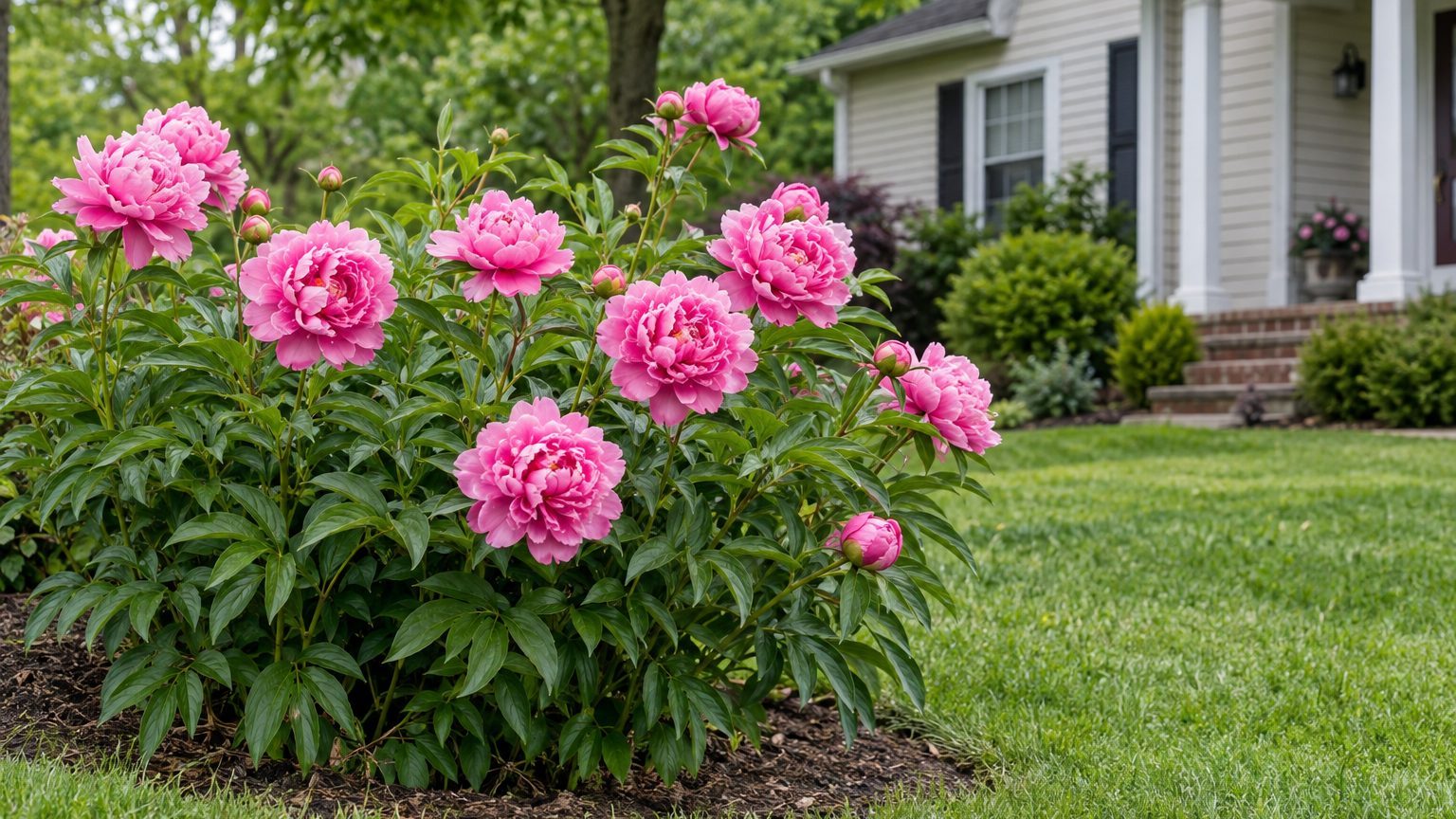
Peony foliage turns bronze and sags after the first hard frosts, and that is the quiet signal that the planting window has just closed behind you. For peonies in West Virginia, roots go in during early autumn so they can settle before winter. The state’s cold winters suit them well.
When to Plant Peonies in West Virginia

Plant or divide peonies in September through October, which gives the roots time to anchor before the ground freezes. The dates below follow Charleston, a river valley, and the state sits in USDA hardiness zones 5a-7a, so other parts differ.
- In late winter and early spring, dormant roots wake up as the last spring frost passes, somewhere between April 9 and April 23 in Charleston, and red shoots push through the soil.
- In May, buds open, and in some parts of the state the show can begin earlier, from mid-April.
- Through summer, the leaves feed the root, building the stored energy that decides next year’s flowers.
- In September through October, planting and dividing is the job of the season, with the soil still workable and the roots free to grow before winter.
- In November and December, once the foliage has died back after frost, herbaceous plants are cut to the ground. Charleston sees its first fall frost between October 18 and November 1, and higher ground freezes noticeably earlier.
A peony planted in fall may skip blooming the first spring. That is normal, and the plant is simply spending its energy on roots.
West Virginia — the year and the numbers
- State
- West Virginia
- USDA zones
- 5a-7a
- Last spring frost
- April 9 to April 23
- First fall frost
- October 18 to November 1
- Annual rain
- 46 in
- Lawn zone
- cool-season
- Source
- NOAA NCEI 1991-2020 Climate Normals, 32F freeze probabilities · Charleston
Which Peonies Grow Best in West Virginia?
Peonies suit West Virginia. They do best where winters are cold and flower poorly in mild-winter climates, so the state’s winters work in your favor.
Herbaceous peonies and intersectionals are the easiest to grow and share the same culture: each fall they die back to the ground, and new growth emerges in spring.
| Peony type | How it does in West Virginia | Why |
|---|---|---|
| Herbaceous | Reliable across the state | Dies back each fall and returns after winter cold |
| Intersectional (Itoh) | Reliable, easy to grow | Same yearly dieback and spring regrowth as herbaceous types |
| Tree peony | Grows, but is handled differently | Keeps its woody stems through winter and is never cut back |
Whichever type you choose, set the roots so the eyes sit near the soil surface. A peony planted too deep may bloom poorly or fail to come up at all.
When to Plant, Cut Back and Feed Peonies in West Virginia
The yearly jobs cluster in fall and early spring. Planting comes first, cutting back follows once frost has finished the foliage, and bloom time sets the pace of the season in between.
| Task | Best timing in West Virginia | Why then |
|---|---|---|
| Plant or divide | September through October | Roots settle before the soil freezes |
| Cut back herbaceous peonies | November through December, after the foliage has died back | Frost has ended the growing season, and removing the tops is tidy |
| Cut back (alternative) | March through April | Waiting until early spring works as well |
| Feed | No statewide feeding month is given | Use guidance for your site |
| Enjoy bloom | May | Peak flowering in most of the state |
Tree peonies are the exception to the cutting rule. Leave their woody stems alone, since they carry next year’s buds.
How Peony Planting Dates Change Across West Virginia
West Virginia’s mountains make the biggest difference to your calendar, so the same plant behaves differently from one county to the next.
- Charleston and the Kanawha Valley: Mild valley air holds off frost longer, so planting can run toward the later part of the fall window and bloom opens early.
- The Allegheny Highlands: Higher elevations freeze noticeably earlier in fall, so aim for the start of the planting window and expect bloom to arrive later in spring.
Watch your own yard too, since a cold hollow or a sunny south slope can shift things by itself.
Where to Get Peony Advice in West Virginia
Local help is close at hand, from a plant that refuses to bloom to a bed that stays soggy.
- West Virginia University offers guidance through WVU Extension, where you can find planting and care information for your area.
- Your county extension office can run a soil test and help diagnose problems, and a visit before planting season gives you results in time to amend the bed.
Common Questions
Can You Plant Peonies in Spring in West Virginia?
Plant container-grown and bare-root peonies in September through October. A newly planted peony may skip blooming the first spring.
Why Won’t My Peony Bloom?
Look at how deep the crown sits together with how much sun the bed gets. Eyes buried well below the surface, along with shade that lasts most of the day, are the usual reasons for leaves without flowers.
Do Peonies Need to Be Divided?
Division is optional and is done in September through October when a clump has grown crowded. Each piece needs its own eyes, and divided plants may rest from blooming for a season before they catch up.