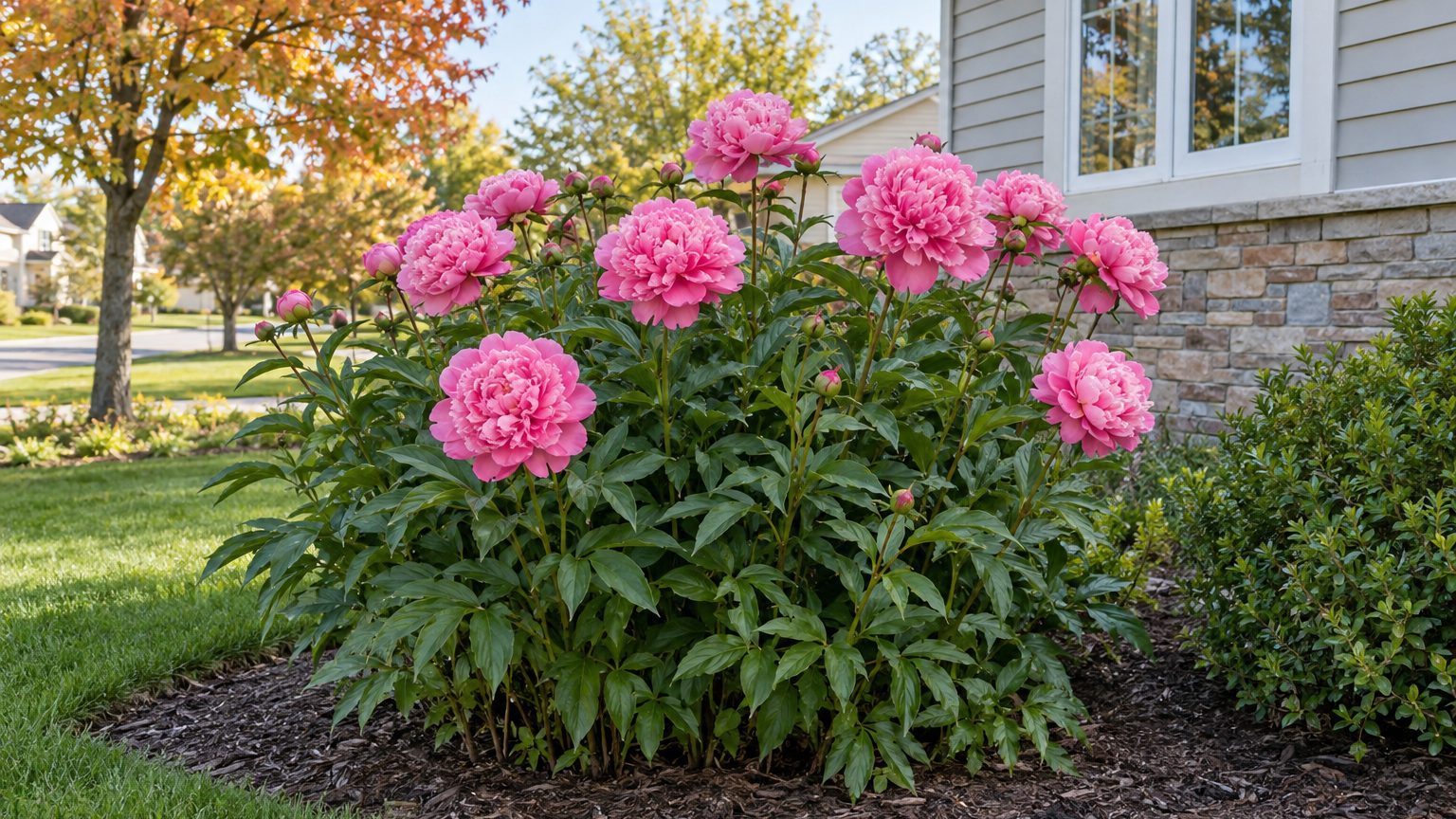
Peony shoots push up red and tight through cool soil in spring, making an established clump a welcome sight. In Minnesota, the winters give peonies the cold rest they need, so the real question is timing the planting. Fall is the season to get roots in the ground.
When to Plant Peonies in Minnesota

Plant or divide peonies in September to early October, so the roots settle in before the ground freezes. The rest of the peony year follows from that planting window.
- In early spring, red shoots break through the soil, and the last spring frost in the Twin Cities falls between April 17 and April 30. Young shoots can handle a light frost, but cover or mulch them if a hard freeze threatens.
- In June, the flowers open, and in a cool year bloom can run into early July. Deadhead the spent flowers once they fade so the plant puts its energy into the roots.
- Through summer, the leaves keep working, storing up food in the roots for next year’s buds. Leave the foliage standing.
- In September to early October, you plant or divide, ahead of the first fall frost, which arrives between October 11 and October 23 in the Twin Cities. New roots need that time to anchor before winter.
- In October and November, after a hard freeze has killed the foliage, you cut herbaceous peonies back and clear the debris.
Those frost dates describe the mild south of the state, and northern Minnesota has a noticeably shorter season. The USDA hardiness zone system puts Minnesota anywhere from zone 3a to 5a, so the north and the metro area differ more than you might expect. Treat the planting window as a guide and lean toward its early end the farther north you garden.
Minnesota — the year and the numbers
- State
- Minnesota
- USDA zones
- 3a-5a
- Last spring frost
- April 17 to April 30
- First fall frost
- October 11 to October 23
- Annual rain
- 32 in
- Lawn zone
- cool-season
- Source
- NOAA NCEI 1991-2020 Climate Normals, 32F freeze probabilities · Minneapolis
Which Peonies Grow Best in Minnesota?
Peonies belong in Minnesota. They need a cold winter rest to set flowers, and they flower poorly in mild-winter climates, so Minnesota’s winters suit them well. Herbaceous and Itoh peonies are the dependable choices for most yards.
Tree peonies can work too, but they ask for more care. Their woody stems carry through winter above ground, which exposes them to the cold.
| Peony type | How it does in Minnesota | Why |
|---|---|---|
| Herbaceous (garden) peony | Reliable and easy | Dies back to the ground each fall, and new growth returns in spring |
| Itoh (intersectional) peony | Reliable and easy | Grows with the same routine as the herbaceous type, since it is a hybrid of garden and tree peonies |
| Tree peony | Possible with protection | Generally less hardy, so it needs a sheltered site or winter mulch |
Woodland peonies also exist, but they are less common in home landscapes, and most Minnesota gardeners will do best starting with a herbaceous or Itoh plant. A tree peony is worth trying if you have a corner out of the wind.
When to Plant, Cut Back and Feed Peonies in Minnesota
Peony work in Minnesota centers on fall planting and cleanup. These jobs happen in fall, which keeps the garden calendar simple.
Herbaceous peonies get cut back, while tree peonies keep their woody stems and are never cut back. The timing below applies to herbaceous and Itoh types.
| Task | Best timing in Minnesota | Why then |
|---|---|---|
| Planting or dividing | September to early October | Roots settle before the ground freezes |
| Deadheading | After the flowers fade in June into early July | Spent blooms are removed so energy goes to the roots |
| Cutting back | October to November, after a hard freeze has killed the foliage | Dead leaves and stems can carry disease |
| Clearing debris | Right after cutting back | Removing it protects next year’s growth |
When you cut back, take stems down to within a couple of inches of the ground. Feeding has no fixed date on the calendar, so a soil test is the better guide than a schedule.
How Peony Planting Dates Change Across Minnesota
Peony timing shifts with latitude and with the big lakes, so a gardener in Duluth works a different calendar from one in the Twin Cities.
- Southern Minnesota: This area shares the milder end of the state with the Twin Cities. Use the September-to-early-October planting window here.
- Red River Valley: The flat northwest has a shorter season, with frost arriving sooner in fall. Plant early in the window so roots have time before the ground freezes.
- North Shore and the Arrowhead: Lake Superior keeps spring cool and slows the season, so shoots emerge later and bloom arrives later than in the south. Plant at the early end of the window, and mulch tree peonies well.
Cut herbaceous peonies back only after a hard freeze has killed the foliage, and plant or divide in September to early October.
Where to Get Peony Advice in Minnesota
For a diagnosis or a soil test, University of Minnesota Extension is the place to start, and its county offices handle local questions about your yard.
- Its plant guides can help when leaves spot or a clump stops blooming.
- Your county extension office can point you to a soil test and to master gardeners who know local conditions, and a call before fall planting saves guesswork.
- A soil test taken before planting shows whether the bed needs changes, so the roots go into ground that suits them in September.
Common Questions
Can You Plant Peonies in Spring in Minnesota?
Yes. Garden centers may sell potted peonies in spring, but plant or divide them in September to early October so the roots can settle before the ground freezes. A newly planted or transplanted peony may not bloom the first spring, so patience matters more than anything you add to the soil.
Why Is a Peony Not Blooming?
A peony set too deep may bloom poorly or not come up at all, so check that the eyes sit near the soil surface. A clump planted in heavy shade also struggles, so check the crown depth and the amount of sun before you dig it up.
Can You Compost Peony Foliage?
It is better not to. Cut the old leaves to ground level in fall and destroy the debris rather than composting it, which helps prevent disease from carrying over to next year’s growth.