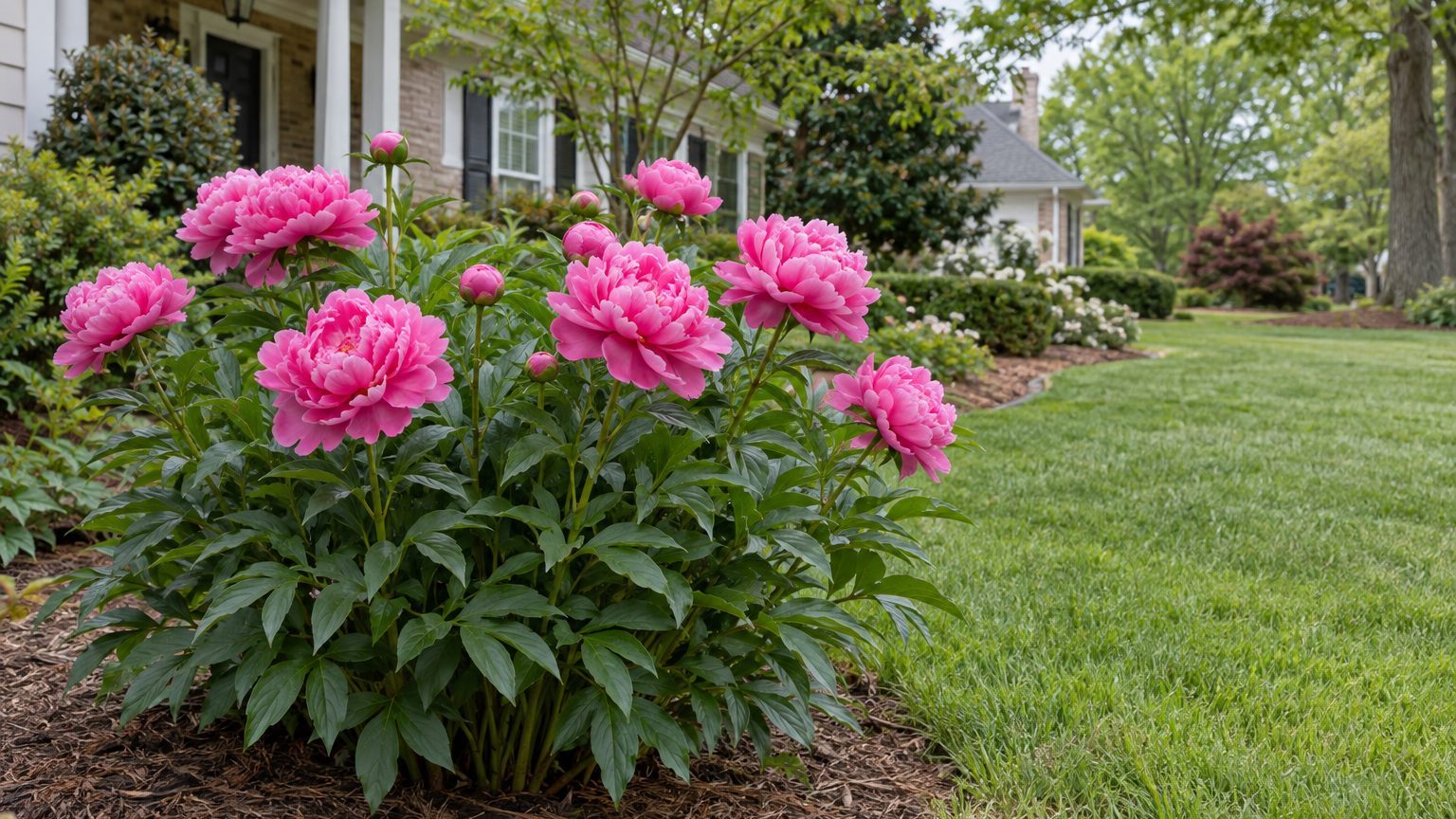
Peony stems poking through the soil in late winter are an early sign that spring has reached a South Carolina yard, and what you plant in autumn decides how that spring looks. Peonies in South Carolina are a fall planting job, and they reward the right variety far more than extra effort.
When to Plant Peonies in South Carolina

Plant or divide peonies in late September or October, and the plant’s year then follows a steady rhythm from there. Dates below speak of Charleston, and other parts of the state differ.
- In late September or October, set bare roots or divisions into the ground so they can root in warm soil before winter arrives.
- Through winter, the plant rests underground, and this cold rest is what lets it flower later. Peonies need it to bloom, and they may flower poorly where winters are mild.
- In March, the earliest cultivars can open their first blooms, and the last spring freeze at Charleston usually falls between February 28 and March 17.
- In April and May, most peonies flower, and a newly planted or transplanted one may skip blooming its first spring.
- In November, once frost has killed the foliage, cut herbaceous stems to the soil. It can also be done in October or December if frost arrives early or late.
The first fall freeze at Charleston tends to arrive between November 20 and December 5, which leaves the fall planting window comfortably ahead of it. South Carolina spans USDA hardiness zones 7a to 9a, a system built on the average annual extreme minimum temperature. Keep the eyes, the pink buds on top of the root, near the soil surface when you plant. A peony set too deep may bloom poorly or not come up at all.
South Carolina — the year and the numbers
- State
- South Carolina
- USDA zones
- 7a-9a
- Last spring frost
- February 28 to March 17
- First fall frost
- November 20 to December 5
- Annual rain
- 53 in
- Lawn zone
- warm-season
- Source
- NOAA NCEI 1991-2020 Climate Normals, 32F freeze probabilities · Charleston
Which Peonies Grow Best in South Carolina?
Peonies can grow here, but they are working against the climate. In South Carolina, they often do not perform well in the lower part of the state because of insufficient winter chilling, and summer heat arrives quickly after bloom.
Early-blooming, single, or Japanese cultivars are the best performers in South Carolina. Those types have time to flower before hot weather sets in.
| Peony type | How it does in South Carolina | Why |
|---|---|---|
| Early-blooming cultivars | Among the best performers | They flower before summer heat and are less prone to botrytis blight |
| Single bloom types | Usually much better than doubles | Lighter flowers cope better with Southern weather |
| Japanese bloom types | Usually much better than doubles | Same advantage as singles, with a simpler flower form |
| Double bloom types | Weaker choice in the South | Usually perform less well than singles and Japanese types |
A tree peony keeps its woody stems and is never cut back, unlike the herbaceous types.
When to Plant, Cut Back and Feed Peonies in South Carolina
Peonies ask for little, but the timing of each task matters. Most of the work lands in autumn, and spring is mostly about watching the buds.
Feeding guidance is not provided here.
| Task | Best timing in South Carolina | Why then |
|---|---|---|
| Plant or divide | Late September or October | Roots settle in before winter, and the plant gets its cold rest |
| Flowering | April and May, as early as March for early cultivars | Early bloomers finish before the heat and are less prone to botrytis blight |
| Cut back herbaceous stems | November, after frost | Dead stems come down to the soil surface once frost has finished them |
| Feeding | Not provided | No recommendation is provided |
Cutting back can slide into October or December if frost comes early or late. The sign to watch is blackened, collapsed foliage, and removing it also takes away a place where fungal problems overwinter.
How Peony Planting Dates Change Across South Carolina
The fall planting window holds across the state, but the weather around it shifts with where you live. Frost and winter chill are what move.
- Upstate: Spring frosts arrive later and fall frosts earlier than they do at the coast, so winters are colder and the cold rest is more dependable. Peonies have their best odds here.
- Charleston peninsula: Milder than the airport readings, with less winter chilling. Early-blooming singles and Japanese types matter most in this setting.
- Midlands and the Lowcountry: Winters give less chill as you move south and east, so flowering becomes less certain and summer heat arrives faster after bloom.
Whatever the region, the planting window stays the same, and local frost is just a reminder to wait for foliage to die back before you cut.
Where to Get Peony Advice in South Carolina
For a peony that refuses to bloom or leaves that spot over summer, Clemson Cooperative Extension is the state’s own source, and your county office can look at the plant in person.
- Its peony guide covers cultivars suited to the state, and it is worth a read before you buy roots.
- Your county extension office can run a soil test, which is worth doing before you dig a bed.
- Staff can help diagnose blight or poor flowering when you bring a sample, so go when you see the problem.
Common Questions
Can You Plant a Peony in Spring in South Carolina?
Fall gives the roots the head start they need, so autumn is the time to plant. A spring-planted peony has less time to settle before summer heat, and it may not bloom the first spring.
Why Is My Peony Not Blooming in South Carolina?
Look at how deep the eyes sit and how the winter went, together. Eyes buried well below the surface often mean leaves with no flowers, and a mild winter can leave the plant without enough chill. A newly planted or transplanted peony may not bloom the first spring.
Should You Cut Back Tree Peonies in South Carolina?
No. A tree peony keeps its woody stems through winter, so leave them in place. Only herbaceous peonies get cut to the soil, and that happens after frost.