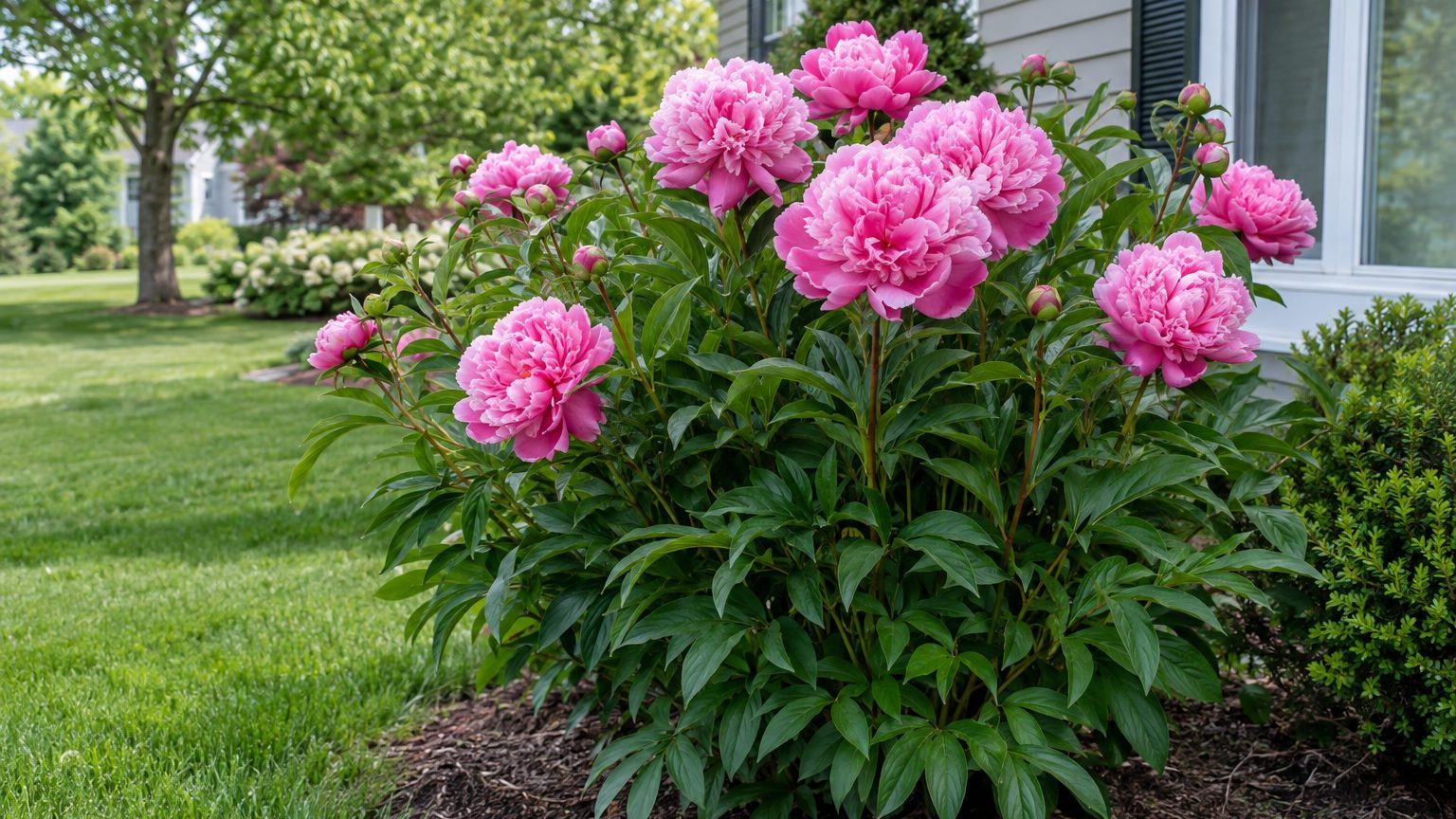
Peony shoots come up red and pushy once the soil thaws, and the clumps that thrive in New Brunswick yards usually went into the ground in late summer. For peonies in New Brunswick, planting time falls well before the first hard freeze, giving roots a season to settle before winter.
When to Plant Peonies in New Brunswick

Plant or divide peonies from late August through September. Dates here follow the nearest comparable climate, since New Brunswick has no local guide on peony timing, so confirm them with a local garden centre, a garden society or the provincial gardening groups. A peony’s year in the province runs like this:
- In March and April, once the snow has gone, you can cut back last year’s herbaceous stems if you did not do it in fall.
- In May and June, the plants bloom, with the exact weeks depending on the type.
- From late August through September, the soil is still warm and the plants are ready to be planted or divided, so new roots can grow before winter.
- In October, planting can still be done, though the roots have less warm weather to get established.
- In November and December, after the foliage has died back, herbaceous peonies are cut to the ground.
At Moncton, the last spring frost arrives around May 23 on average. That is a midpoint, so frost can still return after it, and northern or upland districts run weeks behind. In fall, the first frost comes around October 2 on average at the same city, and the Canadian hardiness zone there is 5a (a Canadian rating that does not convert to a USDA zone).
New Brunswick — the year and the numbers
- State
- New Brunswick
- Hardiness zones
- 5a
- Last spring frost
- May 23
- First fall frost
- October 2
- Annual rain
- 47 in
- Lawn zone
- cool-season
- Source
- Environment and Climate Change Canada — Canadian Climate Normals 1981-2010, station MONCTON · Moncton
Which Peonies Grow Best in New Brunswick?
Peonies suit the province well. They need a cold winter rest to flower, and New Brunswick winters supply it, which is why peonies often fail in mild-winter places but settle in here. Four types are generally grown in home landscapes.
| Peony type | How it does in New Brunswick | Why |
|---|---|---|
| Herbaceous (garden) peony | A dependable choice for most yards | It dies back each year and returns from the roots after a cold winter |
| Tree peony | Grows well, and young plants appreciate some shelter from winter wind | It keeps its woody stems year-round, so exposed buds on those stems need protection |
| Itoh (intersectional) peony | A good fit where you want larger plants | It is a hybrid of the garden and tree peonies, with traits from both |
The woodland peony, Paeonia japonica, is the fourth type. It opens first in the season with white flowers, followed by the tree peonies, then the herbaceous ones, and finally the Itoh hybrids, which stretches the show across late spring into June.
When to Plant, Cut Back and Feed Peonies in New Brunswick
Most peony jobs have a single good window, and the plant tells you when it has opened. Late summer is for roots, late fall is for tidying, and spring is for feeding. A peony planted or moved this year may skip its first spring bloom, which is normal.
| Task | Best timing in New Brunswick | Why then |
|---|---|---|
| Plant or divide | Late August through September, with October as a fallback | Roots establish in warm soil before winter freezes |
| Plant in spring | As soon as the soil is workable | It works, but flowers may be delayed a year |
| Cut back herbaceous peonies | November and December, after the foliage has died back | Frost has finished the leaves, and removing them clears places where disease can overwinter |
| Cut back in spring instead | March and April | Another good window if you prefer to leave stems standing through winter |
Tree peonies are never cut back, since their woody stems carry next year’s buds. Feeding has no fixed month. If you feed, go easy on nitrogen so the plant does not grow more leaves than flowers.
How Peony Planting Dates Change Across New Brunswick
New Brunswick is not one climate, and the season shifts as you move between the coast, the river valley and the north.
- Bay of Fundy coast: Cool, foggy weather keeps spring slow here, so growth starts later than inland. Planting in the middle of the late-summer window is a safe choice.
- Saint John River valley: Inland valley sites around Fredericton warm sooner, so shoots appear earlier and late-summer planting can start at the beginning of the window.
- Northern New Brunswick: Around Campbellton and the Restigouche, spring comes later and fall cold arrives sooner. Aim for the start of the planting window so roots have time to settle.
A sheltered, sunny spot against a south-facing wall can pull your own yard a little ahead of its neighbors.
Where to Get Peony Advice in New Brunswick
For practical local help, turn to people who garden in your part of the province. General growing information can help with the basics, while local groups know your area.
- The federal department, Agriculture and Agri-Food Canada, offers general growing resources you can read at any time of year.
- A local garden centre or garden society can tell you how your neighborhood’s spring and fall compare, and which peonies they have seen thrive, so visit in late summer before planting.
- The provincial department of agriculture is the place to ask about soil testing, ideally before you dig the planting hole.
Common Questions
How Deep Should You Plant a Peony?
Keep the eyes, the small pink buds on the root, close to the soil surface. A peony set too deep may bloom poorly or fail to come up at all, so firm the soil gently and avoid piling it over the crown.
Can You Move a Peony After It Flowers?
Wait until late August or September, when the planting window opens, rather than moving a clump in summer heat. Divided pieces then root in warm soil before winter, and the plant may skip bloom the following spring.
Why Is a Peony All Leaves and No Flowers?
Check whether the plant gets full sun or sits in the shade of a tree or building, and whether it was divided or moved recently. Shade and a recent move are common reasons for a leafy clump with no flowers.