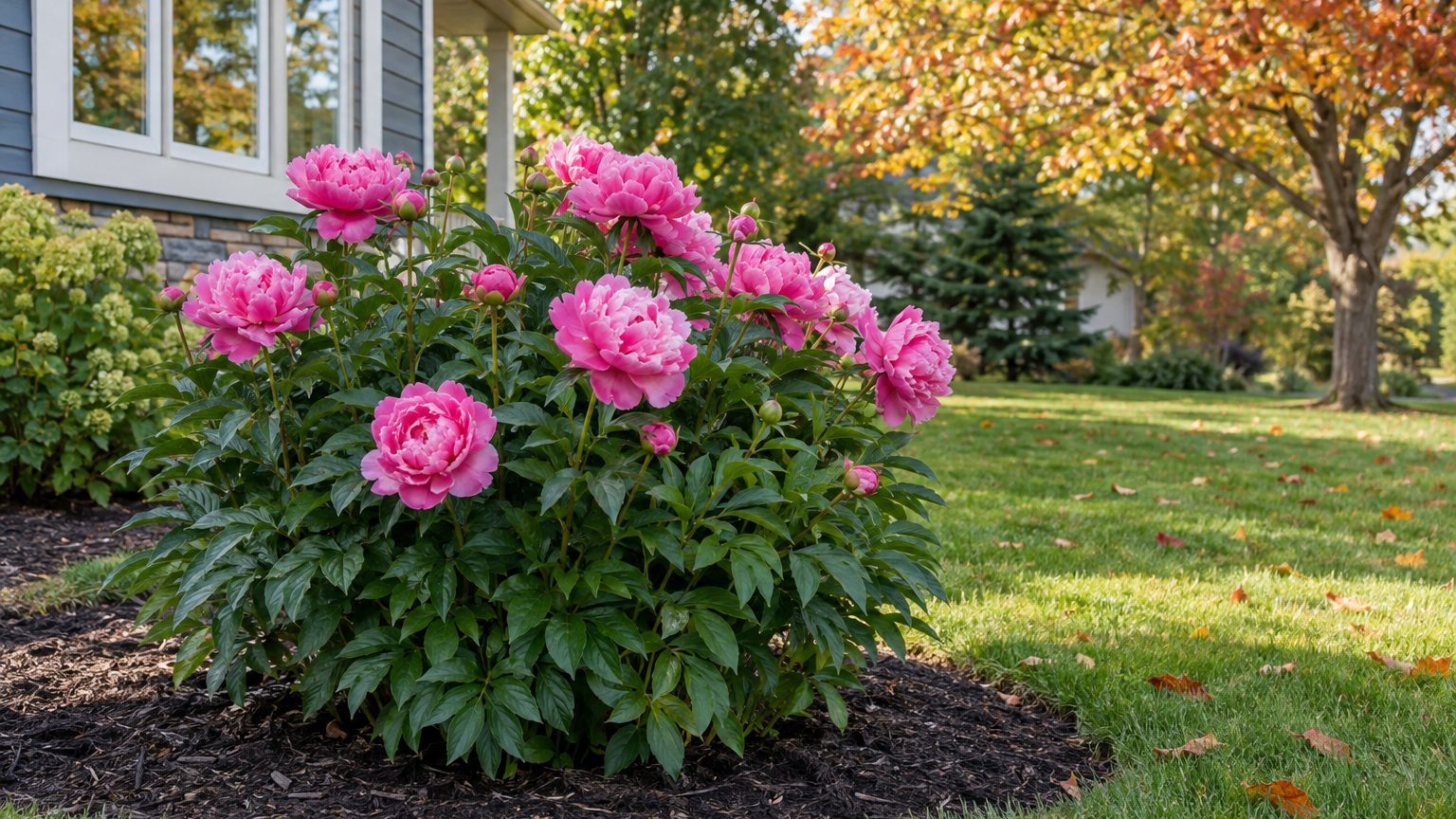
Peony shoots push up red and tight as the snow leaves, and planting in September gives new roots time to settle before the ground freezes. For peonies in Nunavut, the planting window is short and the blooms arrive late, so the whole year runs on a different clock than in the south.
When to Plant Peonies in Nunavut

Plant or divide peonies in September, while the soil can still be worked and before the ground freezes. A peony’s year here looks like this:
- In spring, as the snow retreats and the soil thaws, red shoots emerge from the crown and the plant starts to grow.
- In June, the stems lengthen and buds form, and the first blooms can open in a warm year.
- In July and August, the main bloom arrives, later than in most of North America.
- In September, the roots go into the ground, giving them time to settle before winter locks the soil.
- After the first hard frost, the leaves collapse and brown, and the plant rests under the snow through the cold season.
In Rankin Inlet, the last spring frost falls on average around June 19. That is a midpoint, so frost can still come later than that in many years, and northern districts run weeks behind.
In Rankin Inlet, the first fall frost arrives on average around September 13. This is a midpoint, not a safe date for the whole territory. Rankin Inlet sits in Canadian hardiness zone 0a, a rating that does not convert to a USDA zone.
No local extension page covers peony timing for the territory, so the planting and bloom months here follow the nearest comparable northern climate. Confirm local timing with a garden centre, a garden society or a territorial gardening group before you order roots.
Nunavut — the year and the numbers
- State
- Nunavut
- Hardiness zones
- 0a
- Last spring frost
- June 19
- First fall frost
- September 13
- Annual rain
- 12 in
- Lawn zone
- cool-season
- Source
- Environment and Climate Change Canada — Canadian Climate Normals 1981-2010, station RANKIN INLET A · Rankin Inlet
Which Peonies Grow Best in Nunavut?
Peonies need a cold winter rest to flower, and that is the one thing the far north supplies in abundance. Winter cold is not the obstacle. The short, cool summer is, which is why bloom comes in July and August instead of late spring.
Herbaceous peonies fit this pattern well because they die back each year and rest below ground. Late-blooming cultivars are a sound choice, since they flower when the season has warmed.
| Peony type | How it does in Nunavut | Why |
|---|---|---|
| Herbaceous peonies | A workable choice, blooming in July and August | They die back each year, and the long cold rest sets buds |
| Late-blooming cultivars | Open from July into August, with June possible in a warm year | Their flowering follows the late northern summer |
Tree peonies are a harder bet. They keep woody stems above ground through winter, and those stems face the wind and cold with only whatever snow covers them. If you try one, plant it where drifting snow settles, and treat it as an experiment.
When to Plant, Cut Back and Feed Peonies in Nunavut
Peony care involves getting roots in the ground before freeze-up, cutting back once the foliage has died, and feeding as growth starts. The cutback applies only to herbaceous types. A tree peony keeps its woody stems and is never cut back.
| Task | Best timing in Nunavut | Why then |
|---|---|---|
| Planting or dividing | September, before the ground freezes | Roots need time to settle before winter |
| Cutting back herbaceous peonies | After frost has blackened the foliage | The stems are spent, and removing them takes away a place for disease to overwinter |
| Feeding | When the shoots break the soil in spring | The plant draws on nutrients as the new stems rise |
| Bloom | July and August, and June in a warm year | The short northern summer pushes flowering later |
Mulch placed after the ground freezes helps hold snow and steady the soil. Pull it back in spring so the shoots are not smothered.
How Peony Planting Dates Change Across Nunavut
Nunavut spans a huge range of latitude, and the same peony calendar shifts as you move across it. Warmth and the length of the frost-free stretch decide how much room a peony has.
- Kivalliq: Rankin Inlet and the Hudson Bay coast set the pattern for the region. Spring comes slowly along the coast, with cold water holding temperatures down.
- Qikiqtaaluk (Baffin Island): Iqaluit and the communities around it run cooler, so thaw comes later and fall frost can arrive earlier. Planting in September is safer than waiting.
- Kitikmeot: Cambridge Bay sits in open, windswept country, where wind dries and chills the ground. A sheltered spot against a building makes the difference there.
Farther north, the season shortens further, and a peony there depends on a protected bed and a very early planting.
Where to Get Peony Advice in Nunavut
Canada has no county extension offices, so advice comes from agriculture departments, garden groups and local nurseries. Local nurseries and garden groups can help you with local advice.
- Agriculture and Agri-Food Canada carries national guidance on soil and plant health, and it is a good starting point before you place an order.
- A garden society or territorial gardening group can tell you which beds hold snow and which ones scour out in wind.
- A local garden centre can confirm when bare roots arrive, so you can have them ready for planting in September.
Common Questions
How Deep Should You Plant a Peony?
Set the roots so the eyes, the small pink buds on the crown, sit near the soil surface. A peony planted too deep may bloom poorly or not come up at all.
Will a New Peony Bloom the First Spring?
Often it will not. A newly planted or transplanted peony may skip its first spring, so judge it by the growth it makes before expecting flowers.
Can You Buy Peonies in Spring Instead of Fall?
Potted plants turn up at garden centres in spring, while bare roots usually arrive for fall planting. For planting or dividing, wait until September and work before the ground freezes.