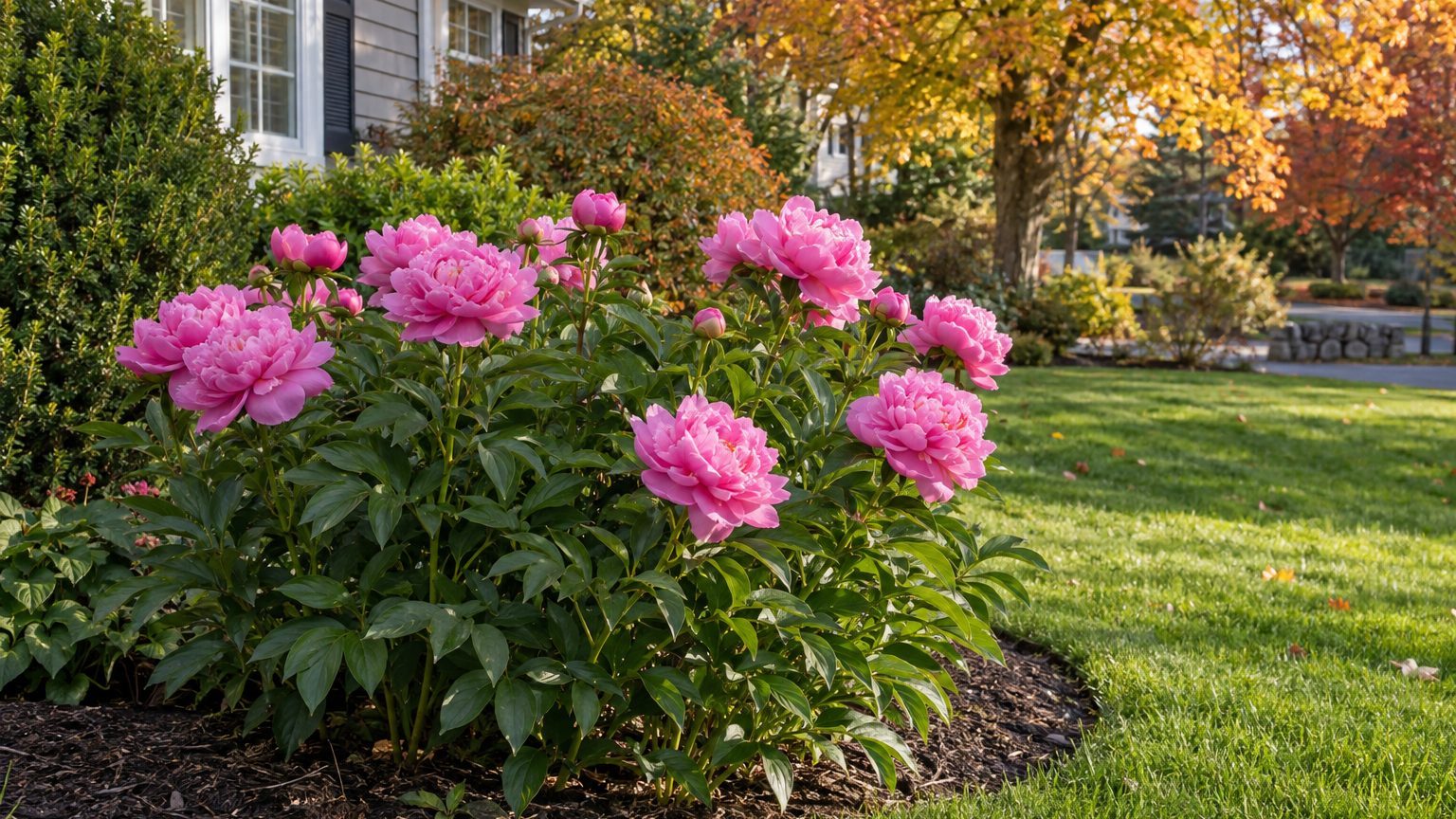
A peony that goes in the ground in late summer spends the fall growing roots while the soil is still mild, and it comes up the next spring ready to settle in. In Newfoundland and Labrador, that late-summer window helps the clump settle well.
When to Plant Peonies in Newfoundland and Labrador

Plant or divide peonies from August through September, with October as a fallback. The province has no local extension page on peony timing, so these dates follow the nearest comparable climate in northern New England, and a local garden centre or garden society can confirm timing for your district.
- In August and September, dig, divide or plant, so the roots establish before the ground freezes. Keep the eyes (the pink buds on the root) close to the soil surface, because a peony set too deep may bloom poorly or not come up.
- In October, planting is still possible if the season got away from you, though the roots have less time to settle.
- From November through December, once the foliage has died back after frost, herbaceous peonies get cut to the ground.
- In March and April, the same cutting back can wait until early spring if you prefer to leave the dead stems over winter.
- In May and June, the plants flower, with the exact timing depending on the type. A newly planted or transplanted peony may not bloom the first spring.
At the reference station in St. John’s, the last spring frost falls on average around May 30, so in one year out of two it comes later, and northern or upland districts run weeks behind. The first fall frost arrives on average around October 17, again with half of years later. These frost dates are midpoints of a window, not safe dates. St. John’s sits in Canadian hardiness zone 6a, a Canadian system that does not convert to a USDA zone.
Newfoundland and Labrador — the year and the numbers
- State
- Newfoundland and Labrador
- Hardiness zones
- 6a
- Last spring frost
- May 30
- First fall frost
- October 17
- Annual rain
- 60 in
- Lawn zone
- cool-season
- Source
- Environment and Climate Change Canada — Canadian Climate Normals 1981-2010, station ST JOHN'S A · St. John's
Which Peonies Grow Best in Newfoundland and Labrador?
Peonies suit this province well, because they need winter cold to flower and a cool climate supplies it. The province’s winters easily deliver the minimum stretch of cold that peonies need to set buds.
Your choice comes down to the look you want and the bloom span you are after.
| Peony type | How it does in Newfoundland and Labrador | Why |
|---|---|---|
| Herbaceous (garden) peony | A dependable choice for borders | Dies back each year and relies on winter cold to set flowers |
| Tree peony | Worth trying in a sheltered spot | Keeps woody stems above ground, so it is never cut back |
| Intersectional (Itoh) peony | Suited to the same cold winters | A hybrid of the garden and tree types, flowering after the herbaceous kind |
The woodland peony (Paeonia japonica) is a white-flowered plant that opens first in the season.
When to Plant, Cut Back and Feed Peonies in Newfoundland and Labrador
Peony care is mostly about timing the big jobs and then leaving the plant alone. Planting and dividing belong in late summer, while cutting back follows the first hard frost, once the leaves have collapsed.
Herbaceous peonies get cut to the ground, but a tree peony keeps its woody stems and is never cut back.
| Task | Best timing in Newfoundland and Labrador | Why then |
|---|---|---|
| Plant or divide | August to September, or October if needed | Roots settle in before the soil freezes |
| Cut back herbaceous peonies | November to December, or March to April | The foliage has already died back after frost |
| Enjoy the bloom | May to June | Each type opens in turn through late spring |
| Feed | Ask a local garden center about appropriate local timing | Local advice can account for soil conditions |
Spring planting is possible once the soil is workable, but it may delay flowers a year. If you have to move a clump in spring, expect a quiet first season and be patient.
How Peony Planting Dates Change Across Newfoundland and Labrador
A province this large and this exposed to the Atlantic does not run on one clock, so your local conditions can shift the planting window a little in either direction.
- St. John’s and the Avalon Peninsula: The ocean keeps the season slow to warm and slow to cool. Planting in the early part of the August to September window works well here.
- Central Newfoundland: Inland sites run colder in fall, so frost can arrive sooner. Aim for late August so roots get their head start.
- Labrador: Seasons are shorter and spring comes later. Plant at the early end of the window and choose a sheltered, sunny spot.
Wind and exposure matter as much as latitude, so a protected yard can behave like a milder district.
Where to Get Peony Advice in Newfoundland and Labrador
Canada has no county extension offices, so advice comes from the province and from local growers. For a diagnosis or a soil test, start with the provincial agriculture department and local gardeners.
- The Newfoundland and Labrador Department of Fisheries, Forestry and Agriculture can point you to soil testing and plant health help, so contact it before you plant.
- A local garden centre or garden society can confirm timing for your district, and spring or late summer visits fit the planting season.
- Master gardener or provincial gardening groups can help you troubleshoot a clump that is not flowering.
Common Questions
Why Won’t My Peony Bloom?
Look at the planting depth and the age of the plant. A clump set too deep, with the eyes well below the surface, may leaf out without flowering. A young transplant may not bloom the first spring. Shade is another common cause, so check whether the spot gets plenty of sun.
Can You Move a Peony in Spring?
Yes, once the soil is workable, but it may cost you a year of flowers. Late summer is the better window. If spring is the only option, dig a generous root ball, replant at the same depth and water regularly.
Should You Cut Back a Tree Peony?
No. A tree peony keeps its woody stems through winter, and cutting them to the ground removes next year’s flower buds. Only dead or damaged wood needs to come out, and herbaceous peonies are the ones that get cut to the ground.