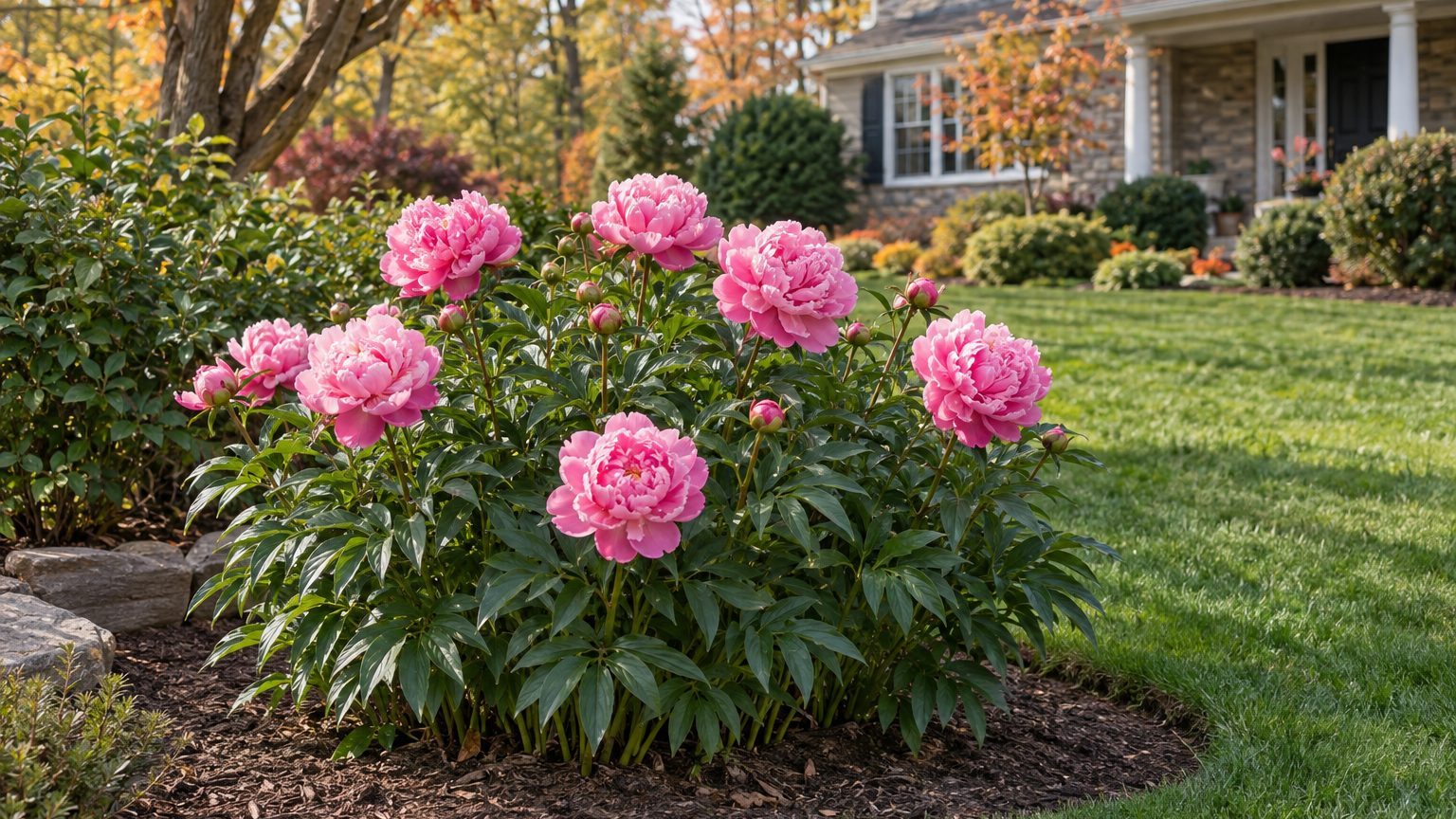
Peony stems poke through cold spring soil as red shoots, then open into big blooms. In Pennsylvania, getting that display started depends mostly on the fall planting window. Here is when to plant, what grows best, and how the year unfolds in your yard.
When to Plant Peonies in Pennsylvania

Plant peonies in September, or in October at the latest, so the roots settle in before winter. The rest of the peony year follows from that fall job.
- In September, plant or divide your peonies. The roots have stored plenty of food by then and the new divisions have time to anchor before the ground turns cold.
- In October, you can still plant or divide, but treat it as the final stretch for this job.
- In October and November, after frost has blackened the leaves, cut herbaceous peonies back. It can also be done in March or April if you would rather wait for spring.
- In May into June, the plants bloom, though a newly planted or transplanted peony may skip flowering the first spring.
- Through winter, the plants rest in the cold, and that rest is what sets up the flowers for the next spring.
Frost dates help you read the weather around those jobs. In Philadelphia, the last spring freeze usually falls between March 29 and April 6, and the first fall freeze between November 5 and November 16. Pennsylvania spans USDA hardiness zones 5a to 7b, so other parts of the state differ from Philadelphia, which is milder than the colder parts of the state.
Pennsylvania — the year and the numbers
- State
- Pennsylvania
- USDA zones
- 5a-7b
- Last spring frost
- March 29 to April 6
- First fall frost
- November 5 to November 16
- Annual rain
- 44 in
- Lawn zone
- transition-season
- Source
- NOAA NCEI U.S. Climate Normals 1991-2020, 32F freeze probabilities · Philadelphia
Which Peonies Grow Best in Pennsylvania?
Peonies suit Pennsylvania well. They need a cold winter rest to flower, and the state’s winters give it, with zones running from 5a to 7b. Peonies may flower poorly in mild-winter climates.
Herbaceous peonies and Itoh (intersectional) peonies are the easiest to grow, and they share the same care. Tree peonies work too but follow different rules.
| Peony type | How it does in Pennsylvania | Why |
|---|---|---|
| Herbaceous (garden) peony | Reliable and easy | Dies back each fall and returns with new growth in spring |
| Itoh (intersectional) peony | Reliable and easy | A hybrid of garden and tree peonies, with the same yearly care as herbaceous types |
| Tree peony | Grows well with different care | A woody shrub that goes dormant in winter and renews growth on woody stems each spring |
Woodland peony (Paeonia japonica) is also grown in home landscapes, though herbaceous and Itoh types are the usual choices for a front yard bed. Keep the eyes, the pink buds on the root, near the soil surface when planting. A peony set too deep may bloom poorly or not come up at all.
When to Plant, Cut Back and Feed Peonies in Pennsylvania
Planting and cutting back happen in fall, so the garden calendar for peonies is short. Feeding has no set month here, so follow the plant’s growth instead of the date.
The table gives timing for the jobs that carry a month, plus the sign to watch for the rest.
| Task | Best timing in Pennsylvania | Why then |
|---|---|---|
| Plant or divide | September, or October at the latest | Roots have time to settle before the ground freezes |
| Cut back herbaceous peonies | October and November, after frost | The foliage has died and can be removed cleanly |
| Cut back herbaceous peonies (alternative) | March or April | Spring cleanup works too, before new shoots grow tall |
| Enjoy the bloom | May into June | Flowering follows the cold winter rest |
| Tree peony pruning | Not cut back | It keeps its woody stems from year to year |
Cut herbaceous stems down to within a couple of inches of the ground. A tree peony never gets that treatment, since the woody stems carry next year’s growth. For feeding, wait until the plant is up and growing, and avoid heavy nitrogen near the crown. A soil test tells you what the bed actually needs.
How Peony Planting Dates Change Across Pennsylvania
Pennsylvania’s elevation and latitude shift the season, so the same September to October window lands a little differently from one corner to another.
- Philadelphia and the southeast: Winters are milder here than anywhere else in the state, and spring arrives earlier. Aim for the early part of the planting window.
- The northern tier: Spring comes later and fall cold arrives sooner. Plant in September so roots settle before the ground chills.
- The Allegheny Mountains: Higher ground runs cooler and later in spring than the southeast. Again, September planting gives the roots the longest head start.
Spring cleanup and bloom shift along with these differences, so peonies in colder parts of the state flower a little later than those near Philadelphia.
Where to Get Peony Advice in Pennsylvania
When a peony refuses to bloom or a bed needs a closer look, local help is close by. Penn State Extension publishes garden guidance for the state and connects you to county offices.
- The extension service offers plant guidance and soil testing information, which is useful before a fall planting.
- Your county extension office can help diagnose a plant that is not blooming, so bring a photo or a sample of the stems.
- A soil test in late summer tells you what the bed needs before September planting begins.
Common Questions
Why Didn’t My New Peony Bloom?
A newly planted or transplanted peony may not bloom the first spring. If an established plant still gives only leaves, check how deep the eyes sit and how much sun the bed gets. Buds buried too deep or a shaded site can keep an established peony from flowering.
Can You Plant Peonies in Spring in Pennsylvania?
Fall is the planting season here, in September or October. Fall gives the roots time to settle before winter.
Do Peonies Need Cold Winters?
Yes. Peonies need a cold winter rest to flower, and they may flower poorly in mild-winter climates. Pennsylvania’s winters supply that rest, so the plants return reliably each spring.