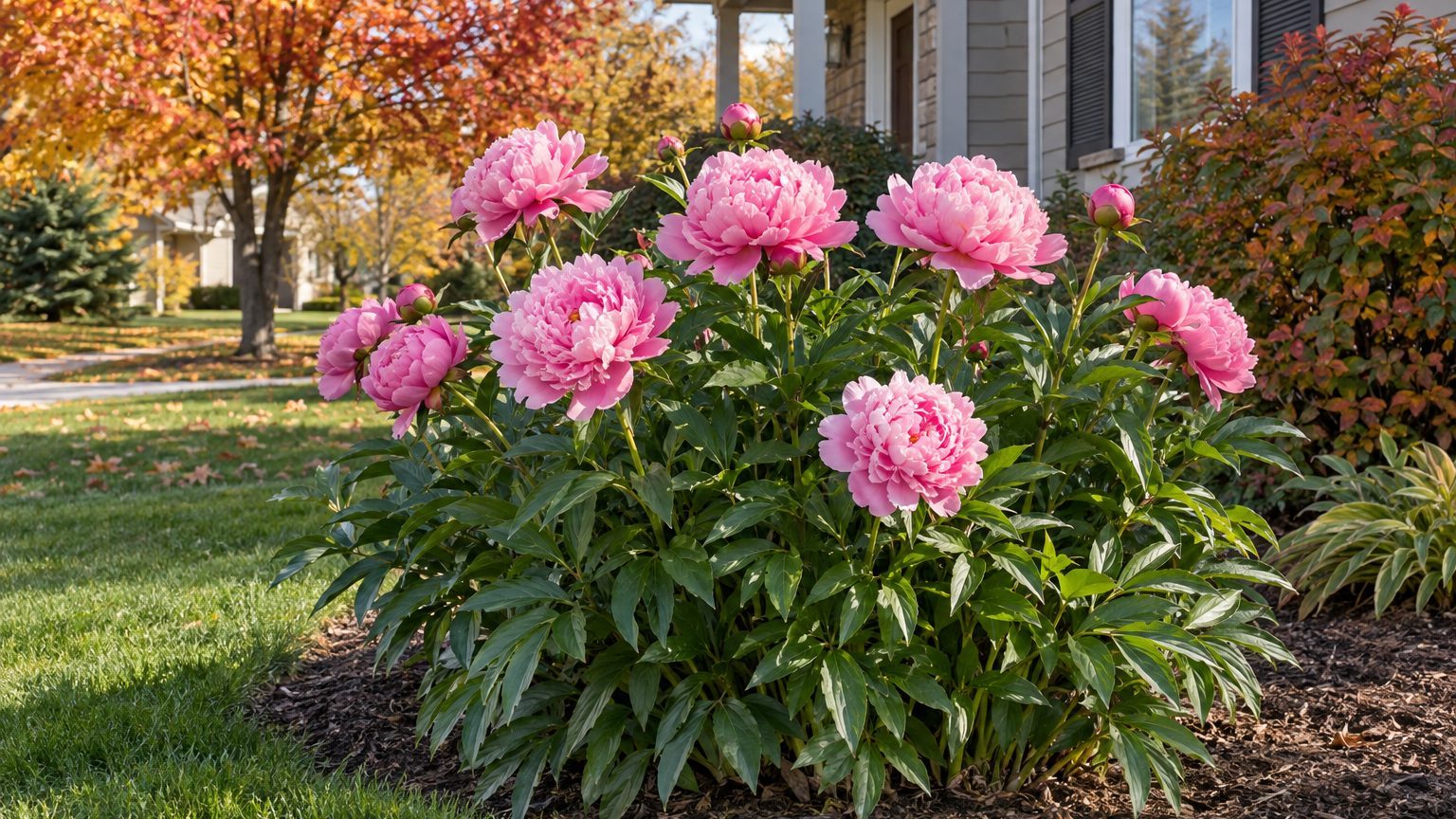
A peony that gets its roots into Nebraska soil in early fall will often reward you with a thick clump of red-tinged shoots the following spring. Peonies in Nebraska are reliable perennials because the winters provide the cold rest they need to flower. The questions are when to plant, what to cut back, and where the state’s climate shifts the timing.
When to Plant Peonies in Nebraska

Plant or divide peonies in September, or in October at the latest. The roots store food over summer, then need time to settle in before the ground freezes. Here is how the year runs for a peony in Nebraska.
- In early spring, last year’s stems can still be trimmed if they were left standing, since March and April are the spring window for cutting back, and red shoots begin pushing up as the soil warms.
- Through May into June, the plants bloom.
- In summer, the foliage works quietly, gathering the energy that the roots will hold through winter and that next year’s buds depend on.
- In September, the roots are ready to be lifted, divided or planted, and replanted divisions have time to establish before winter.
- In October, planting is still fine, and this is also when cutting back begins once frost has blackened the stems, continuing into November.
At the reference city (Omaha), the last spring frost falls between April 12 and April 23, and the first fall frost arrives between October 15 and October 26. Suburban and rural yards usually see spring frost later and fall frost earlier, often by one to two weeks, so check your own county. The hardiness zone runs from 4a to 5b on the USDA system, a range that varies across the state.
Nebraska — the year and the numbers
- State
- Nebraska
- USDA zones
- 4a-5b
- Last spring frost
- April 12 to April 23
- First fall frost
- October 15 to October 26
- Annual rain
- 32 in
- Lawn zone
- cool-season
- Source
- NOAA NCEI U.S. Climate Normals 1991-2020, 32F freeze probabilities · Omaha
Which Peonies Grow Best in Nebraska?
Peonies do well here. They need a cold winter rest to flower, and Nebraska’s winters supply it, so the plants are far more likely to bloom heavily than in a mild-winter climate.
Herbaceous peonies and intersectional (Itoh) peonies are the easiest to grow and share the same care. Tree peonies are woody shrubs that need a different approach to pruning.
| Peony type | How it does in Nebraska | Why |
|---|---|---|
| Herbaceous (garden) | Easy and dependable | Dies back to the ground each fall, then new growth emerges in spring |
| Intersectional (Itoh) | Easy to grow | A hybrid of garden and tree peonies, with the same yearly culture as herbaceous types |
| Tree (woody) | Grows well with care | Woody stems stay through winter, and new growth renews each spring |
Woodland peonies are another type grown in home landscapes. Whichever type you choose, a newly planted or transplanted peony may not bloom the first spring, so give it time before judging it.
When to Plant, Cut Back and Feed Peonies in Nebraska
Planting and cutting back are the jobs with clear windows. Cutting back applies to herbaceous peonies only, because a tree peony keeps its woody stems and is never cut back.
| Task | Best timing in Nebraska | Why then |
|---|---|---|
| Planting or dividing | September, or October at the latest | Roots have stored food by then and get time to settle before winter |
| Cutting back herbaceous stems | October into November, after frost has hit the foliage | The plant has finished storing energy and the stems are done |
| Cutting back, spring option | March or April | Old stems can come off before new shoots grow tall |
| Bloom | May into June | Buds set by cold winters open as the weather warms |
Cut herbaceous stems down to within a couple of inches of the ground, and keep the eyes near the soil surface when planting, since a peony set too deep may bloom poorly or not come up.
How Peony Planting Dates Change Across Nebraska
The same September to October window applies statewide, but weather shifts the feel of it from one corner to another.
- Omaha and the Missouri River side: Milder and earlier in spring, so shoots show sooner and fall planting tends to stay comfortable into October.
- Lincoln and the southeast: Similar to Omaha, with a long enough fall that October planting works well if September gets away from you.
- The Panhandle and western Nebraska: Higher and drier, so spring comes later and fall frost arrives sooner, which makes September the safer month to plant.
In colder spots, lean toward the start of the planting window, so roots have the full stretch of fall to anchor.
Where to Get Peony Advice in Nebraska
University of Nebraska–Lincoln Extension, reached through its extension website, covers peony care for the state’s soils and weather. Your county extension office can help with problems you cannot name.
- The extension website has peony care guidance, which is worth reading before planting day.
- Ask your county office whether a soil test would help before September digging begins.
- Ask your county office how to document fresh symptoms on a plant that looks off.
Common Questions
Can You Plant a Peony in Spring in Nebraska?
Fall is the time that suits the plant, because roots settle before winter. A peony set out in spring will likely sulk and may skip blooming, so wait for September if you can.
Why Won’t My Peony Bloom in Nebraska?
Look at how deep the eyes sit and how long ago the plant went in, and consider them together. Eyes buried well below the soil surface, on a clump moved recently, point to planting depth and a plant still settling in. Raise the eyes to just below the surface when you next divide in fall.
Do Tree Peonies Need Cutting Back in Nebraska?
No. Tree peonies keep their woody stems through winter and push new growth from them each spring. Remove only dead or damaged wood.